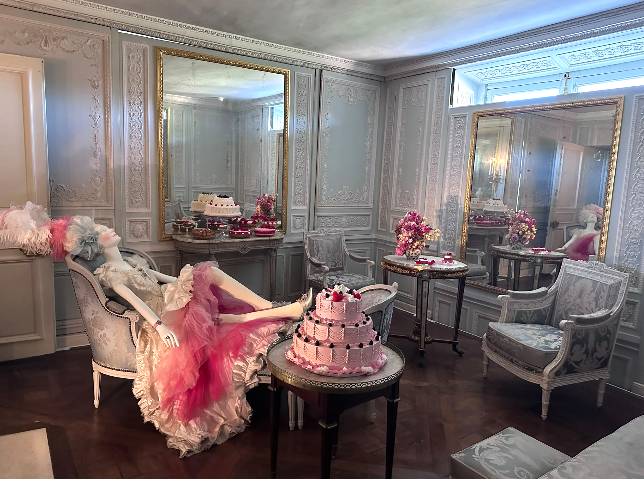
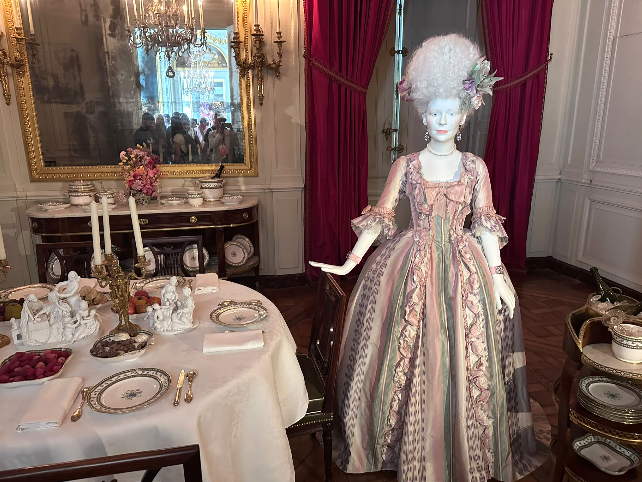
Right now, at the Petit Trianon in Versailles, the palace where Marie-Antoinette created her own private world away from court, a major exhibition celebrates the 20th anniversary of Sofia Coppola's cult film Marie Antoinette. Original costumes, storyboards, set designs - the exhibition explores both the film's creation and its lasting influence on fashion, design, and how we imagine the queen herself. It runs until 24 January 2027, and it's the first exhibition in the palace's history dedicated entirely to a single film.
It's also, as Paris Fashion Week reminds us every September, proof that Marie-Antoinette's influence never really went away. Here's the story of how a fourteen-year-old Austrian princess became the most influential fashion figure of the 18th century - and arguably of every century since.
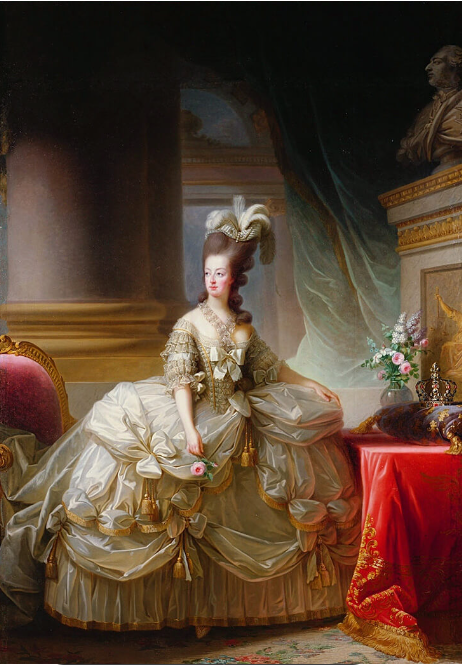
Figure 1: Queen Marie Antoinette 1778 Elisabeth Vigée-Lebrun
A Palace Where Clothes Were Power
Imagine the Hall of Mirrors at Versailles on a typical day at court. Hundreds of courtiers in silks, satins, velvets and brocades, the candlelight bouncing off the mirrors, the rustle of fabric the constant soundtrack of palace life. What you wore wasn't vanity — it was politics. Gold thread, silver buttons, gem-encrusted fastenings: all strictly regulated by rank and title. Women were expected to change dress not only with the season or the occasion but with the hour, wearing several gowns a day.
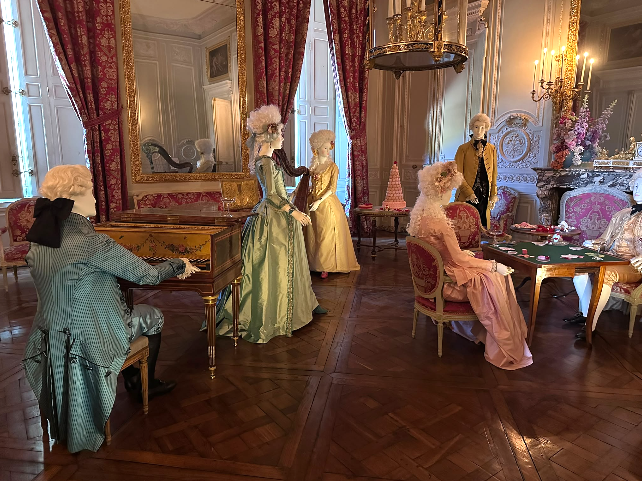
The queen, outranked only by the king, was expected to play a supporting role to his splendour. With Marie-Antoinette, that was never going to happen.
Fashion Forward France
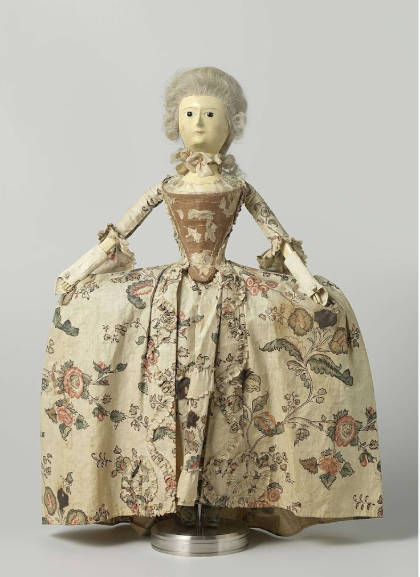
Figure 2: 1760 Fashion Doll, Rijksmuseum, Amsterdam
By the time the Austrian princess arrived in France in 1770, Paris had long been the fashion capital of the world. The philosopher Montesquieu put it drily: "A woman who leaves Paris to spend six months in the country comes back as out of date as if she had been buried there for thirty years."
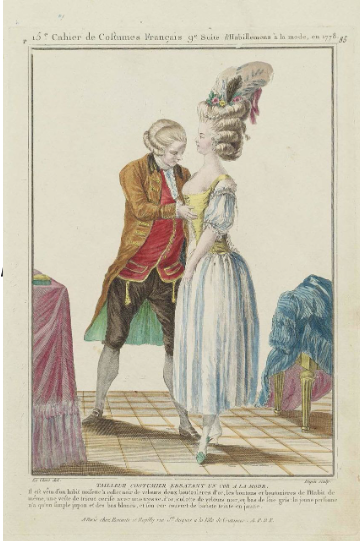
Figure 3: Corset Fitting in Paris Galerie des Modes et Costumes Français, Boston Museum of Fine Arts
The city exported its tastes via fashion dolls - miniature models dressed in the latest creations and snatched up by collectors - sent from the boutiques of the rue Saint-Honoré to courts across Europe, from Saint Petersburg to Madrid, Lisbon to Stockholm. Magazines like the Cabinet des Modes, launched in the 1780s, spread French style further still, to middle-class readers well beyond France's borders. Abigail Adams, visiting Paris on a diplomatic trip with her husband, the Amercian President John Adams, noted that Parisian shop girls would wear well-cut silks - even if it meant living otherwise on bread and water in a garret.
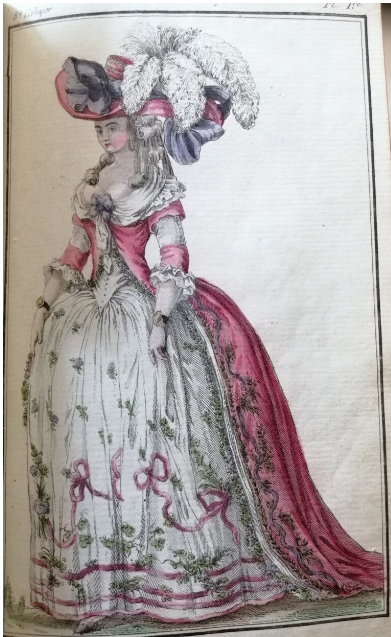
Figure 4: Cabinet de Modes Janvier 1786
Anyone and everyone who could afford it went to the French capital in person to procure the finest fabrics and have them cut according to the latest trends.
Paris set the tone. Versailles set the tone for Paris. And very soon, one woman would set the tone for Versailles.
The Queen Who Ruled Fashion
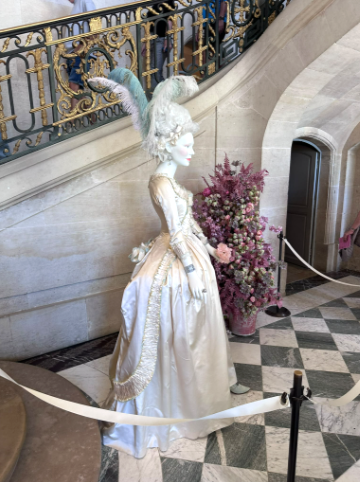
The fourteen-year-old who arrived at Versailles in 1770 had grown up with her Austrian mother's relatively modest tastes. What she found at the French court must have been overwhelming: layers of silk and satin over hoops and corsets, cascading lace, gowns that shifted colour with the light and the hour. And it would never do to be seen in the same dress twice - each repeat appearance required significant and costly modifications to disguise the fact.
The gowns themselves were engineered for spectacle. A long elegant pleat ran from nape to hem at the back, creating a train that came alive when its wearer moved. Combined with the famous gliding walk developed for the marble floors and mirrored galleries of Versailles - the celebrated Versailles Glide - the effect was extraordinary: grace and beauty in motion, a woman who seemed to float rather than walk.
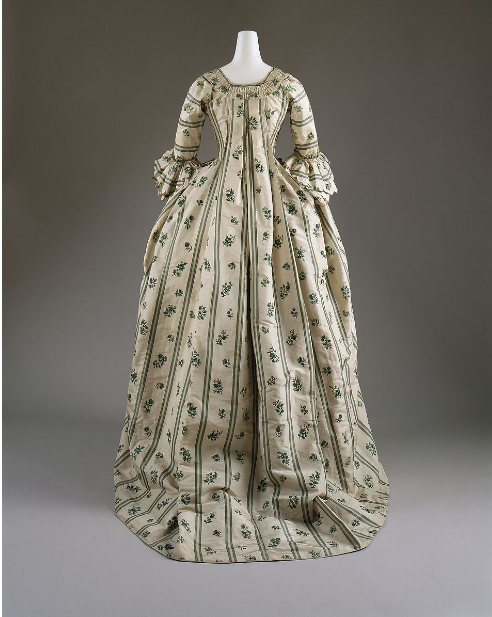
Figure 5: Met Gown 1750–75
Once crowned queen, Marie-Antoinette felt she needed to stand out among all that finery. Stand out she did - at her own risk and peril.
Rose Bertin and the Birth of Haute Couture
The turning point came when her hairdresser - the creator of her famous towering poufs - introduced her to a fashion merchant on the rue Saint-Honoré: one Rose Bertin, proprietress of an establishment called Le Grand Mogol. It was the beginning of a partnership that essentially invented modern fashion.
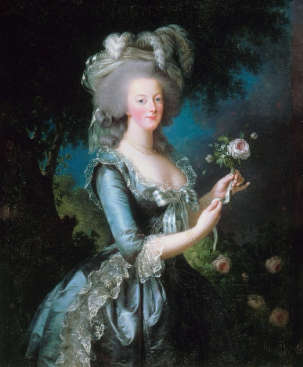
Figure 6: Marie Antoinette dressed by Rose Bertin, Elisabeth Vigée-Lebrun, 1783, MOMA
Whatever the queen wore, Paris had to have. Bertin created bespoke, trend-driven looks that responded to events almost in real time. When Louis XVI received a smallpox vaccination, Marie-Antoinette appeared in an 'innoculation hairdo', a headdress featuring a rising sun, an olive tree, and the serpent of Aesculapius - the symbol of medicine. When The Marriage of Figaro finally debuted on the Paris stage, Bertin created a lady's maid costume based on the character of Suzanne, for the queen to wear at her private Trianon theatre. Fashion as commentary, as wit, as power.
Bertin was slyly nicknamed the Minister of Modes, and eventually made Master of her trade corporation - a remarkable achievement that gave her the right to dress the most prestigious fashion dolls dispatched to royal courts across Europe.
The clothes were not inexpensive. Though given a clothing allowance of 120,000 livres, the queen routinely overspent - one year reaching 272,000 livres. For context: an entire farm could be bought for 100 livres. Her critics called her Madame Deficit. It didn't help that by the end of each season, worn gowns were simply passed on to ladies-in-waiting.
Was it pure extravagance? Some historians argue it was also strategy. Marie-Antoinette was Austrian, and Austria had long been France's enemy. Spending - visibly, conspicuously, on French craftspeople and French taste - was a way of demonstrating influence, of showing that she had the king's trust. Her mother, Empress Maria Theresa, saw through it immediately and predicted it would not end well. She was right.
The Real Queen and Her Private Versailles
Underneath the extravagance, Marie-Antoinette's own tastes were considerably simpler. The ceremonies of Versailles - the 'lever', the 'coucher', the rigid etiquette that governed every moment of court life - exhausted and frustrated her. She needed somewhere to breathe.
Louis XVI gave her the Petit Trianon, a small pink marble palace that had previously belonged to his predecessor's mistress, Madame de Pompadour. The gift was well-intentioned; the association was unfortunate, drawing an immediate comparison between the queen and a royal favourite. But within those walls, for a time, she was free.
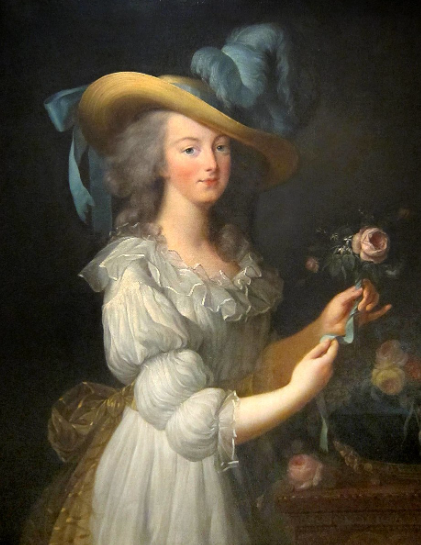
Figure 7: after Elisabeth Vigée-Lebrun, The Queen in a Muslin Dress, 1783
She walked in the gardens in a straw hat like a simple shepherdess. She wore cotton dresses inspired by the fashions of the French colonies - comfortable, airy, and unencumbered by hoops or stays. These robes 'à la Créole' became so associated with her that they were renamed the Chemise à la Reine - the Queen's Shift. She and her portraitist decided that this would be her new image: plain, clean lines, (comparatively) inexpensive fabrics, minimal decoration, a sincere and unpretentious queen who has turned her back on luxury in a time of financial crisis.
This backfired spectacularly. After years of extravagance, the sight of the Queen of France in what amounted to a muslin slip - in a mistress's private palace, surrounded by her chosen circle - fuelled exactly the kind of gossip it was designed to counter. Whatever image she attempted to project, it seemed she simply could not win.
A Style Icon for the Ages
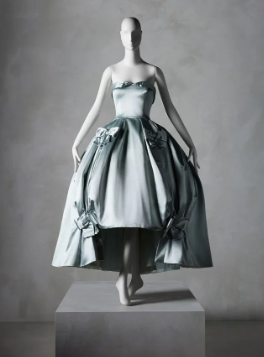
Figure 8: "Du Barry" Dior evening ensemble, fall/winter 1957-58, Met
From the moment she crossed into France and exchanged her Austrian dress for French fashions, to the moment she went to the guillotine in mourning black - designed, of course, by Rose Bertin - clothes told the story of Marie-Antoinette's life in France.
Her influence didn't die with her. Rose Bertin's fashion dolls continued to carry the queen's aesthetic across Europe. The Duchess of Devonshire wore a white muslin dress, a gift from Marie-Antoinette, to a London concert - and helped popularise what we now call the Little White Dress in England. The queen's cast-offs worked their way down through ladies-in-waiting, chambermaids, second-hand dealers, and eventually to the streets - where, as Abigail Adams noticed, even a shop girl could make an impression.
Nearly two centuries later, when Christian Dior was designing for a France recovering from the humiliation of Occupation, he reached back to the 18th century for inspiration: tiny waists, exaggerated hips, the vocabulary of Versailles. He even named a dress after Marie-Antoinette's arch-rival, the elder king's mistress Madame du Barry.
Vivienne Westwood, Thierry Mugler, Christian Lacroix, Jean Paul Gaultier - all have drawn on her aesthetic. Manolo Blahník named a mule slipper Antonietta and continues to produce a Marie-Antoinette capsule collection. Earlier this year, the Victoria and Albert Museum in London mounted the UK's first exhibition dedicated entirely to her style - 250 objects, including loans from Versailles never previously seen outside France. It closed in March, but its success speaks to an appetite for Marie-Antoinette that shows no sign of fading.
And now, twenty years after Sofia Coppola's pastel-drenched film brought her back to a new generation, Versailles itself has opened its doors to celebrate that vision - in the very palace where the original was lived.
See It for Yourself
The Sofia Coppola exhibition at the Petit Trianon runs until 24 January 2027 - and it's the perfect complement to a visit to Versailles itself. If you'd like an expert guide to bring the history to life, we have several options:
- A half-day palace and gardens tour covering the essential highlights with skip-the-line access
- An afternoon in Marie-Antoinette's private domain : the Petit Trianon, the Hamlet, the gardens where she was most herself
- A full day combining both - the palace in the morning, her private retreat in the afternoon
You can also join the morning palace tour and decide on the day whether to continue into the private domain - just let your guide know. And if the suburban train feels daunting, we escort you from Paris.
Thank you so much for taking the time to read our blog! We are a small Paris-based tour company that prioritises a boutique personal experience where we can share our passion for our heritage and community with every individual that joins us. If you'd like to take a tour then head over to our website for an unforgettable trip to the city of lights. Also, check out our social media @memories.france for everything you could need to know for coming to Paris: from how to use the metro to coffee shops closest to each major monument, there is something for everyone!
Angelissa, Siobhan & the Memories France Family
If you're looking for more tips, itineraries, and insights into Paris, check out our social media!
Like what you see? Read our other blogs here!
- Was Marie Antoinette the World's First Fashion Influencer?She arrived at Versailles at fourteen and changed the history of fashion forever. In partnership with her designer Rose Bertin, Marie-Antoinette didn't just follow fashion — she made it, from the extravagant gowns that earned her the nickname Madame Deficit to the simple muslin chemise that scandalised a nation. Here's the story of the original style icon, and why her influence is still felt from the runways of Paris to her Petit Trianon at Versailles, where a major new exhibition celebrates Sofia Coppola's cult film right now.
- The Best Outdoor Museum Cafés in Paris for Summer - Gardens, Terraces and Hidden CourtyardsSeveral of Paris's best museums have gardens attached — and those gardens have cafés worth knowing about. Not just as a pitstop between galleries, but as places to sit, slow down, and make the afternoon last. Here are our favourites.
- Paris Summer 2026: Events, Exhibitions and What's On — July and AugustParis this summer: beaches on the Seine - plus swimming! - Bastille Day fireworks with 1,600 drones, the Tour de France racing up the hill in Montmartre, and four exhibitions worth rearranging your itinerary for. Here's our pick of the best things to do in Paris this summer.
- French Revolution Sites - Paris Landmarks You Can Still Visit TodayStep back into one of history’s most dramatic chapters by exploring the places where the French Revolution unfolded. From the former prison of the Conciergerie to the vast gardens of the Tuileries, the elegant streets of Le Marais and the Palace of Versailles, many of the Revolution's most important landmarks can still be visited today. This guide takes you through the key sites, bringing their stories to life and helping you discover the people, events and hidden details that shaped modern France.
- Mysteries of the metro — your insider guide to riding like a ParisianThe Paris métro is fast, cheap, and goes everywhere — but it has its unspoken rules. Here's the local insider guide to riding it like a Parisian, without putting a foot wrong.