

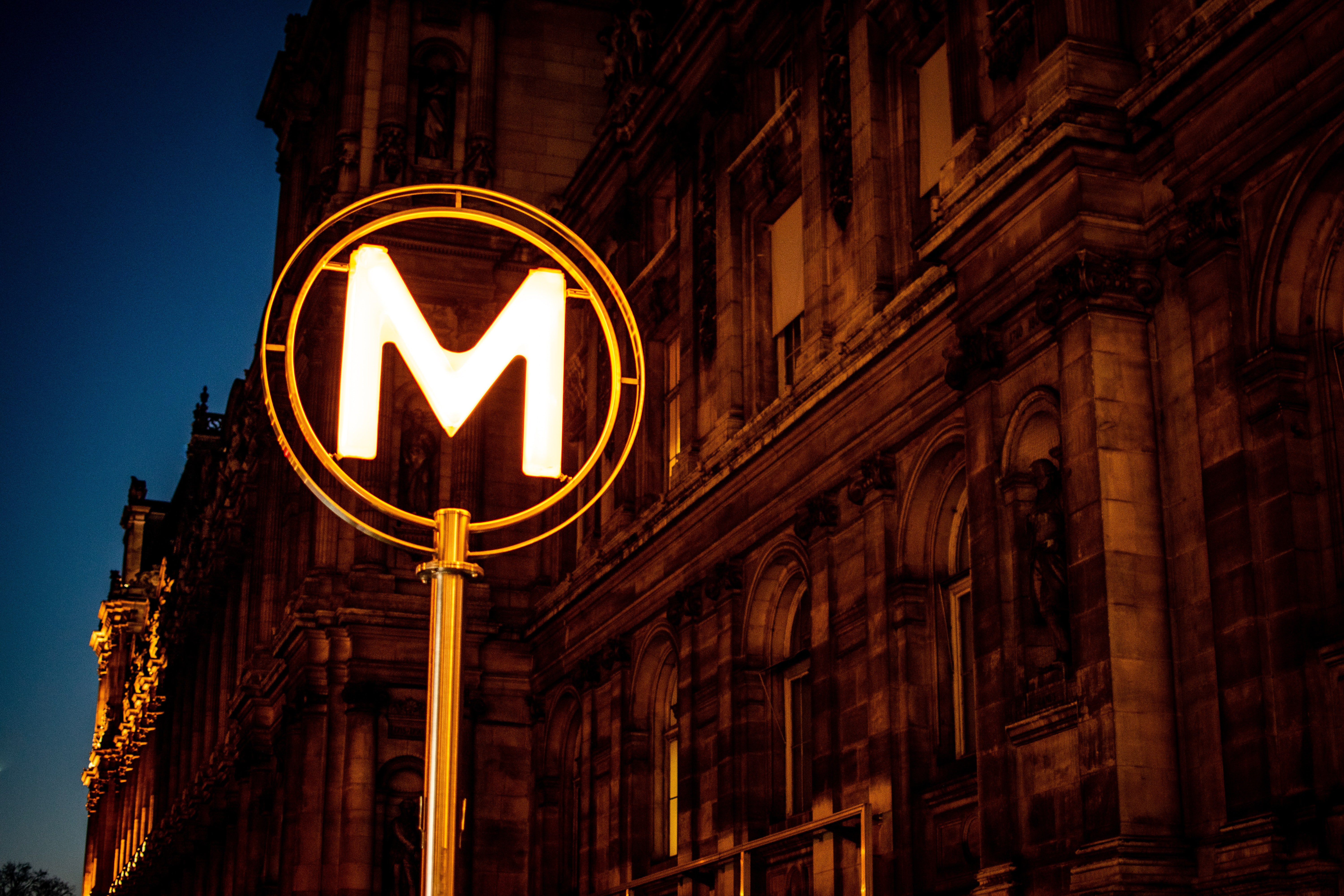
Parisians know the métro ("comme leur poche" - literally 'like their pocket' - or like the back of their hand). It's fast, cheap, and goes everywhere. Here's what they know that the guidebooks don't tell you.
In the station
On the escalator
Stand on the right, walk on the left. Stopping on the left can cost a commuter an hour — they may be catching a suburban train with long gaps between services.
At the turnstile
Have your ticket ready before you reach the barrier. Hold on to it for the whole journey — inspectors do board trains and check tickets in the metro corridors. On the RER suburban trains (if you're going to Versailles for example) you'll need it to exit the turnstiles when you arrive.
Boarding the train
Stand to the side as the doors open and let people off first, always. There's no formal queue to board, but a general sense of order prevails — don't push past those who were there before you.
Getting off the train
Don't stop the moment you step off — you'll cause a pile-up. Move to the side by the wall if you need to check a map or get your bearings.
Once you're on board
Near the doors
If you're standing near the doors at a busy stop, step out onto the platform to let people off — otherwise they're trapped behind you.
Phone by the doors - watch out
A known trick: as the doors buzz to close, someone on the platform or exiting the train snatches a phone from a passenger standing near the doors — and the train pulls away before you can do anything. Keep your phone in your bag or your inside pocket when you're near the doors. It happens.
Noise
Keep your voice down, skip the FaceTime, and if you're listening to music make sure it stays inside your headphones. The métro is a shared space — treat it that way.
The folding seats
Those fold-down seats near the doors are great when the train is quiet. When it fills up, fold yours away and stand — it's the done thing.
Give up your seat
For pregnant passengers, anyone with mobility difficulties, and the elderly. It's not a rule — it's just what you do.
Your bag
Wearing a backpack? Swing it off your shoulders and hold it by your legs once you board. You'll be amazed how much space that frees up — and how many other passengers you'll avoid annoying!
Spreading out
Don't manspread, and don't put your bag on the seat next to you if someone needs to stand. Parisians do this too — it's still rude.
Feet on the seats
Don't do it — it's considered disrespectful and you can actually be fined for it. Keep your feet on the floor where they belong.
A couple of extras worth knowing
If you have flexibility, avoid the rush hour crush: 8:00–9:30 et 18:00–20:00 are peak times. If you can't avoid them, lean into it — watching Parisians commute is a slice of daily life in itself.
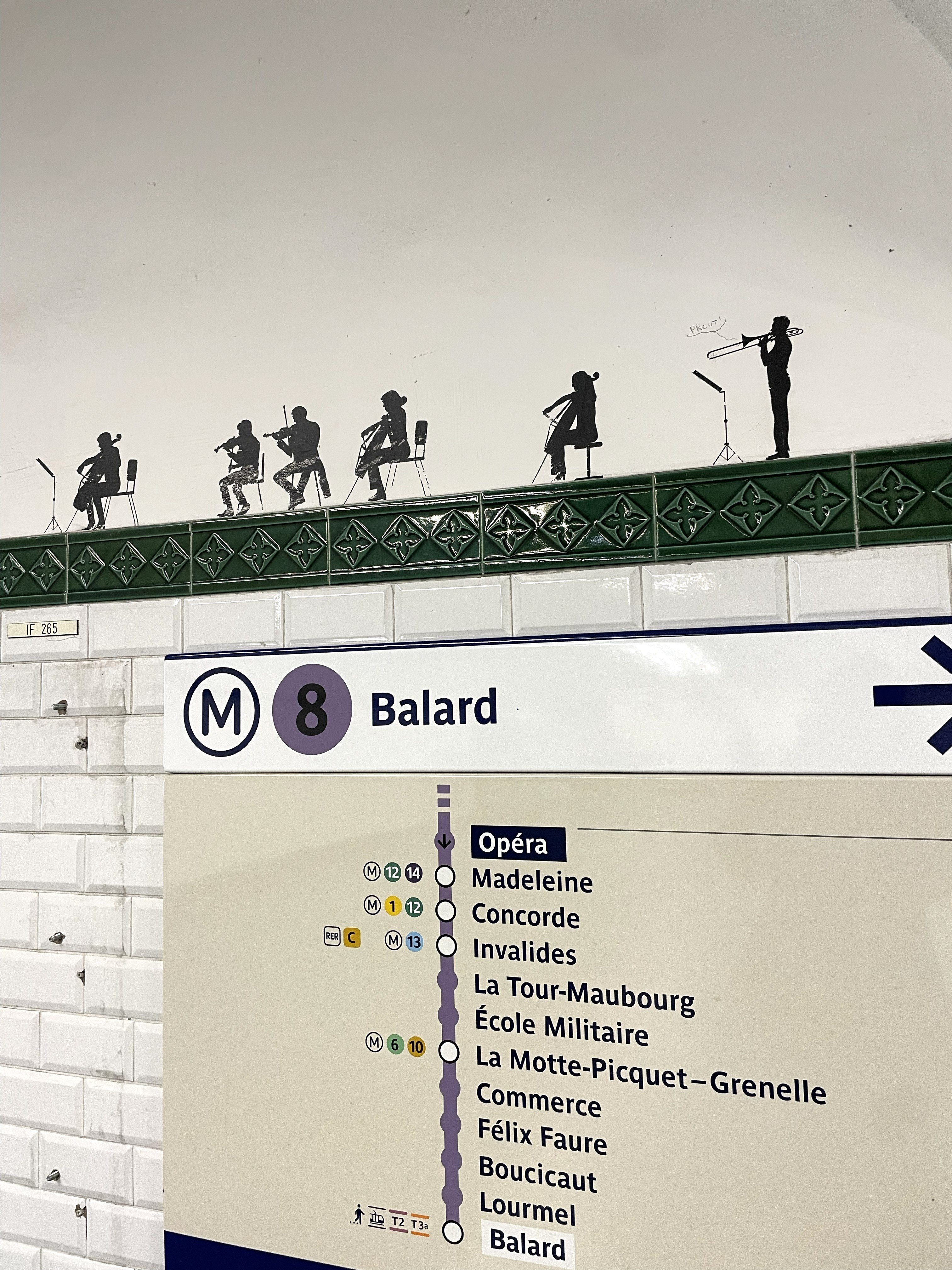
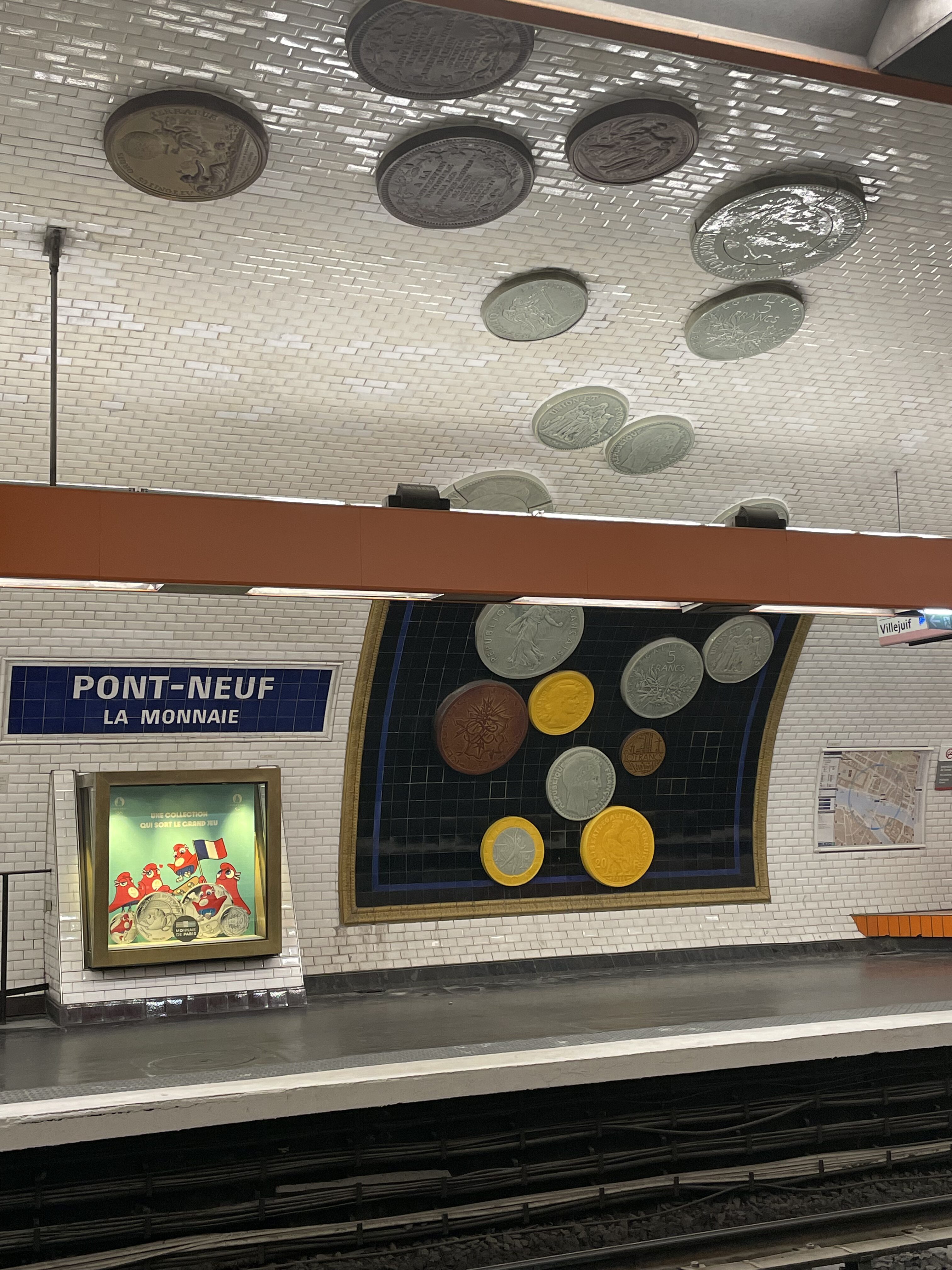
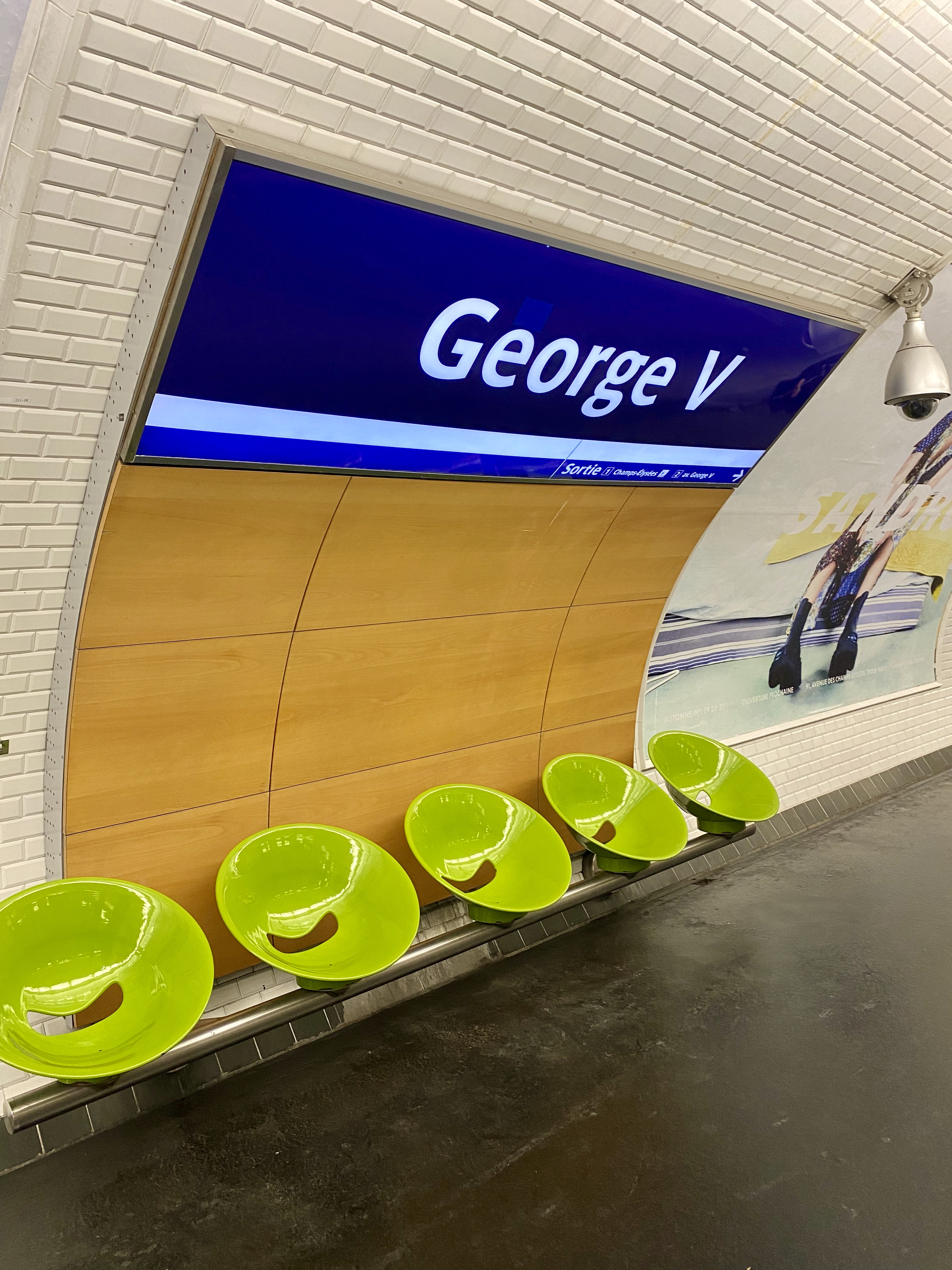
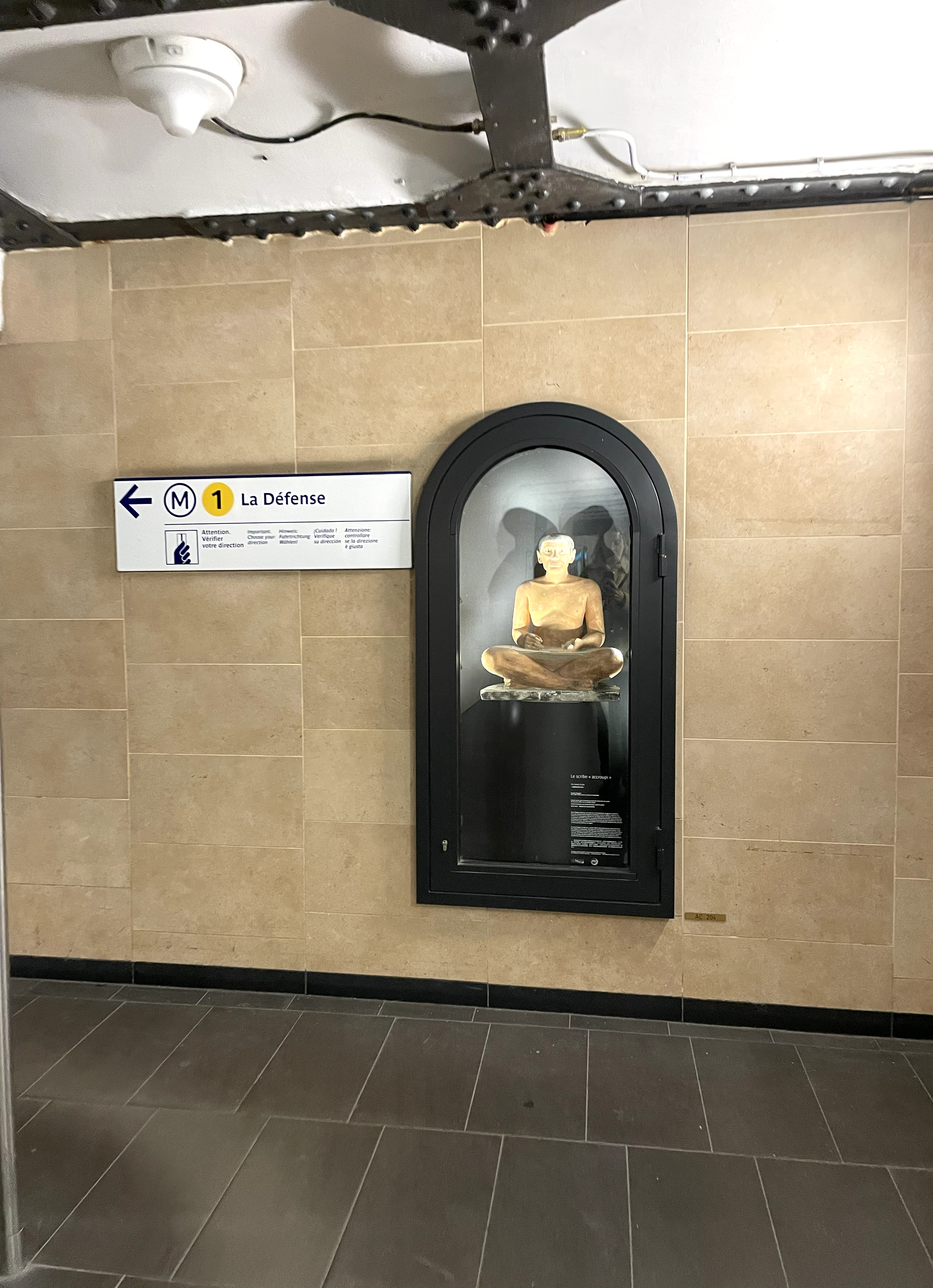
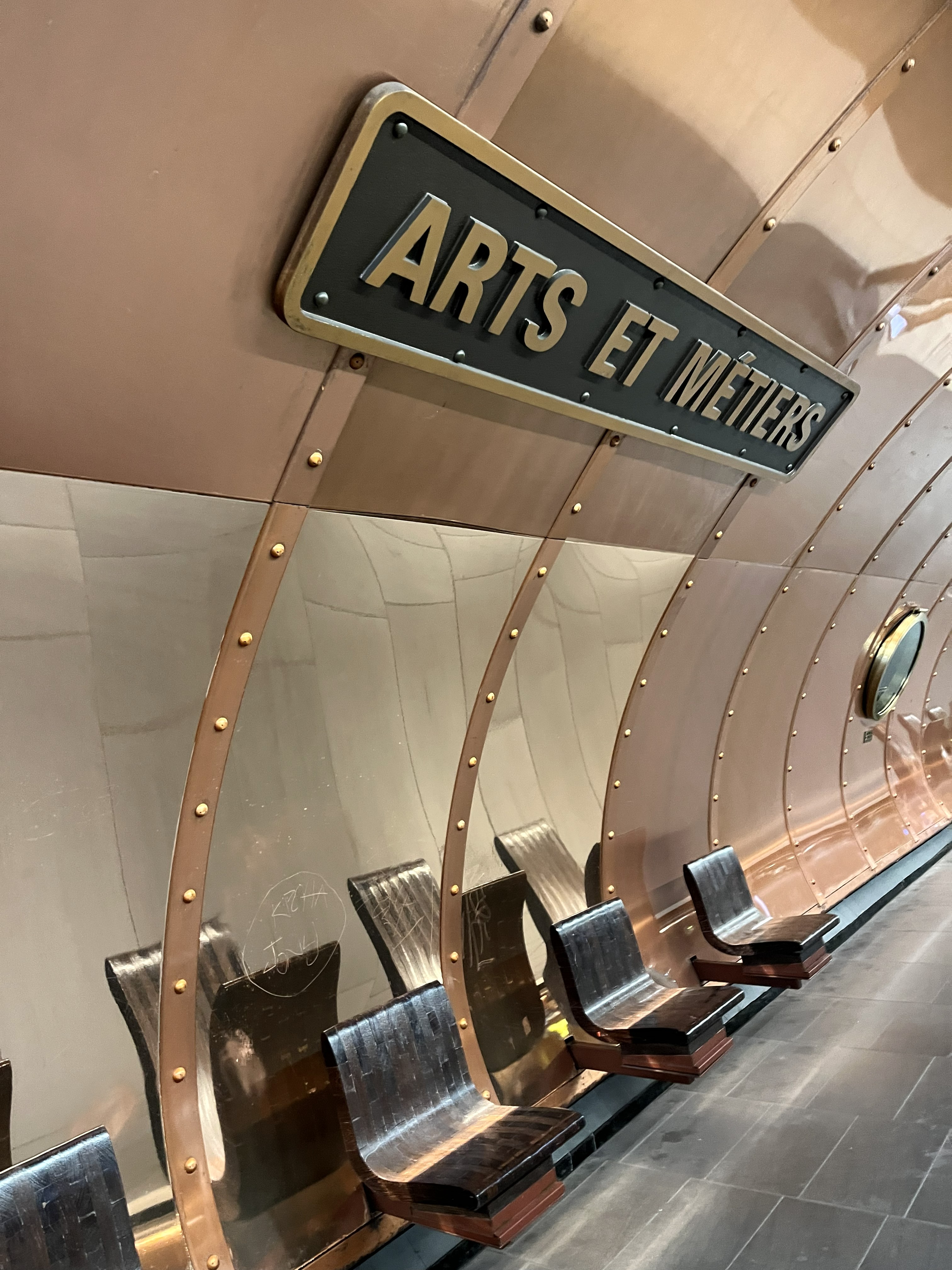
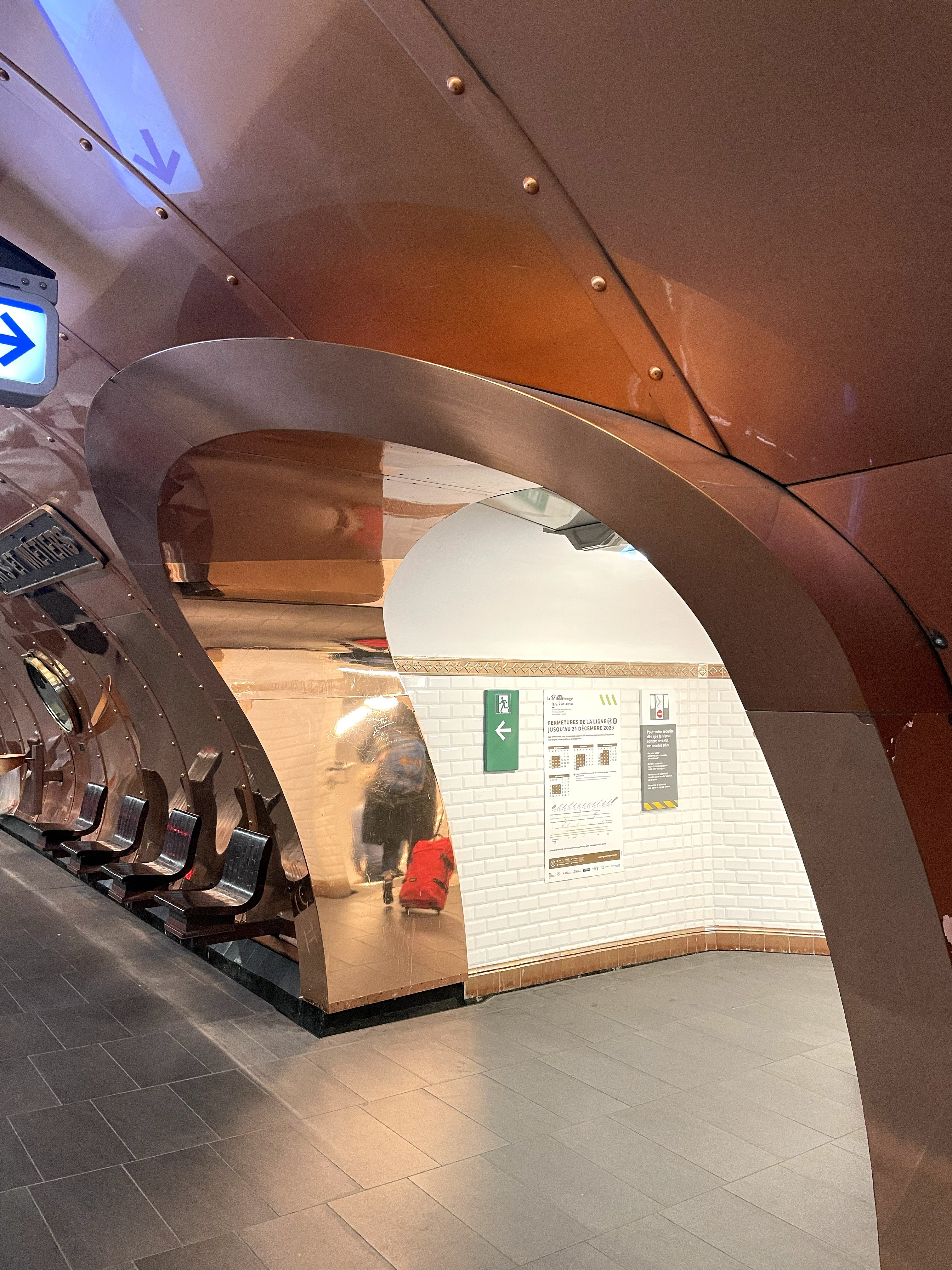
And while you're riding, look up. Station designers have had some fun over the years. Montparnasse traces the history of the métro itself; Saint-Germain-des-Prés is lined with books; Louvre-Rivoli has replica statuary. At Bastille, you can see actual foundations of the prison. At Vincennes, archaeological remains of the château.
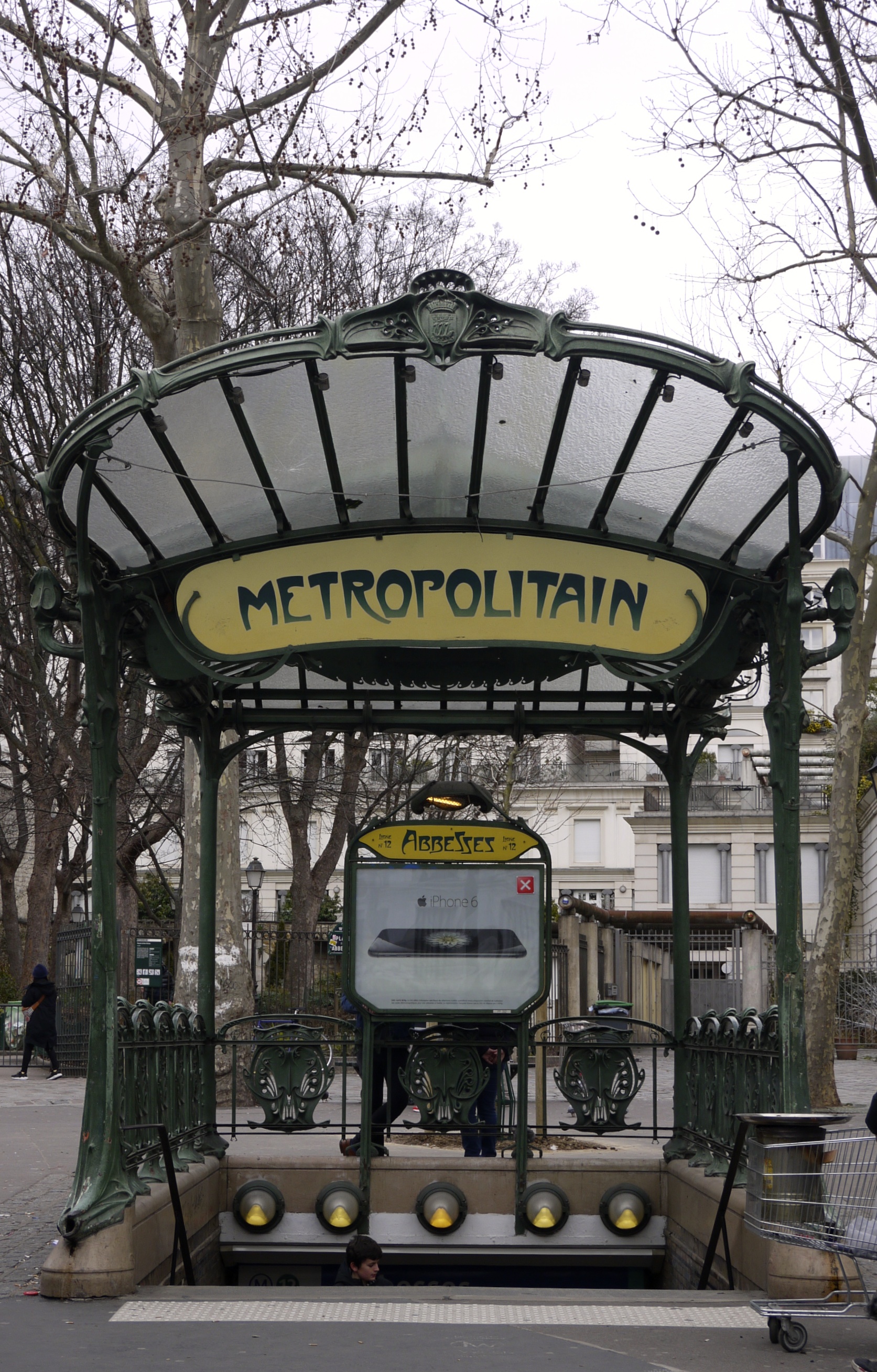
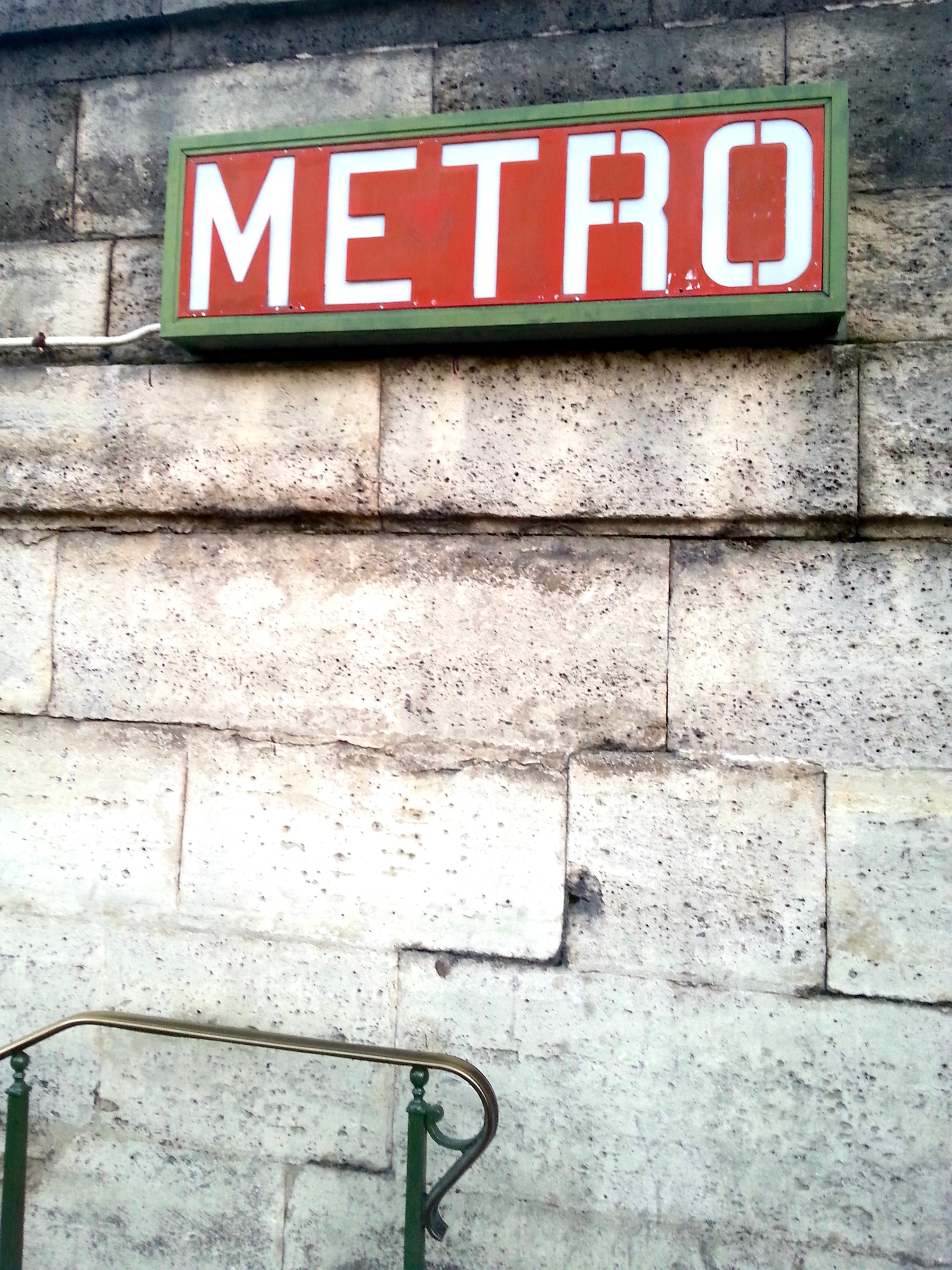
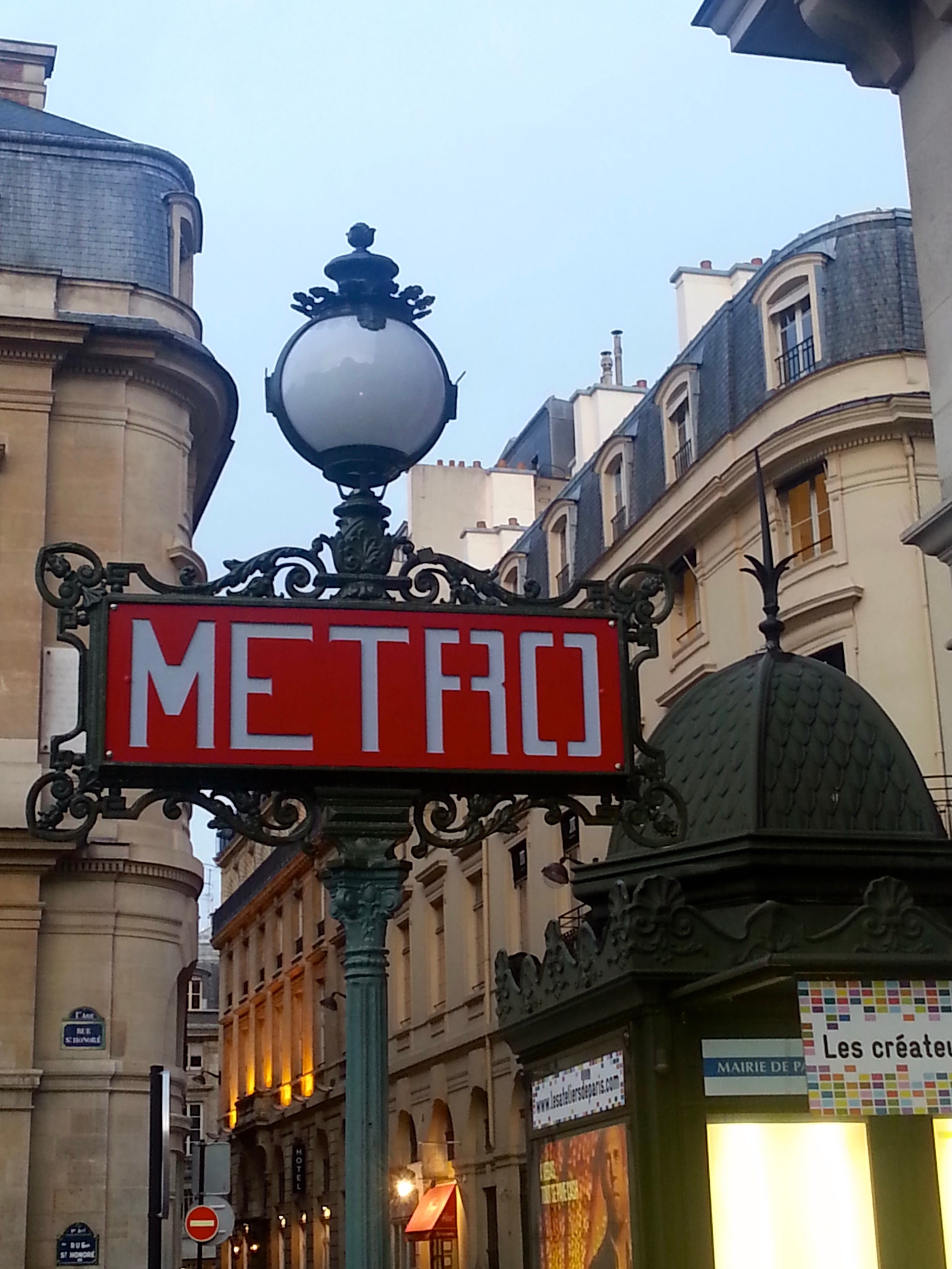
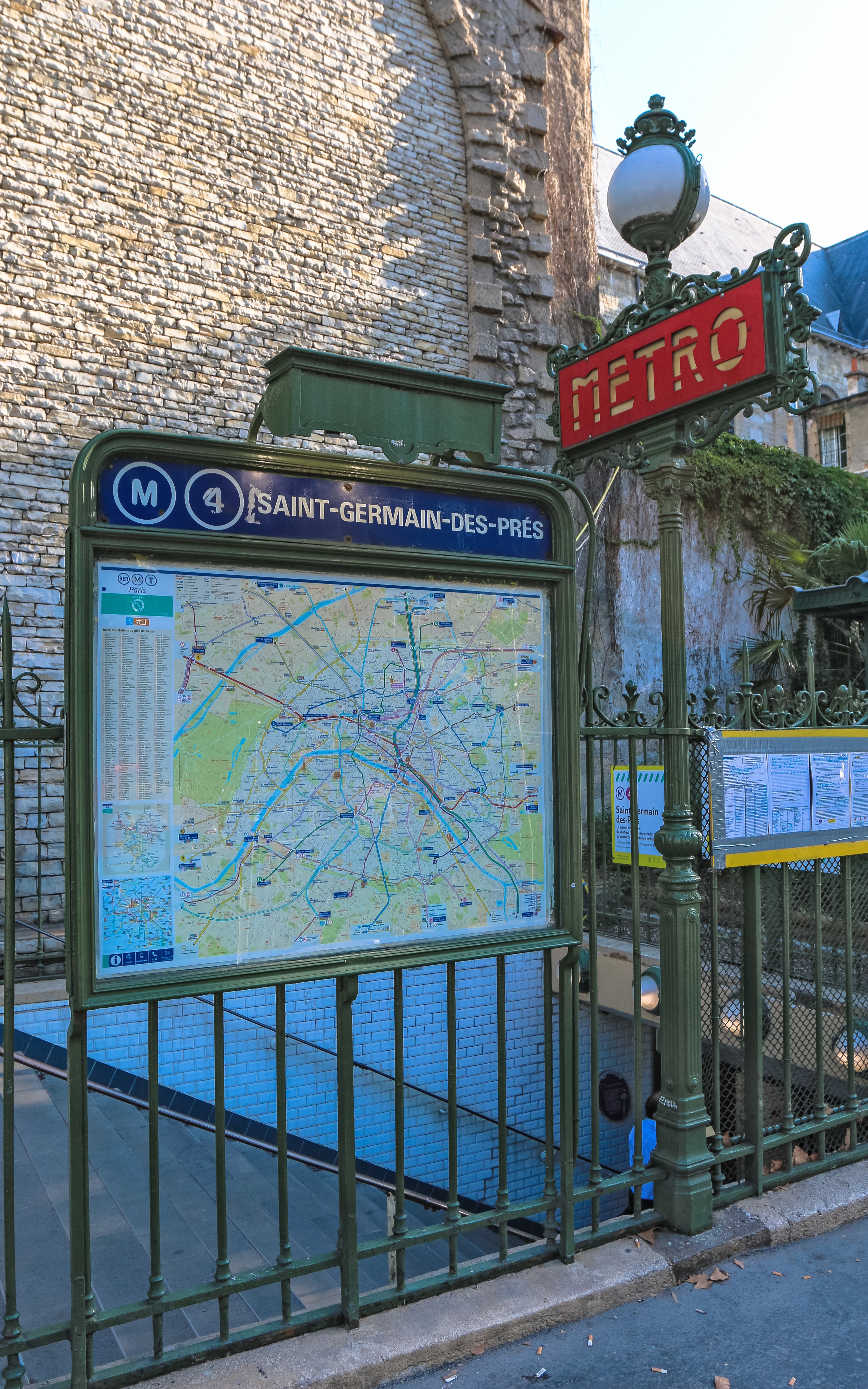
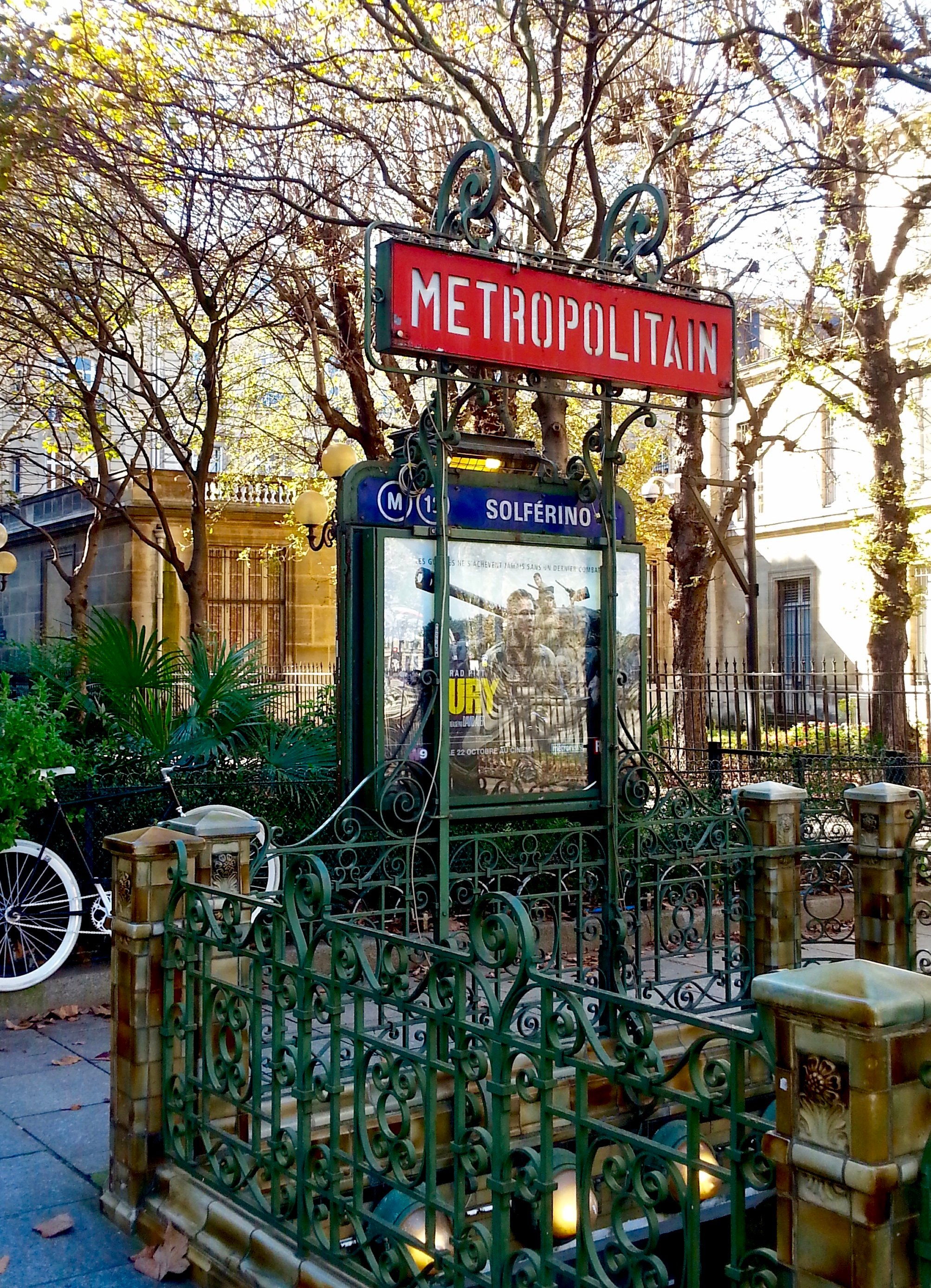
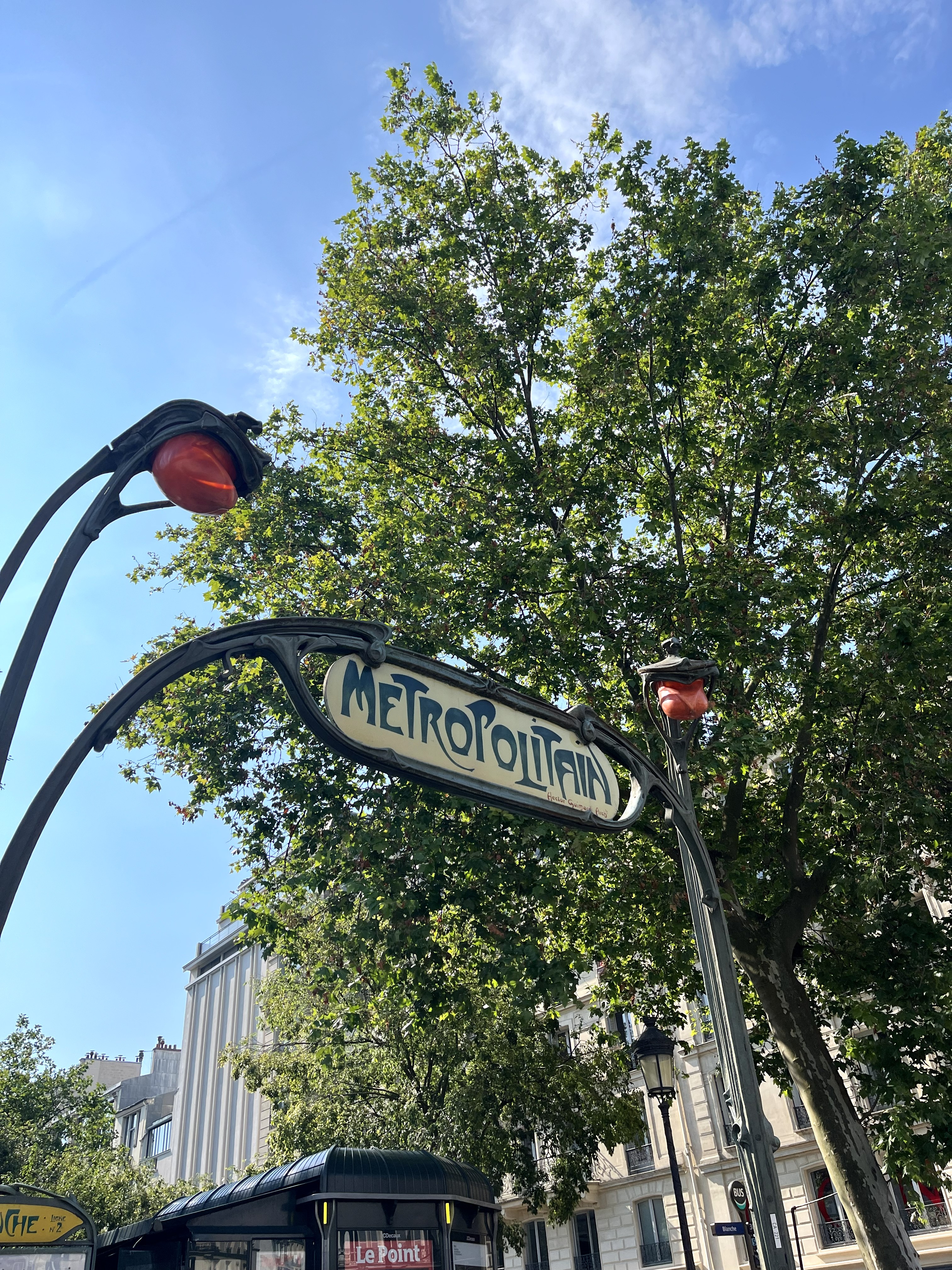
Before you even get underground — look at the entrance. The métro's street-level entrances are an art form in themselves, and hugely varied. The most famous are the sinuous art nouveau ironwork canopies designed by Hector Guimard at the turn of the last century — a handful survive, and they're worth seeking out. But across the network you'll find everything from bold modernist lettering to understated neighbourhood kiosks. We have a soft spot for some of the lesser-known ones, and we'll be sharing our favourites right here on the blog — along with photos — so watch this space.
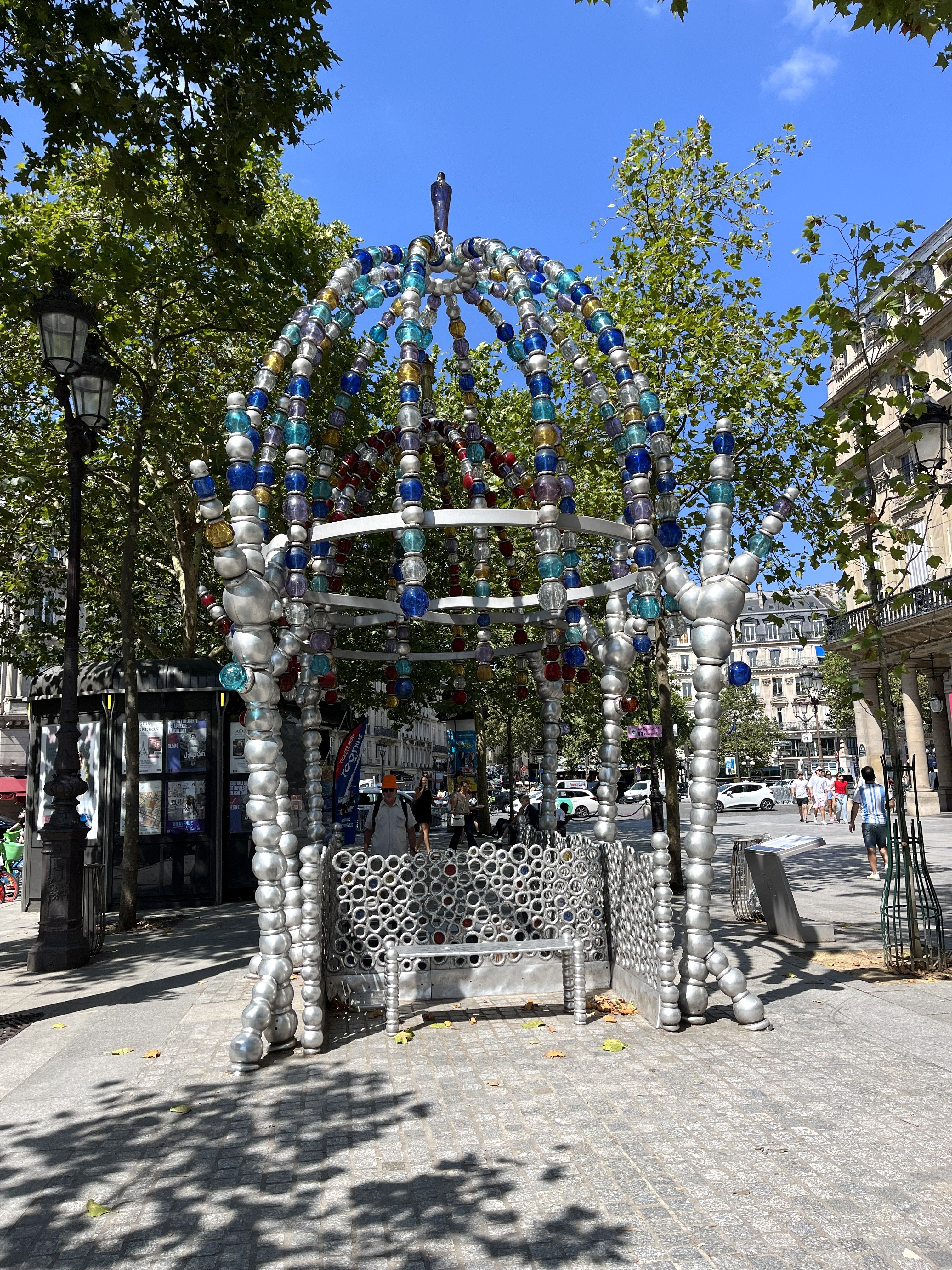
In the meantime, Abbesses station in Montmartre is a classic starting point: at 52 metres deep it's one of the network's deepest, and it has one of the original Guimard canopies still intact above ground. Worth a look even if you're just passing through.
We hope that helps your journey go "comme une lettre à la poste" — smoothly and without a hitch. See you out there!
If you're looking for tips about how to purchase tickets and navigate your way around, check out our comprehensive guide in our article de blog which will teach you everything you need to know!
Merci de votre attention. Merci d'avoir pris le temps de lire notre blog ! Nous sommes une petite société de tourisme basée à Paris qui privilégie une expérience personnelle dans une boutique où nous pouvons partager notre passion pour notre patrimoine et notre communauté avec chaque personne qui se joint à nous. Si vous souhaitez participer à une visite guidée, rendez-vous sur notre site Web. site web pour un voyage inoubliable dans la ville lumière. En outre, consultez nos médias sociaux @memories.france pour tout savoir sur Paris : de l'utilisation du métro aux cafés les plus proches de chaque grand monument, il y en a pour tous les goûts !
Angelissa, Siobhan et la famille Memories France
Si vous êtes à la recherche de conseils, d'itinéraires et d'informations sur Paris, consultez nos médias sociaux !
Vous aimez ce que vous voyez ? Lisez nos autres blogs ici !
- Was Marie Antoinette the World's First Fashion Influencer?She arrived at Versailles at fourteen and changed the history of fashion forever. In partnership with her designer Rose Bertin, Marie-Antoinette didn't just follow fashion — she made it, from the extravagant gowns that earned her the nickname Madame Deficit to the simple muslin chemise that scandalised a nation. Here's the story of the original style icon, and why her influence is still felt from the runways of Paris to her Petit Trianon at Versailles, where a major new exhibition celebrates Sofia Coppola's cult film right now.
- The Best Outdoor Museum Cafés in Paris for Summer - Gardens, Terraces and Hidden CourtyardsSeveral of Paris's best museums have gardens attached — and those gardens have cafés worth knowing about. Not just as a pitstop between galleries, but as places to sit, slow down, and make the afternoon last. Here are our favourites.
- Paris Summer 2026: Events, Exhibitions and What's On — July and AugustParis this summer: beaches on the Seine - plus swimming! - Bastille Day fireworks with 1,600 drones, the Tour de France racing up the hill in Montmartre, and four exhibitions worth rearranging your itinerary for. Here's our pick of the best things to do in Paris this summer.
- French Revolution Sites - Paris Landmarks You Can Still Visit TodayStep back into one of history’s most dramatic chapters by exploring the places where the French Revolution unfolded. From the former prison of the Conciergerie to the vast gardens of the Tuileries, the elegant streets of Le Marais and the Palace of Versailles, many of the Revolution's most important landmarks can still be visited today. This guide takes you through the key sites, bringing their stories to life and helping you discover the people, events and hidden details that shaped modern France.
- Les mystères du métro — votre guide pour le prendre comme un ParisienLe métro parisien est rapide, bon marché et dessert toute la ville — mais il a ses règles tacites. Voici le guide des initiés pour le prendre comme un vrai Parisien, sans commettre d'impair.