

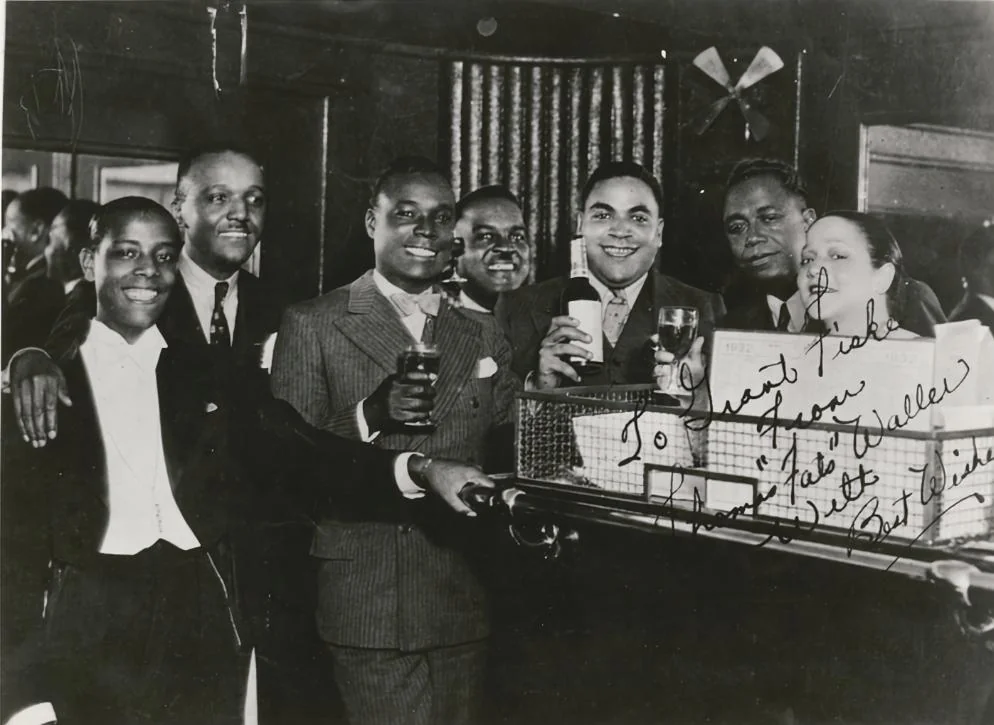
Black History Month is a time to celebrate and explore the people, stories, and cultural movements that have shaped cities around the world — and Paris is no exception. Paris’s glory has been profoundly enriched by her Black residents, among them American expats: poets, musicians, artists and so much more. February offers the perfect opportunity to pause and discover some of the names and places from Black culture that have marked the capital’s past (and present), starting with a one-time cabaret called Bricktop’s and the remarkable woman who gave it her name.
From the Great War to the Jazz Age
To begin, we need to go back to the Great War and its aftermath. Some 200,000 Black troops had to fight for their right to go into battle armed, judged by the colour of their skin. When the Armistice was signed in 1918, they took to the streets playing their military instruments in celebration.
This was France’s love at first hearing. The syncopated rhythms and improvised complexity of jazz sparked a love story that would endure for more than a century — and still echoes today in the legendary jazz clubs of the Rive Gauche.
With peacetime, only a few of those troops stayed on. Yet despite the contradictions of France’s colonial empire, Black American expats found in Paris a thriving creative community — a heady sense of freedom far from the entrenched racism they knew at home.
A 1923 interview with author Jessie Fauset sums it up: “I like Paris because I find something here, something of integrity, which I seem to have strangely lost in my own country. It is simplest of all to say that I like to live among people and surroundings where I am not always conscious of “thou shall not.” […] I have fled from it.
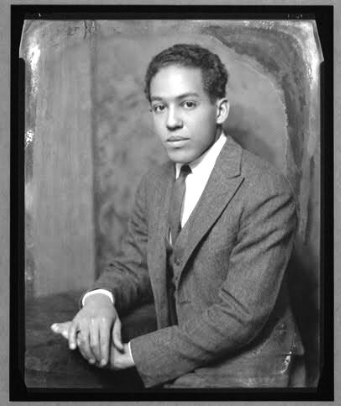
Langston Hughes 1923 —from “Langston Hughes: Poems, Biography, and Timeline of his early career”
Langston Hughes described that world as “the very whirling heart of Parisian nightlife— Montmartre where topsy-turvy no one gets up before seven or eight in the evening, breakfast at nine and nothing starts before midnight. Montmartre of the Moulin Rouge, Le Rat Mort and the famous night clubs and cabarets! The colored jazz bands and performers are about the only ones doing really well here".
So enamoured were they that many sent word home for friends to join them.
Enter Bricktop
Among those who received such a telegram was a vaudeville performer with the regal name Ada Beatrice Queen Victoria Louise Virginia Smith.
Born to a formerly enslaved mother, she had bright red hair that earned her the nickname Bricktop. A proud Leo, she liked to say she was “really a lion all right.”
Raised with her mother’s advice — “Think big and you’ll do big” — she performed as a teenager on the vaudeville circuit in Illinois. Audiences were drawn not only to her flaming hair but to her charm, timing, and stage presence.
As composer Fritz Loewe later said:
“There’s no one in the world with the timing and phrasing of Bricktop, and the funny thing about it, Brick don't know what she's doing".
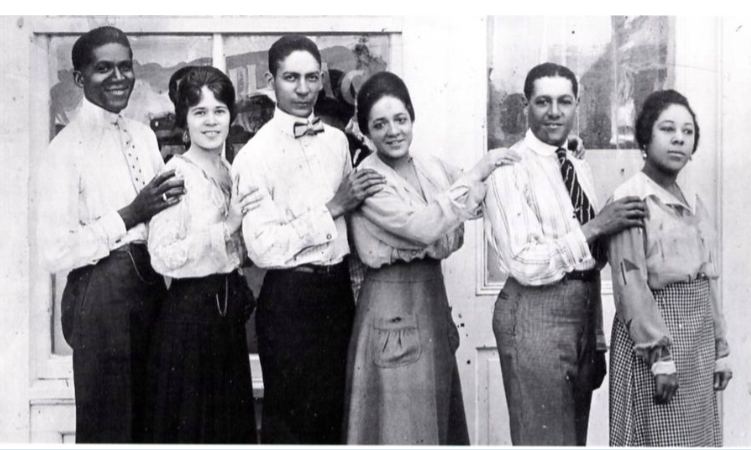
Ada "Bricktop" Smith fourth from left, 1917-18 with Jelly Roll Morton. Photo Wikipedia user Infrogmation
Arrival in Paris
Fate intervened when she received an invitation from Eugene Bullard, the famed Black pilot and expat who ran the club Le Grand Duc at 52 rue Pigalle. She accepted a six-month contract.
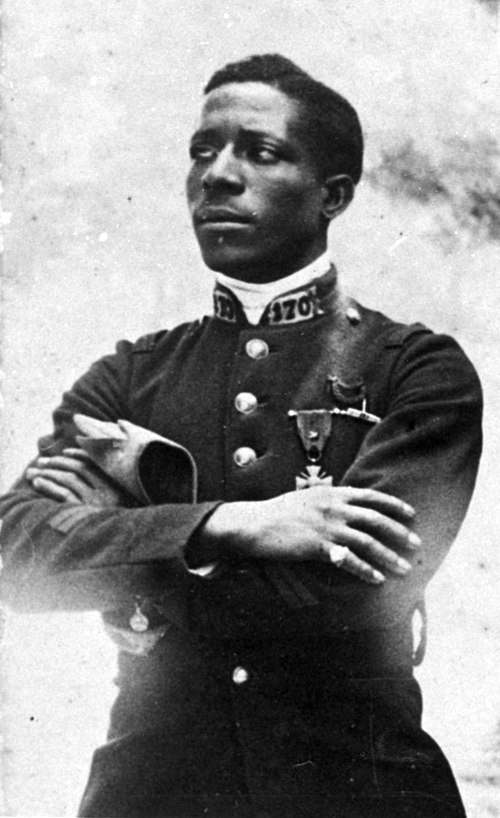
Eugene Bullard. Photo: Wikipedia user Sus scrofa
Her arrival in Paris in May 1924 was far from glamorous. Seasick after eleven days at sea, she arrived under grey skies, lost her purse containing her life savings of 25 dollars, and found the club to have a grand total of 12 tables. She broke down in tears. A busboy named Jimmy Hughes comforted her with kind words and some food. He would later make his own mark with the first name of Langston. She opened to an empty house and within days she was rushed to hospital with appendicitis.
Yet she stayed.
She took a room at 36 rue Pigalle, in what was then the beating heart of Black Montmartre — around rue Pigalle, rue Fontaine, rue des Martyrs and rue de la Trinité. What was meant to be six months became fifteen years.
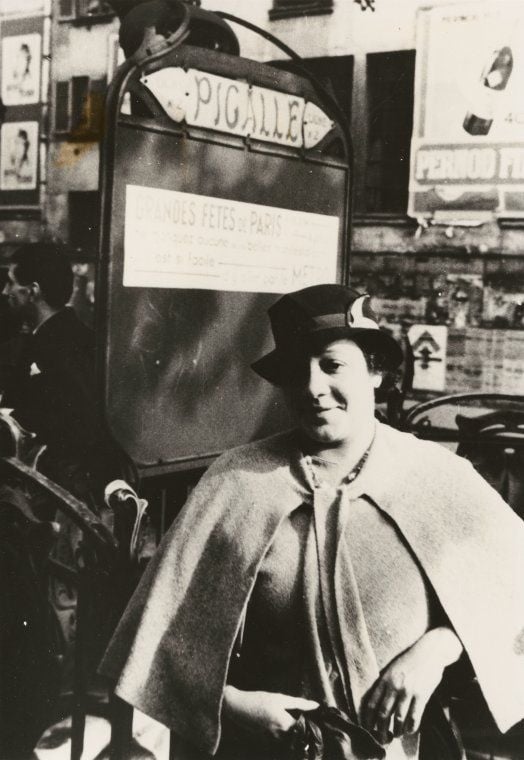
Bricktop at the Pigalle Metro, photo: New York Public Library
Langston Hughes later wrote of her, referring to her opening night sobs:
“Two years later, when she had all the royalty of Europe at her tables, she wasn't crying."
Bricktop’s: The Club That Defined an Era
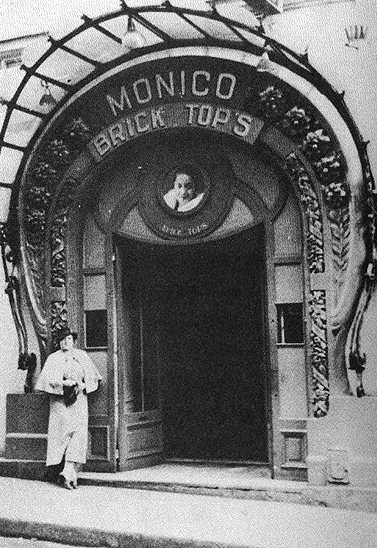
Ada "Bricktop" Smith outside Brick Top's, in the old Monico nightclub, in Paris. Photo: NYPL digital collections
In 1926, Bricktop opened her own club at 66 rue Pigalle. She preferred to call herself not a cabaret owner but a “saloon keeper.”
It was the first address of many of the club’s incarnations that served as the quarter’s poste-restante, club, bank and practice hall, for artists from Montmatre, Montparnasse, and then the world over.
Its popularity wasn’t entirely due to the many functions of the place but to her talents: It started with her “singing feet” as one writer friend put it. “I have to give the Charleston the credit it deserves for launching me on my career as a saloonkeeper.. . . It caught on and I caught on… »
She hired only the best, legends such as:
- Django Reinardt
- Louis Armstrong
- Fats Waller
- Sidney Bechet
- Duke Ellington, whom she launched, before his Cotton Club days
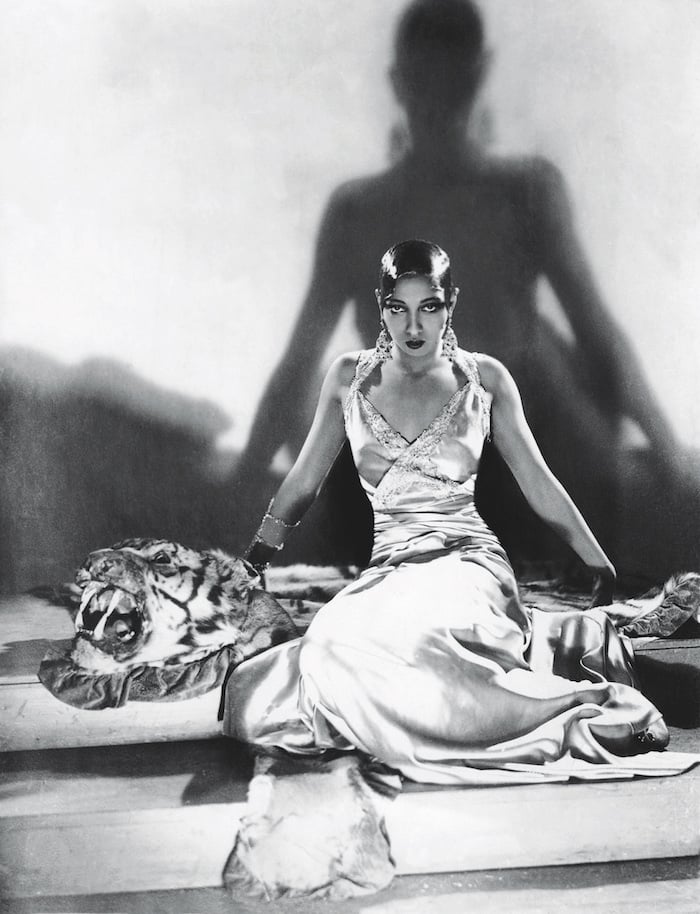
Josephine Baker, Photo: Shutterstock (francetoday.com/travel/paris/in-the-footsteps-of-josephine-baker/)
One night she needed to call on the understudy of a star who was too drunk to perform. This was none other than one Josephine Baker of whom she said:
“Josephine arrived with no education or anything, I stopped her from signing autographs and I told her, ‘Get a stamp, and stamp 'em,” “but she died a woman that knew all about books and paintings and a very highly-educated girl and also became a great actress.” “Josephine Baker couldn't do wrong. She couldn't do wrong, she was such an artist.”
After Bricktop’s death, Baker’s son confirmed the longstanding rumors of a love affair between the two remarkable women.
Elegance and Celebrity
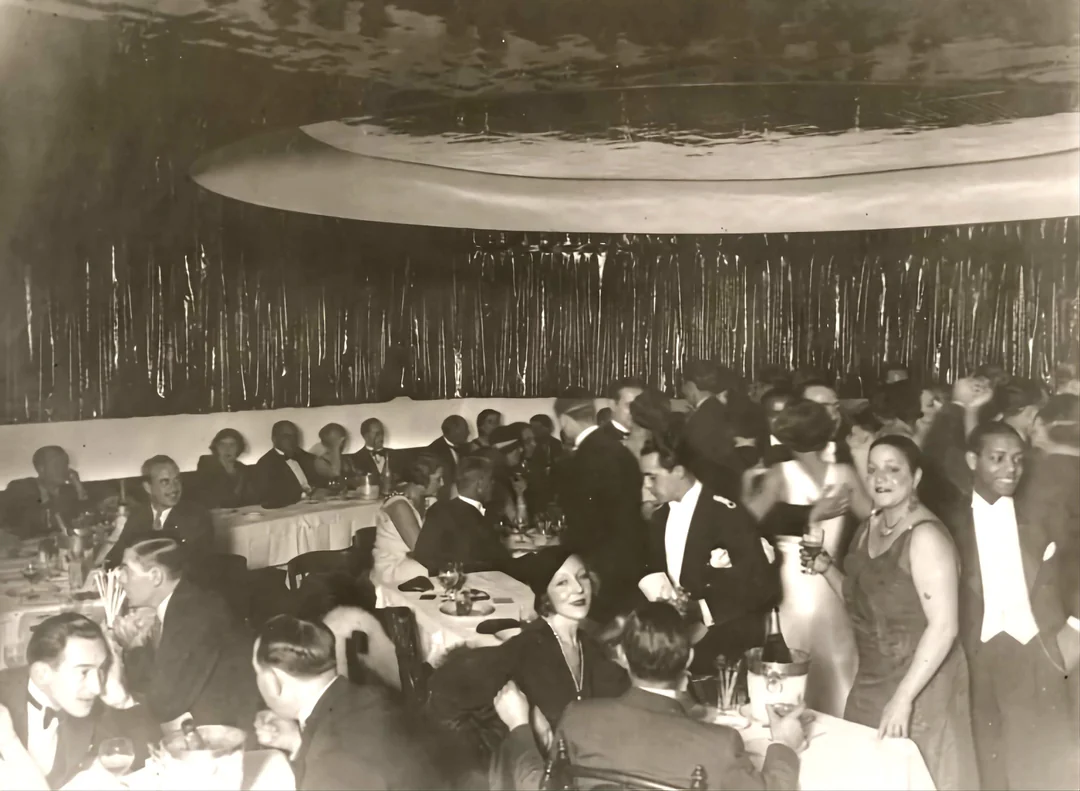
Interior, Brick Top's (Bricktop pictured at right) 1932 Photo: NYPL digital collection
Bricktop’s became the place to see and be seen. Evening dress was required, and she enforced it firmly.
Guests included:
- The Prince of Wales (later Edward VIII) and Wallis Simpson
- Zelda and F. Scott Fitzgerald
- Cole Porter
- T. S. Eliot
- Pablo Picasso
- Salvador Dalí
- Gertrude Stein
- Fred Astaire
- John Steinbeck
Steinbeck was once thrown out for ungentlemanly behaviour and begged forgiveness by sending a taxi filled with roses.
This was better than Hemingway at least. Not only did he never succeed in getting back into her good graces, he rarely got into the club itself, mainly because of his meanness to Scott Fitzgerald, a close friend of hers.
Her friendship with Scott Fitzgerald marked both of them. “I can tell you some stories about Scott, but that’s nobody’s business,” Bricktop said in a 1975 interview with Studs Terkel.
She does, though, tell the tale of how Scott and Zelda had been detained for fountain jumping on the Champs Elysées. Pleading with the gendarmes, Fitzgerald vaunted his friendship with Bricktop, but the forces of order refused to believe it. “Madame Bricktop wouldn't know anyone like you.” They brought him to the club all the same, drenched to the skin and dripping all over the floor. She wouldn’t let him in, but she did vouch for him, and he and Zelda thus avoided arrest.
Years later Scott would write about those days in “Babylon Revisited,” His autobiographical protagonist “passed a lighted door from which issued music, and stopped with the sense of familiarity; it was Bricktop’s, where he had parted with so many hours and so much money.” The writer even declared his “greatest claim to fame” was not The Great Gatsby but “that [he] discovered Bricktop before Cole Porter.”
Indeed, he was not only one for whom she was muse.
Cole Porter was first among them. She recalled that he penned “’Day and Night’ and ‘Lover for Sale’ and a lot of those, his great hits, practically right in my place.” “Then walked in one night and told me that he'd written ‘Miss Otis Regrets’” - just for Bricktop.
T. S. Eliot wrote Bricktops for her.
Django Rheinhardt and Stéphane Grapelli wrote the song Brick Top together in tribute to their patron.
The Woman Behind the Counter
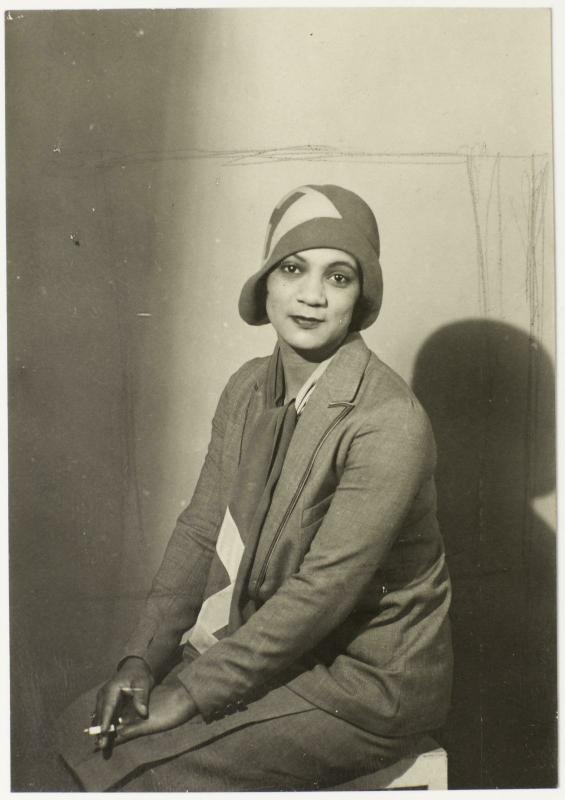
Bricktop by Man Ray. Photo: Collection Pompidou
Bricktop is remembered seated behind the counter and puffing a cheroot while making up the books, occasionally calling out a request for a particular tune to the musical acts on stage or directing the waiters to which tables. And then they’d ask her to sing - almost always Cole Porter’s “Love for Sale,” in her signature recitative style.
Her style and personality both shone, making her a doyenne of cafe society, and successful enough to sport dresses by Elsa Schiaparelli and Cartier diamonds. As was said of her:
“She made several fortunes, so they say, and lost them, or spent them. Or maybe gave them away, the godness [sic] of her heart being almost a legend in Montmartre.” and she said of herself “I became Bricktop, the one and only.”
Despite the glamour, she was famously proper. No vulgar expressions ever crossed her lips, Even in the midst of a nervous breakdown, the doctors had to outright prescribe outbursts of foul language her to evacuate her stress. She refused. The doctors ordered her : “Start saying ‘No, go to hell.’ ‘I don’t swear,’ I said. Then he gave me some really good advice. ‘When it’s raining, walk in the rain and just scream out loud whatever you feel.’
“Well it rains a lot in Paris, especially in the mornings, and it was in the mornings after a night of running Bricktop’s that I’d go out. . . . I’d be screaming very nicely and my face would be all wet and the rain streaming down over my cheeks, and I’d feel much better. . . . I’d watch the window shutters open, the concierges come out and start sweeping the sidewalks, the flower and fruit vendors opening their stalls. They didn’t pay any attention to the crazy little woman walking along screaming at the top of her voice. The people of Montmartre understood and never complained. Once in a while a stranger would hear me and inquire of one of the gendarmes, and he’d answer, ‘Oh, that’s just Madame Bricktop getting rid of her nerves.’”
War and Departure
This breakdown happened during the Great Depression, when so many of the Lost Generation, her primary clientèle, had returned back to the States. She weathered that storm, but not 1939 and the ominous rise of a fascist populist in Germany. Fleeing the black booted goosesteps, Bricktop left Paris just months before World War II broke out which ushered in such a dark time for Paris. fifteen years after her broke and seasick arrival.
Like her adopted home however, Bricktop was unsinkable and created various versions of her famous Montmartre premises in Rome, New York, and Mexico City.
Twenty five years before the turn of the millenium, Studs Terkel asked her, “Dont you want to hit the year 2000?” “No, sweetheart. Oh, no. I've had it. And I've loved every minute of it.”
She got her wish. In 1984 she passed peacefully in her sleep. She was 89 years old.
Remembering Bricktop’s Paris
The world has changed since Bricktop’s Paris days, even if the more things change the more they stay the same “Plus ça change…”
But when you go to Montmartre and especially the rue Pigalle, have a thought for her in all her redheaded and refined glory. Have a thought too for the Black community who surrounded her and lifted her up, the very voices and souls and talents that helped bring Jazz and its Black artists their French and thus international reputation.
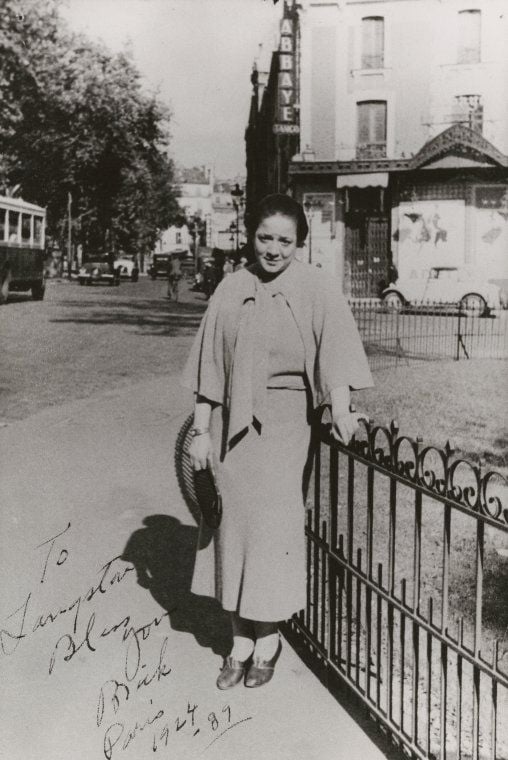
Ada "Bricktop" Smith in Paris, France. Phto Credit NYPL digital collections.
Explore Montmartre Today
Bricktop's has sadly been demolished, but Montmartre remains one of the most fascinating neighbourhoods to explore when visiting Paris. Spend a day wandering its streets, and let the stories of its artists, musicians and dreamers guide you.
As for where to go, when, and what to do — the Memories family has you covered.
See our guide for a perfect day in Paris’s favourite artists’ quarter.
Merci de votre attention. Merci d'avoir pris le temps de lire notre blog ! Nous sommes une petite société de tourisme basée à Paris qui privilégie une expérience personnelle dans une boutique où nous pouvons partager notre passion pour notre patrimoine et notre communauté avec chaque personne qui se joint à nous. Si vous souhaitez participer à une visite guidée, rendez-vous sur notre site Web. site web pour un voyage inoubliable dans la ville lumière. En outre, consultez nos médias sociaux @memories.france pour tout savoir sur Paris : de l'utilisation du métro aux cafés les plus proches de chaque grand monument, il y en a pour tous les goûts !
Angelissa, Siobhan et la famille Memories France
Si vous êtes à la recherche de conseils, d'itinéraires et d'informations sur Paris, consultez nos médias sociaux !
- Le Mois de l'histoire des Noirs à Paris : Jazz, Montmartre et la légende de BricktopLe Mois de l'histoire des Noirs est le moment idéal pour découvrir les artistes, musiciens et écrivains noirs qui ont contribué à façonner le Paris moderne. Des rues jazzées du Montmartre des années 1920 au légendaire cabaret Bricktop's, découvrez l'histoire d'Ada “Bricktop” Smith et de la communauté dynamique qui a fait de la capitale française un havre de créativité, de liberté et de vie nocturne.
- Choses à faire à Paris quand il pleut : Musées, passages couverts et cafés chaleureuxLes jours de pluie à Paris ne sont pas forcément synonymes d'enfermement. En fait, ils peuvent être l'occasion de découvrir la ville dans une atmosphère des plus agréables. Des musées de renommée mondiale aux joyaux cachés, des passages couverts historiques aux cafés accueillants aux fenêtres embuées, Paris brille même lorsque le ciel est gris. Que vous visitiez l'hiver ou le début du printemps, ce guide regorge de conseils pratiques et de coups de cœur locaux pour vous aider à rester au sec, au chaud et inspiré - et à profiter de Paris dans ce qu'elle a de plus intime, de plus réfléchi et de plus silencieusement beau.
- Guide local des passages couverts de ParisQuittez les rues animées de Paris et pénétrez dans ses arcades cachées - les passages couverts. Construites au XIXe siècle, ces élégantes galeries vitrées étaient autrefois les rues commerçantes les plus chics de la ville, remplies de boutiques, de cafés et de charme. Aujourd'hui, elles sont parfaites pour flâner, découvrir des boutiques d'artisans et profiter de méandres tranquilles à l'écart de la foule. De la Galerie Vivienne au Passage Choiseuil, chaque passage a son histoire et ses trésors. Ce guide vous montrera les passages incontournables, les joyaux cachés et les astuces locales afin que vous puissiez explorer Paris comme un véritable initié.
- Marie-Antoinette portait-elle vraiment un bateau dans ses cheveux ?Les coiffures de Marie-Antoinette étaient bien plus que des déclarations de mode extravagantes. D'imposants poufs couronnés de navires, de symboles et d'allégories faisaient de sa chevelure une scène pour la politique, le patriotisme et la construction de l'image royale. Des victoires navales aux messages codés sur le pouvoir, la fertilité et la loyauté, les cheveux de la reine racontaient des histoires que les spectateurs du XVIIIe siècle savaient exactement comment lire, bien avant que le scandale ne les réduise à la caricature.
- Promenades secrètes de Noël à Paris : 6 quartiers magiques à explorer cet hiverParis brille à Noël - mais la vraie magie se trouve au-delà des grands boulevards. Laissez-nous vous emmener dans les quartiers authentiques de notre ville et vous montrer le côté charmant et local de Paris pendant les vacances d'hiver. Habillez-vous, laissez les touristes derrière vous et suivez-nous !