
Découvrez les secrets, les boutiques et l'histoire qui se cachent dans les passages couverts de Paris.
Sortez des boulevards parisiens animés et vous vous retrouverez peut-être en train de remonter le temps. Où ailleurs qu'à Paris le shopping peut-il être considéré comme une expérience d'immersion culturelle ? Grâce aux passages couverts, la thérapie par le shopping dans des boutiques pittoresques et originales devient un passe-temps riche en histoire et l'un des secrets les mieux gardés de la capitale.
Construites au XIXe siècle comme d'élégants raccourcis pour les flâneurs fortunés, ces arcades aux toits de verre étaient destinées à la flânerie, au shopping et à l'observation des gens, le tout à l'abri de la pluie (ou de la chaleur estivale). Aujourd'hui, elles sont toujours pleines de caractère, avec des librairies à l'ancienne, des boutiques spécialisées et des cafés accueillants qui invitent à la flânerie. Accompagnez-nous dans ces joyaux cachés et découvrez pourquoi les passages couverts restent l'une des façons les plus agréables d'explorer Paris.
Passages couverts - Qu'est-ce que c'est ?
Tout d'abord, un peu d'histoire pour bien comprendre ces joyaux cachés que sont les arcades.
Météo à Paris : Pluie et autres
Une chose n'a pas changé depuis qu'ils font partie du paysage parisien, à la fin du XVIIIe siècle : les nuages au-dessus de la Ville Lumière s'ouvrent plus souvent qu'on ne le voudrait.
De plus, porter un parapluie était considéré à l'époque comme une faiblesse féminine, craignant l'humidité sur ses cheveux amidonnés. Les hommes virils se passaient de ces accessoires ridicules et supportaient les averses avec une bonne humeur stoïque.
En outre, les rues de Paris n'ont été pavées qu'au milieu du XIXe siècle, lors de la rénovation urbaine d'Haussman. Si les pavés existaient depuis le Moyen Âge et même les Romains, ce n'est que vers 1850 que le granit et le bois ont commencé à recouvrir les rues animées de la capitale, dans un vacarme épouvantable.
Qu'avez-vous fait ? avant d'éviter la pluie et les éclaboussures de boue - voire de se faire carrément écraser - par les chevaux et les voitures, et d'échapper au vacarme assourdissant qu'ils faisaient ?
L'immobilier et la révolution
Juste après la Révolution, les propriétaires ont été bouleversés. Les propriétés religieuses et aristocratiques sont dissoutes, détruites et les terrains vendus, ouvrant la ville aux spéculateurs.
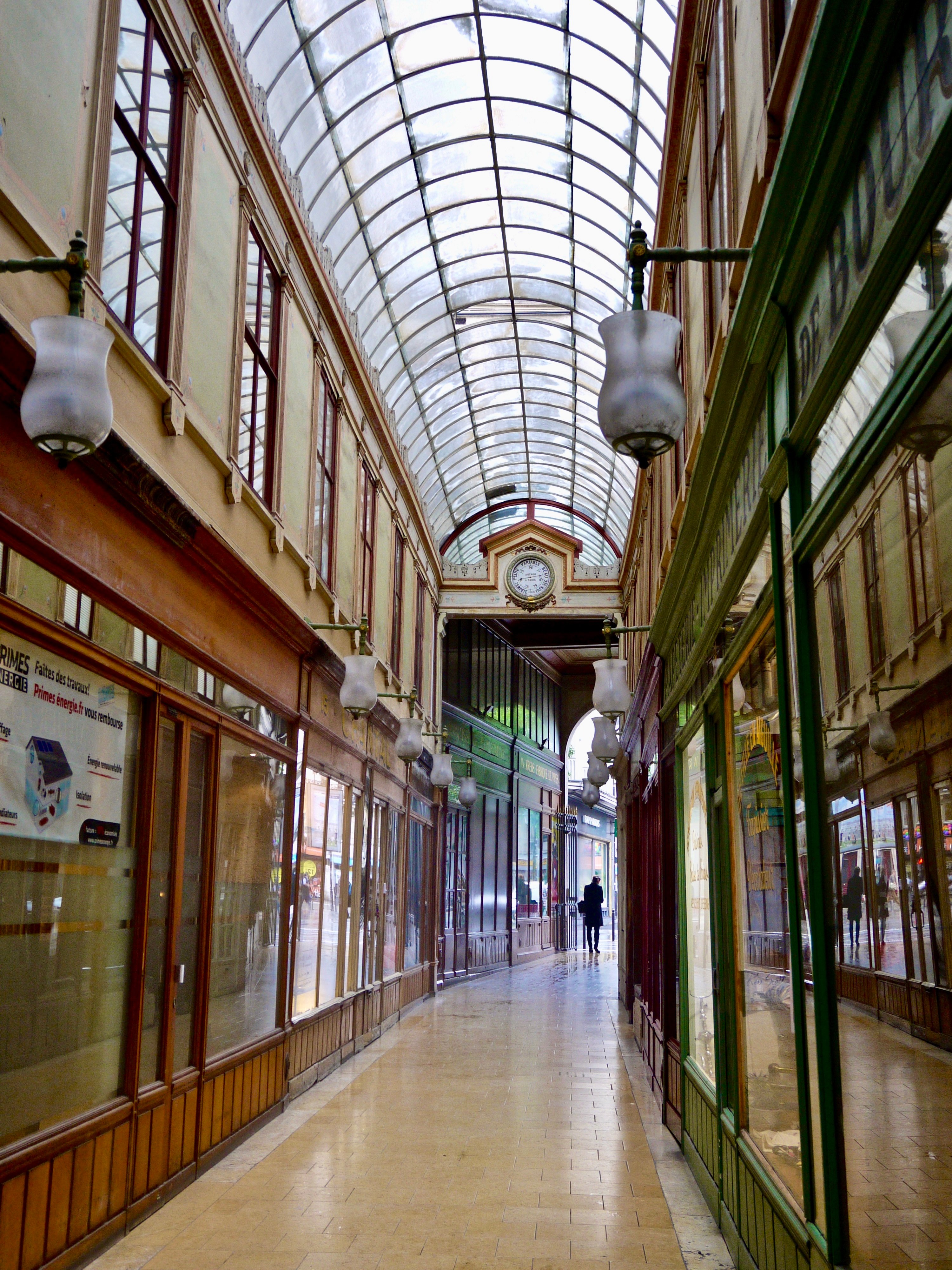
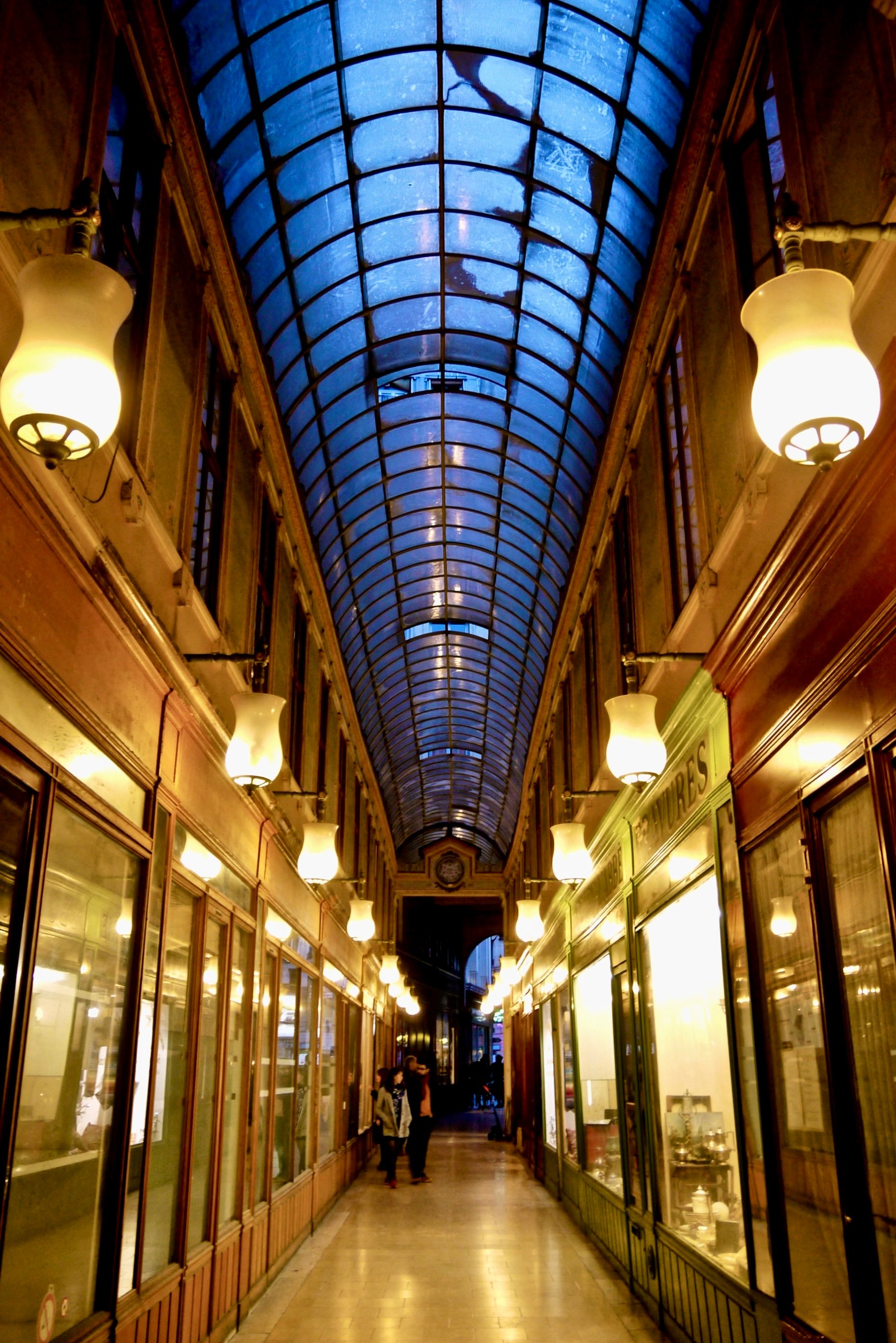
Nombre d'entre eux ont eu l'idée astucieuse de découper des passages couverts de boulevard populaire en boulevard populaire, où l'on peut emprunter des raccourcis plus propres, plus tranquilles, plus agréables, à travers des ruelles pavées et bordées de boutiques.
Des revêtements de verre et de ferronnerie à la pointe de la technologie empêchent l'inévitable temps pluvieux et permettent d'éviter la boue des rues principales. L'éclairage artificiel le plus moderne permettait de mieux voir les jours sombres, et les heures d'ouverture étaient plus longues.
Quoi de neuf ?
Les gens se réunissaient dans les cafés pour prendre des nouvelles - il était même possible de louer un journal au lieu de l'acheter, si nécessaire. Les vitrines des caricaturistes présentent des satires mordantes de la scène politique du moment.
Vous pouviez également vous renseigner sur ce qui se passait dans d'autres villes, car les diligences gardaient souvent leurs chevaux de poste ici. Les visiteurs de la ville, ou les voyageurs en transit, se dégourdissaient les jambes et étaient prêts à discuter.
On y trouve souvent des théâtres et on peut y suivre les spectacles les plus populaires du moment.
Au milieu du 19e siècle, on comptait plus de 150 de ces proto-malls.
Personnalisation et clients
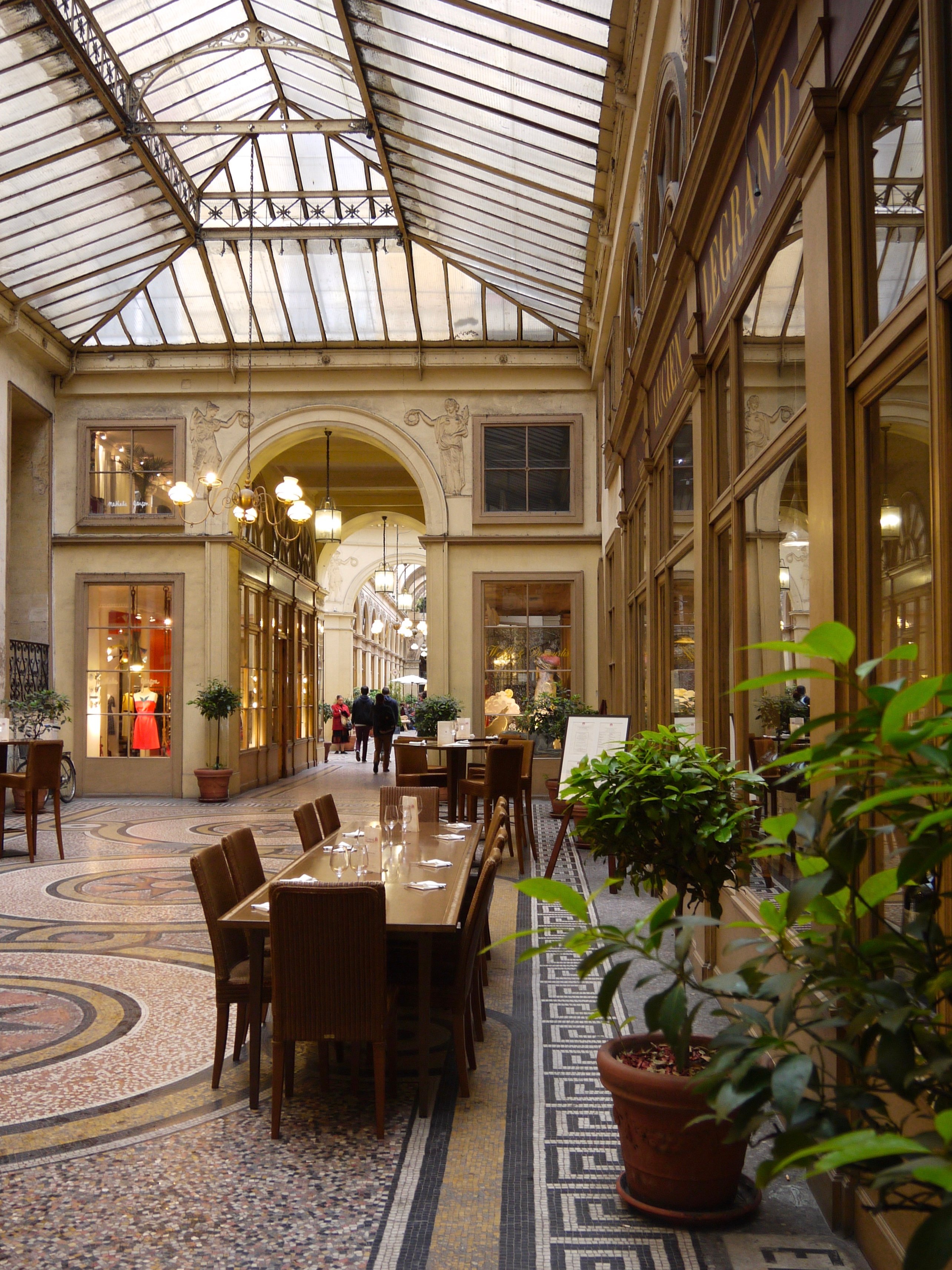
C'est dans ces couloirs couverts que les façades vitrées des magasins ont donné naissance à des passe-temps appelés lèche vitrine, ou “léchage de vitrine”, autrement appelé "lèche-vitrine".
Avec les étiquettes de prix affichées derrière la vitre protectrice des magasins spécialisés, ce monde est différent de l'ancien commerce de quartier médiéval, avec ses annonceurs qui vendent leurs produits et le marchandage qui va avec.
Ici, des commis bien habillés et courtois attendent le client comme s'ils pouvaient tous être des aristocrates renversés.
Comment ils ont été oubliés
Puis vint la refonte de la ville par le baron Haussman avec les gares et les grands magasins, tous phénomènes du Nouveau Paris qui sonnèrent le glas de ces espaces.
Longtemps laissés à l'abandon, ces lieux atmosphériques sont devenus des capsules temporelles, des beautés endormies oubliées. Il en reste une trentaine, chacune avec son caractère et son histoire. Voici un ensemble d'entre eux, facilement accessible à pied, qui se situe approximativement entre le Louvre et la Bourse.
MAINTENANT, FAISONS DU SHOPPING !
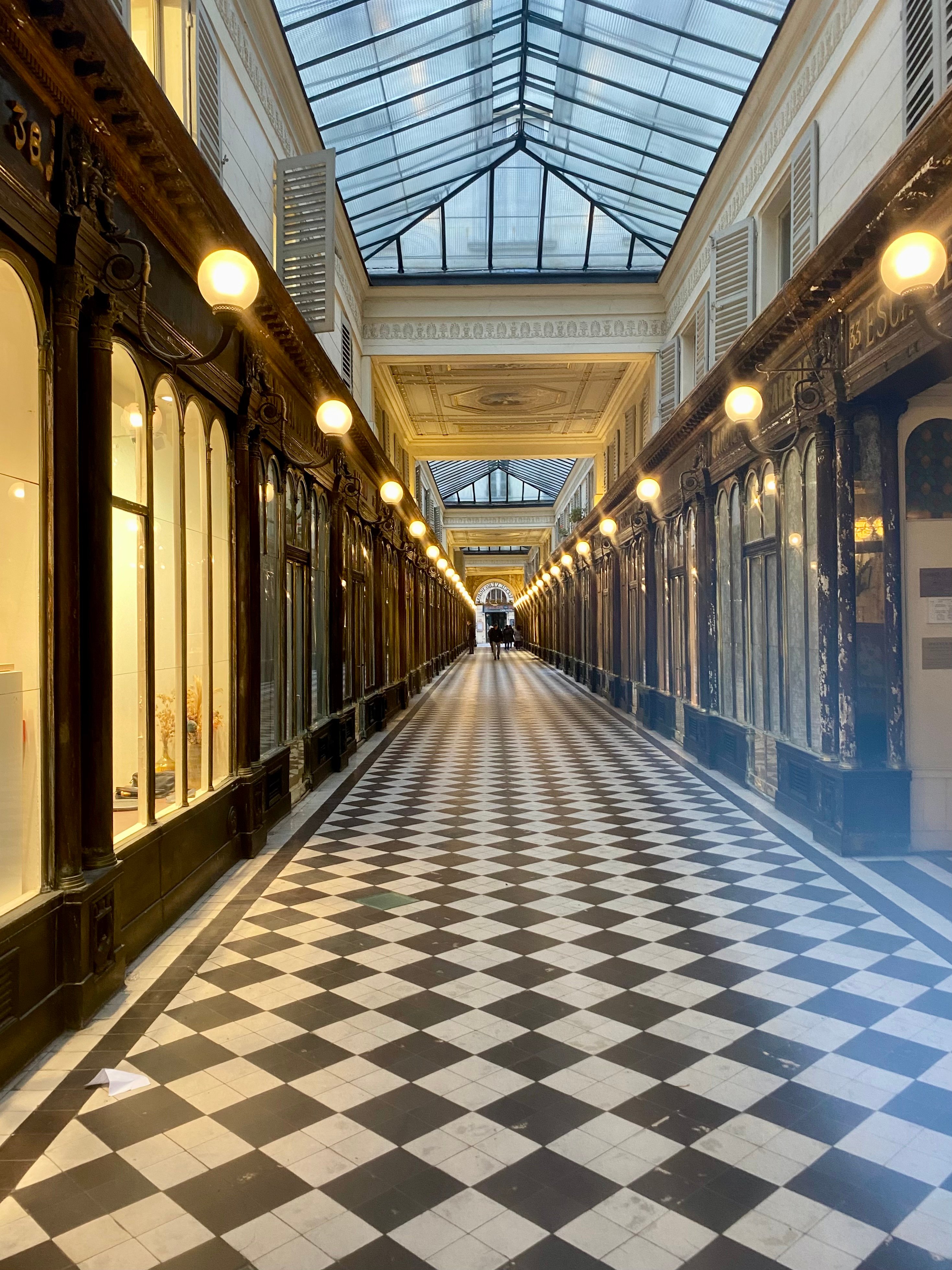
1. Galerie Véro Dodat

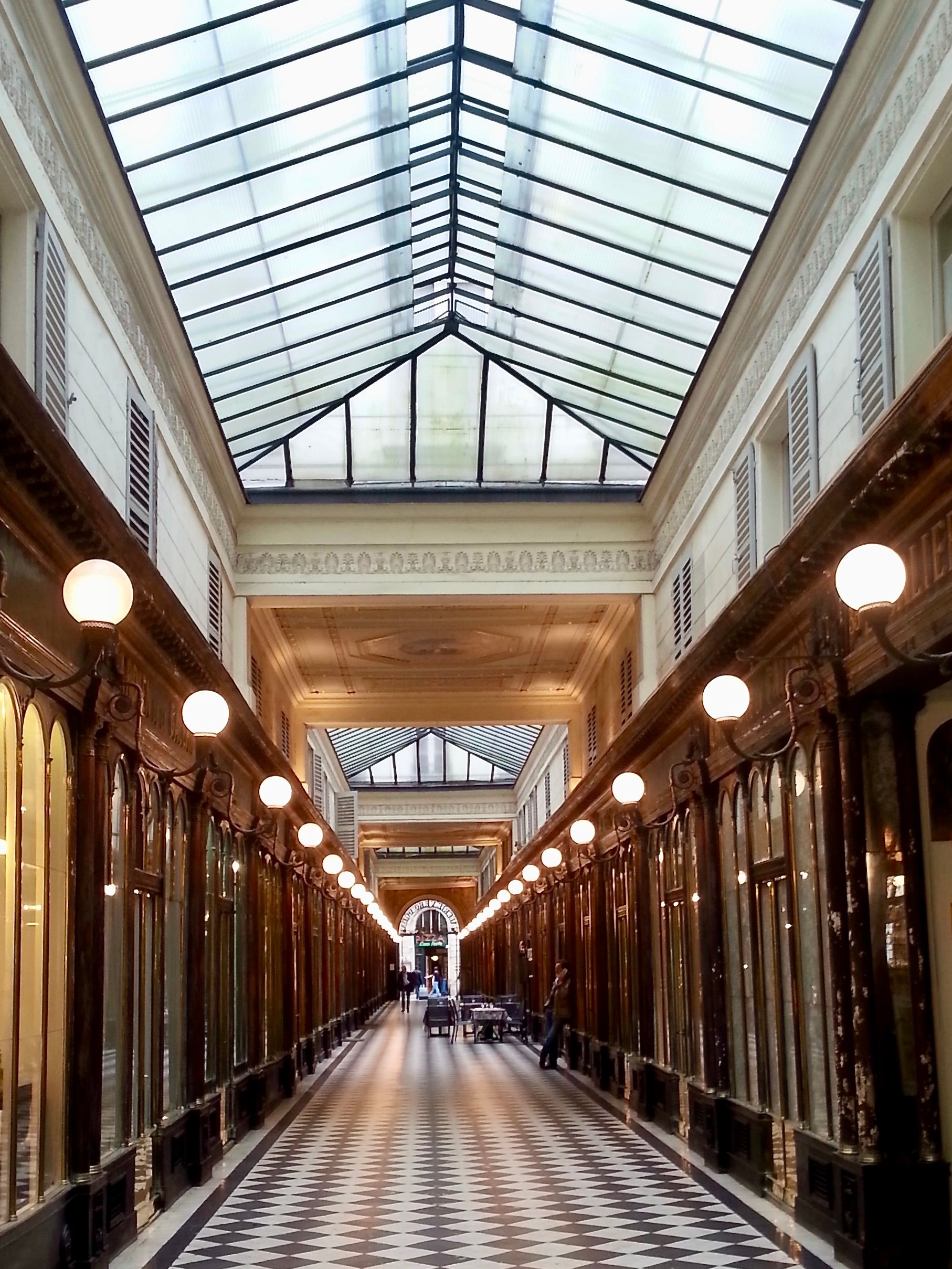
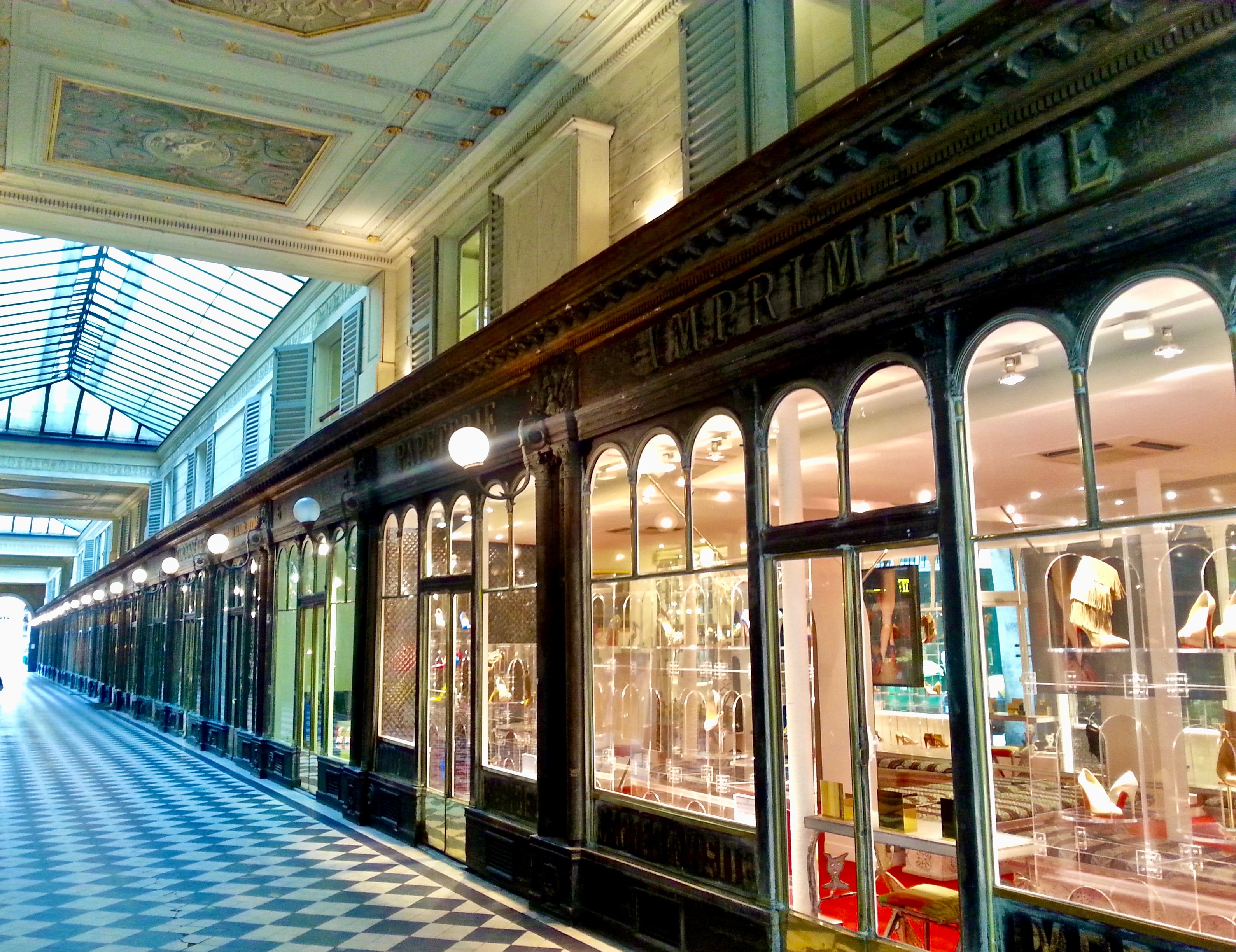
Notre premier arrêt se situe entre les métros Louvre Rivoli- Palais Royal, l'éternellement chic Galerie Véro-Dodat datant de 1826, soit deux siècles.
Deux bouchers entreprenants, Véro et Dodat, décident d'acheter le terrain des rues du Bouloi et Jean-Jacques-Rousseau, créant ainsi un agréable raccourci entre le Palais Royal, très à la mode, et ce qui était à l'époque le marché central de la ville, les Halles.
Son sol de marbre en forme de losange noir et blanc semble vous inviter à poursuivre l'exploration et offre un grand confort par rapport aux planches de bois, aux pavés et à la boue omniprésente, sans parler du vacarme des fers à cheval et des roues sur les pavés.
Ce lieu semblait être un havre de paix, chaque devanture étant encadrée comme un tableau entre deux colonnes doubles, divisées par des éclairages à globe (à l'origine au gaz) qui scintillaient sur les séparations en verre plat, donnant aux produits présentés une allure magique.
La statue d'Hermès avec son casque ailé à l'entrée de la rue de Bouloi, dieu des marchands, annonce d'emblée qu'il s'agit d'un espace dédié au shopping. Son compagnon, un satyre au repos, pourrait être un clin d'œil à un autre type de commerce souterrain qui se déroule dans les chambres louées au-dessus.
La Meryl Streep de sa génération, Rachel, habitait au n° 23 (quelques parisiens chanceux logent encore à l'étage supérieur : on peut voir la cage d'escalier d'époque menant à des appartements privés).
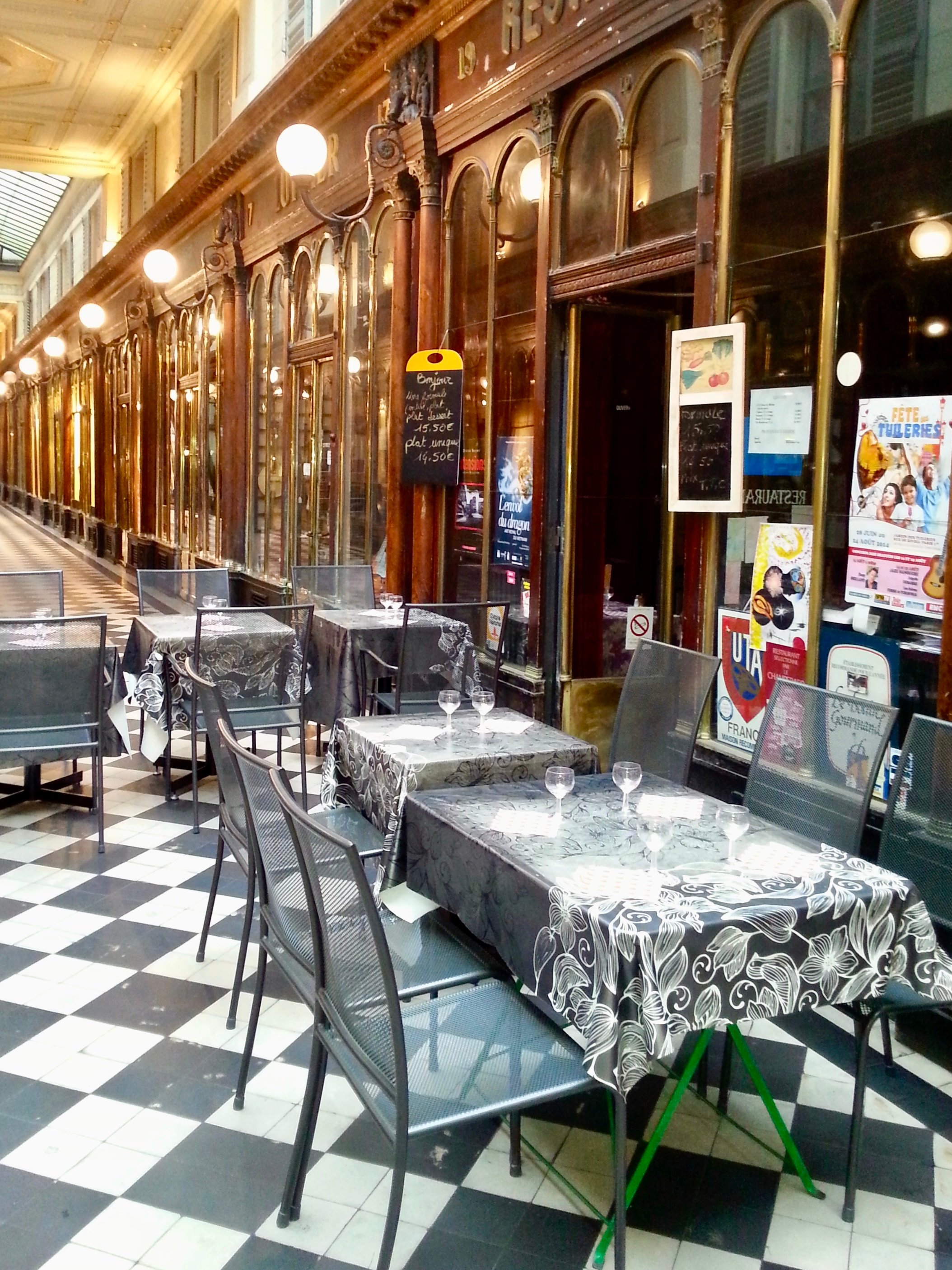
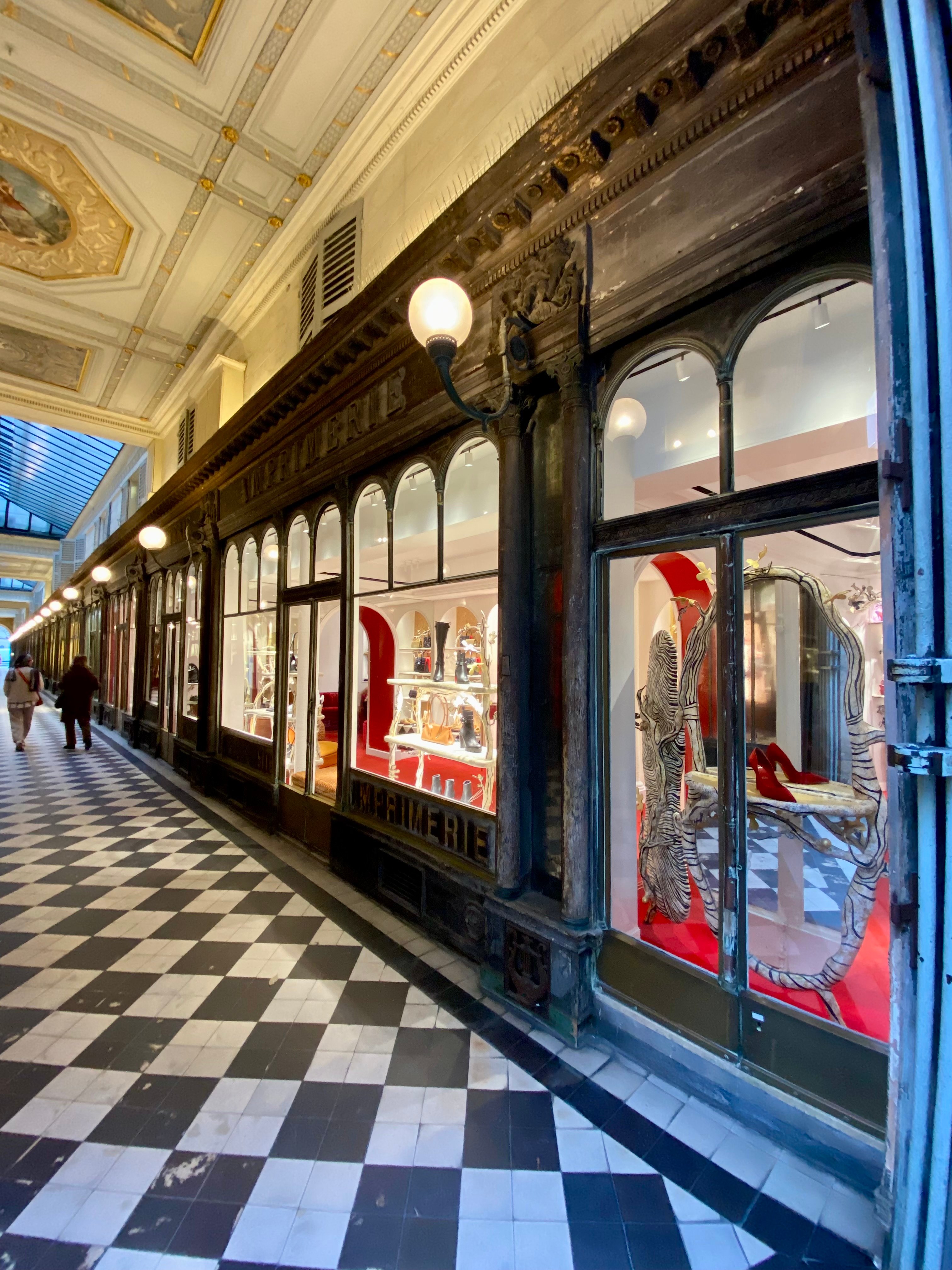
Le Café de la Galerie est l'endroit où, dit-on, le poète Gérard de Nerval et son homard de compagnie (en laisse !) prenaient un verre, et l'utilisaient en effet pour quitter le monde et porter un dernier toast à la vie avant sa mort prématurée. Il y a de pires endroits pour faire ses adieux.
Ici, les diligences arrivaient, se garaient et prenaient en charge les prochains passagers. Les voyageurs fatigués pouvaient se reposer un peu avant d'entamer la suite de leur voyage et se raconter des histoires sur leur provenance et les villes où ils s'étaient arrêtés au cours de leur périple.
Ils peuvent jeter un coup d'œil aux fenêtres du n° 31 où un graveur affiche les dernières caricatures de la politique parisienne, en particulier celles de Daumier qui caricatura le roi en poire et une couronne lui tombant sur l'œil, le rendant aveugle.
Aujourd'hui, le passage abrite toujours des galeries d'artistes, à côté de fabricants d'instruments de musique (mandolines et ukulélés), tandis que la boutique de Christian Louboutin est un nom connu dans le monde entier pour chausser les pieds des riches et des belles.
Nous vous proposons de vous arrêter au n°19, Le Véro-Dodat, L'hôtel, avec ses chaises en forme de cœur et sa façade ancienne, propose une heure du thé pas comme les autres, où les meilleurs ingrédients sont servis par le propriétaire, qui connaît sa carte sur le bout des doigts. Il se fera un plaisir de vous recommander une boisson pour accompagner le menu du déjeuner ou une friandise.
📍N° 19, rue Jean-Jacques Rousseau / N° 2, rue du Bouloi, 75001
- Métro : Palais Royal - Musée du Louvre (Ligne 1, 7)
- Du lundi au samedi, de 7h à 22h. Fermé le dimanche et les jours fériés
Rendez-vous rue de Rivoli, juste en face du Louvre, au métro Palais Royal, le grand-père de tous.
2. Palais Royal
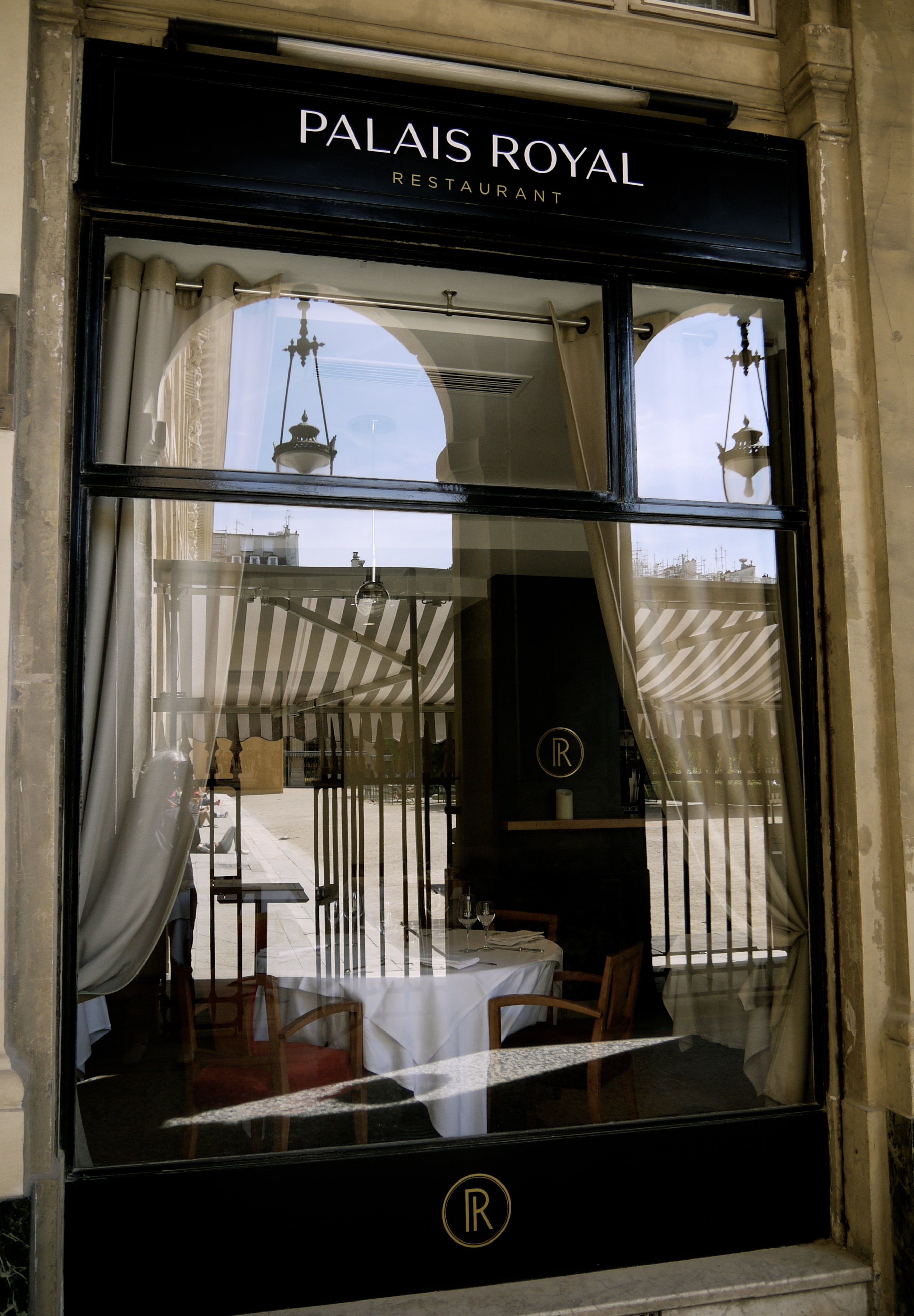
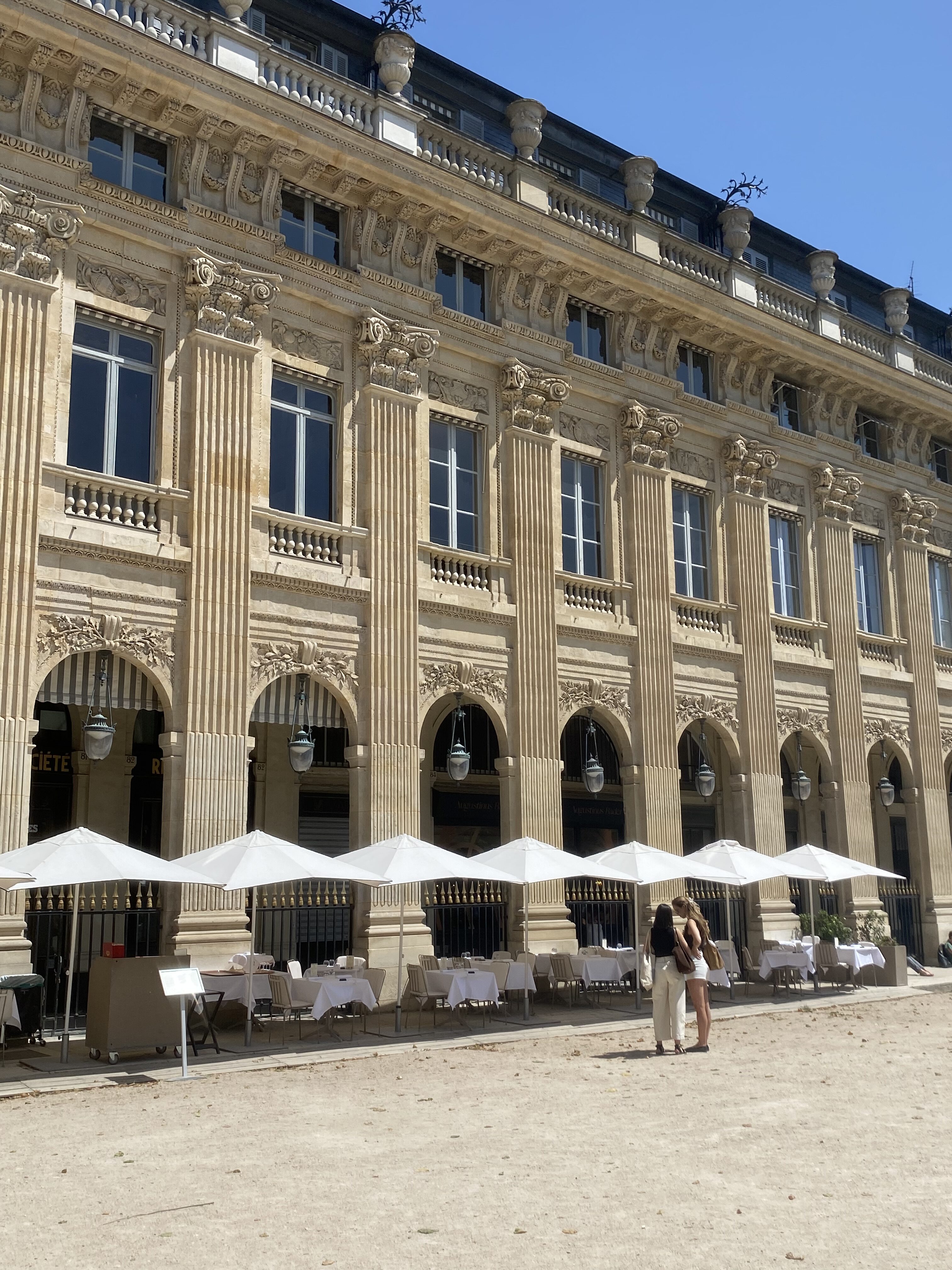
Il ne s'agit pas techniquement d'un passage couvert, mais il est certainement à ne pas manquer lorsque vous les explorez ! Résidence aristocratique juste avant la Révolution, à la fin des années 18th siècle, le Palais Royal s'est transformé en une sorte de bazar. Ses galeries couvertes abritaient une multitude de magasins et de cafés permettant de faire du shopping à l'abri du ciel parisien. Ou tout simplement de jouer aux dames et de débattre de politique
Ses célèbres “dames” - abordables à l'heure - ont peut-être disparu (on dit que Napoléon y a perdu sa viriginité), mais pas les excellentes occasions de faire du shopping.
Visitez les parfumeries de Serge Lutens, qui met en scène un space opera, ou les parfums de Rosine, mignonne comme un cœur, et les bijoux artisanaux de Vincent Avenches.
Le Grand Véfour, à l'époque où il était le Café de Chartres, a nourri les cerveaux de la Révolution comme Robespierre et Marat, et plus tard des stars de la littérature comme Lamartine qui aimait y déjeuner de viande de mouton. Il est toujours là, attendant de vous accueillir pour une expérience gastronomique dans un décor ancien inoubliable.
Il contraste magnifiquement avec les célèbres colonnes rayées de Buren. Opportunité photo garantie.
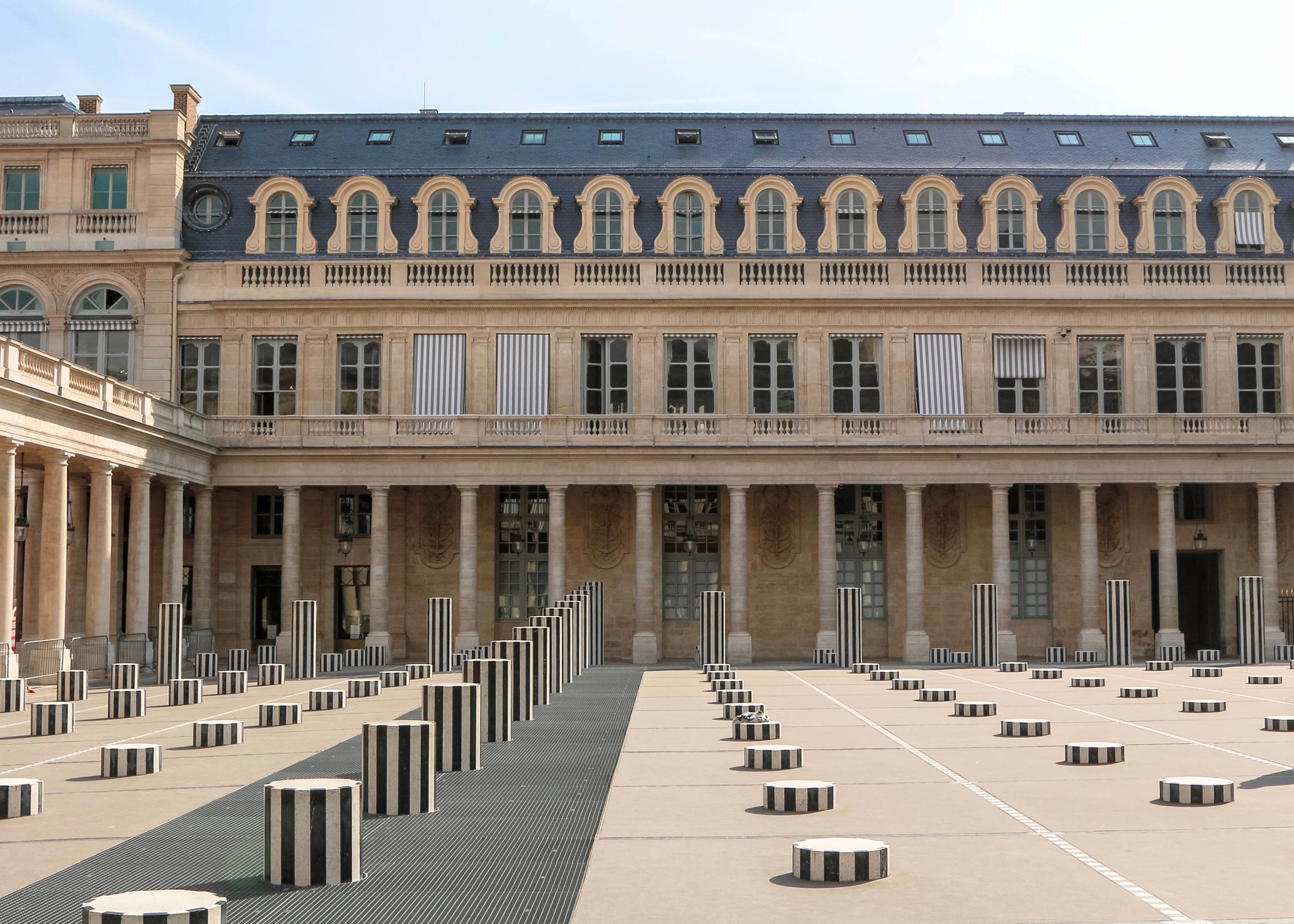
📍Rue de Montpensier / Rue des Petits-Champs
- 8h-20h
- Métro : Palais Royal (Ligne 1)
Marcher jusqu'au sommet des jardins, sortir par Passage du Perron puis Passage des Deux Pavillons (voir ci-dessous).
3. Galérie Vivienne
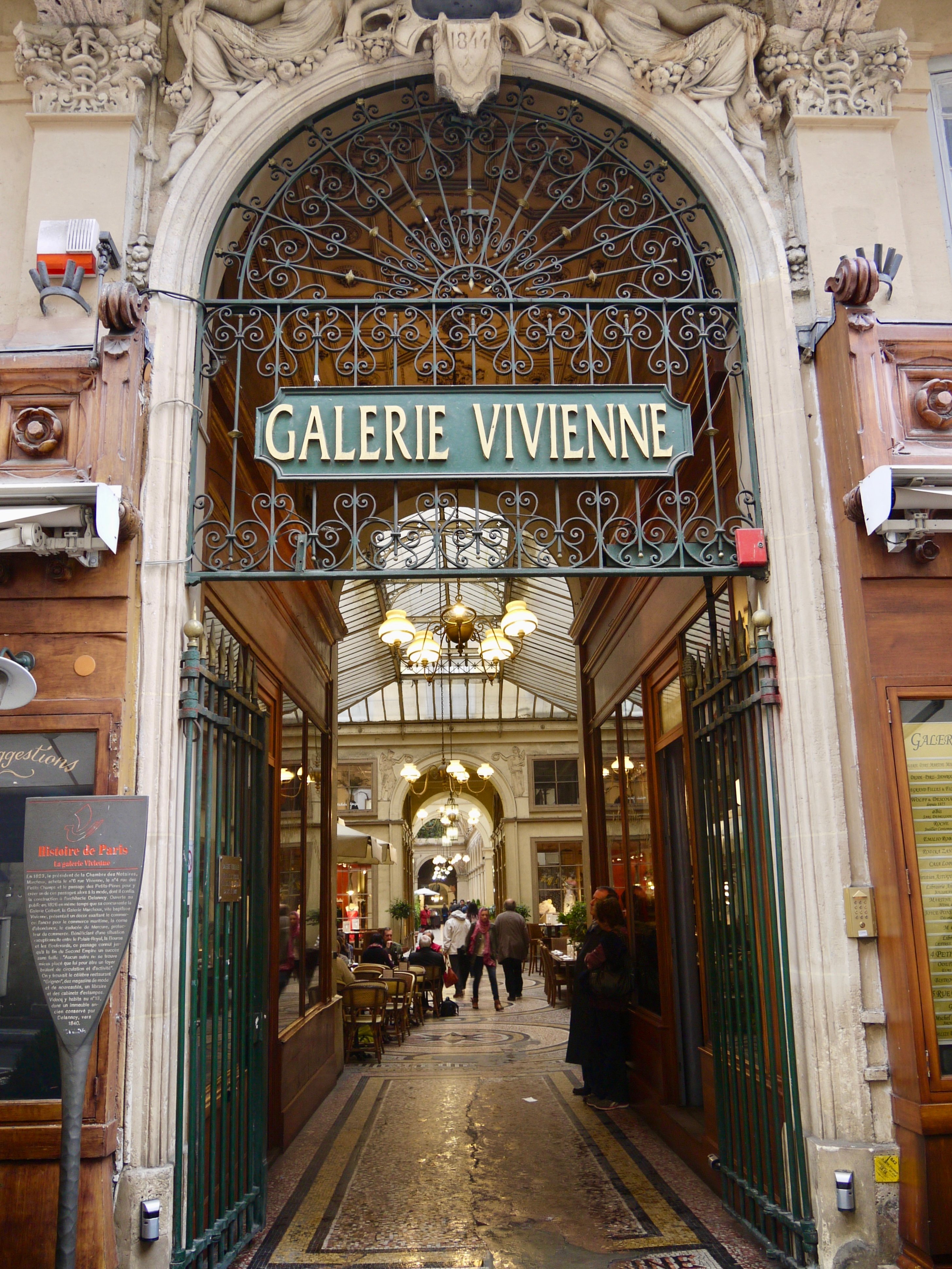
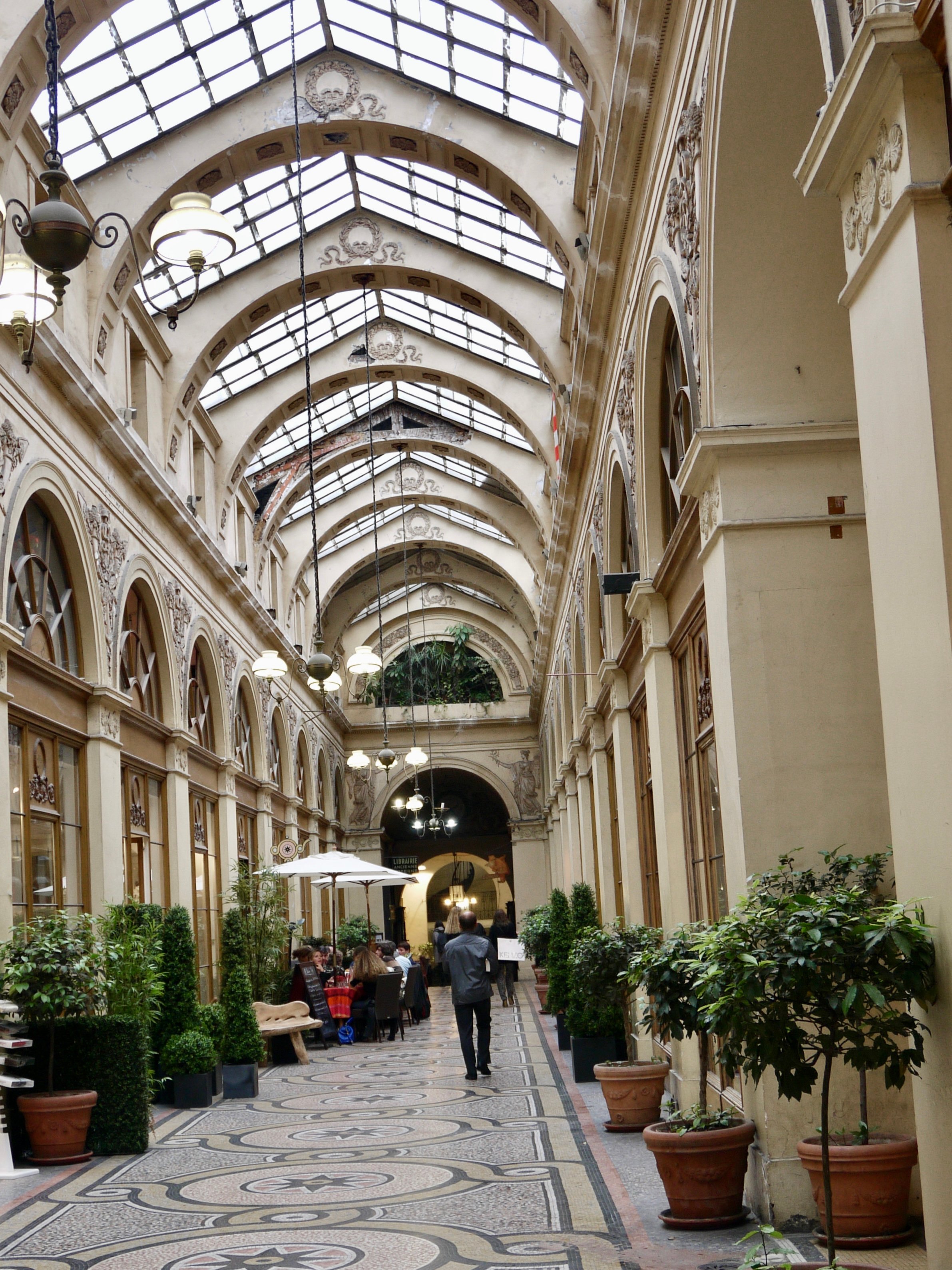
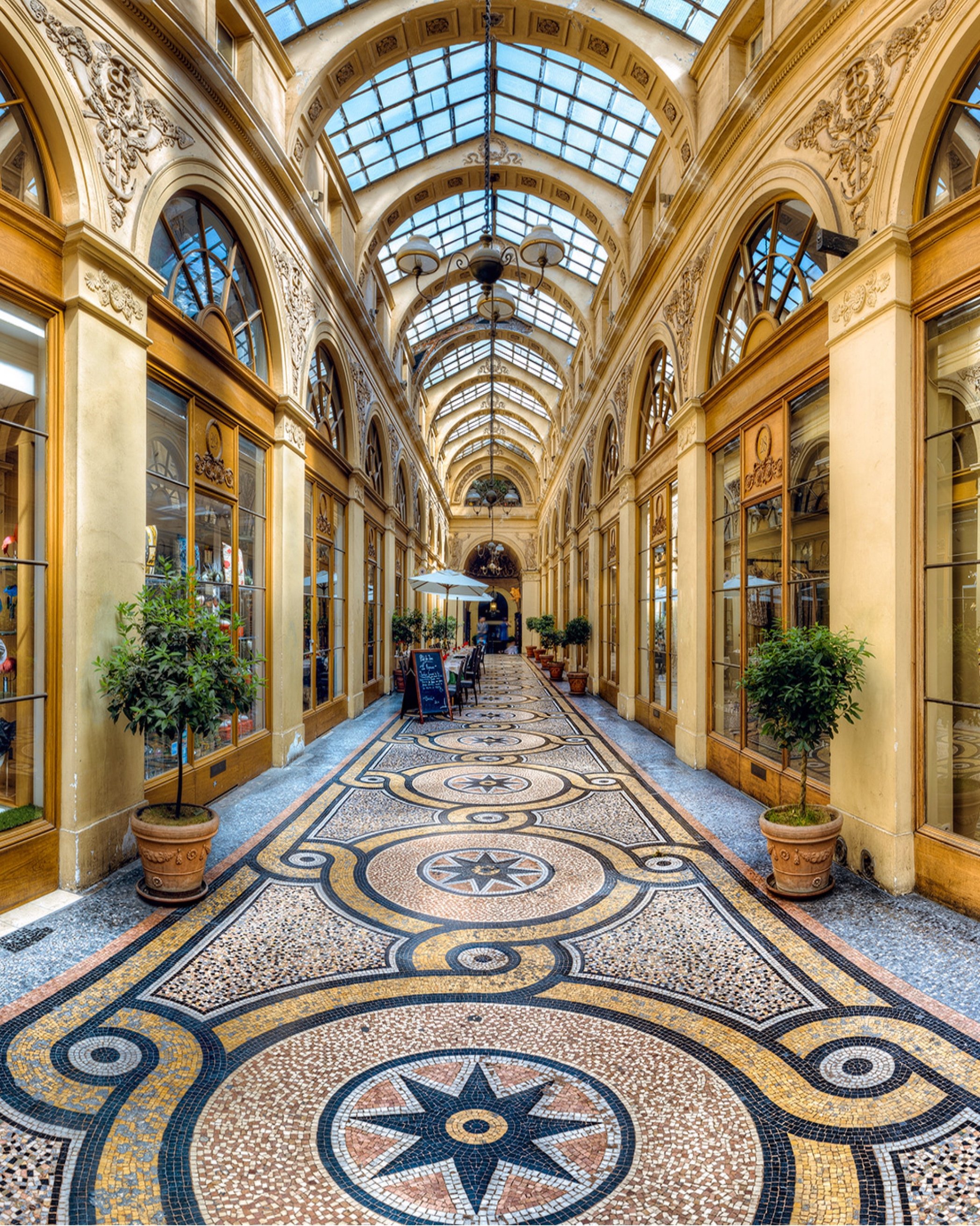
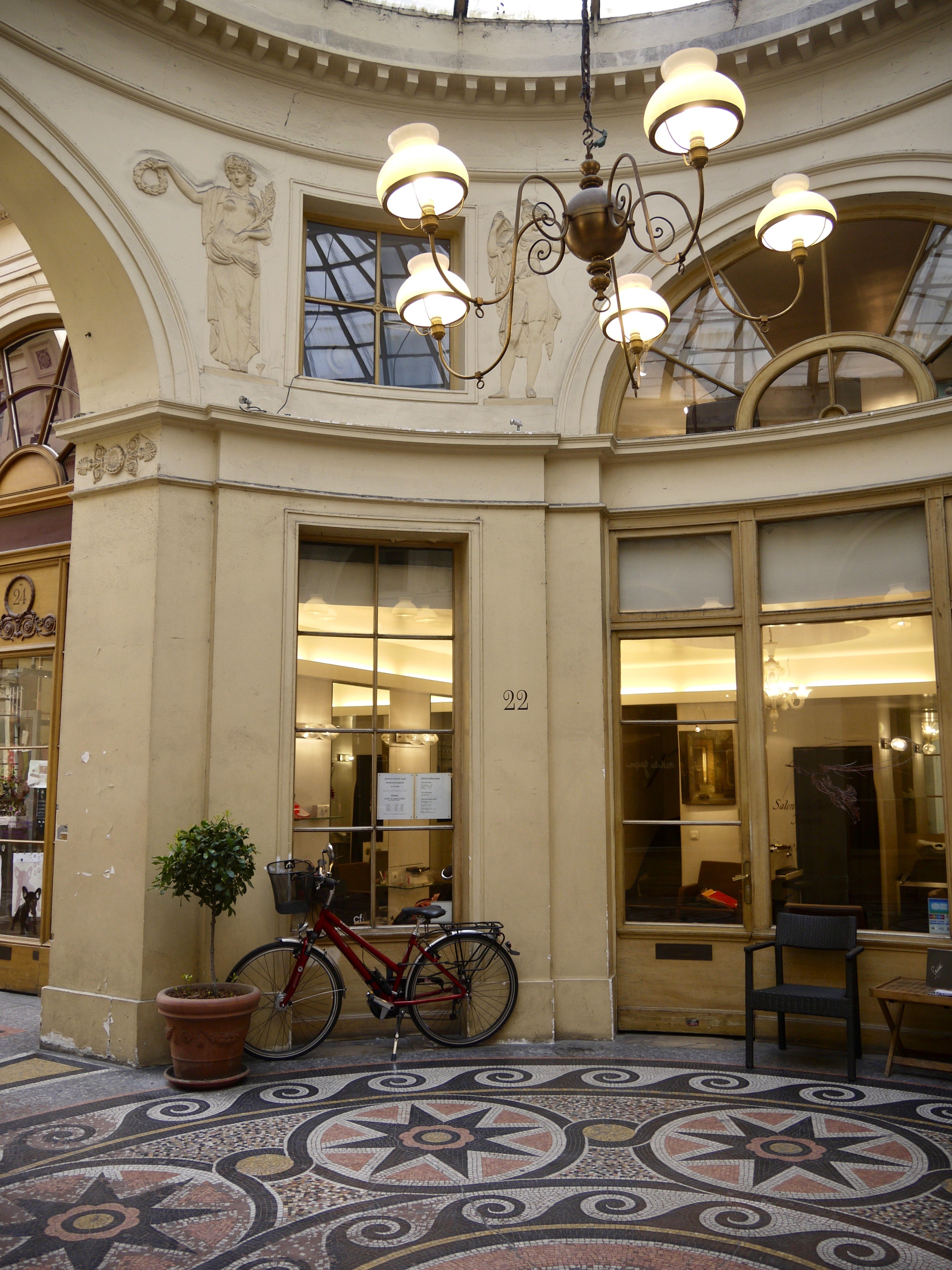
La prestigieuse Galerie Vivienne, construite au début des années 1820, a vu le jour lorsque l'engouement pour tout ce qui touche à Pompéi s'est emparé du monde de la mode, comme en témoignent ses colonnes corinthiennes, ses pilastres délicats et ses corniches moulurées, ses couloirs ornés de symboles du succès commercial et de la richesse, tels que des balances, des lauriers, le caducée de Mercure, des bottes de blé, des palmiers, des ruches et des paniers de fleurs, ainsi que des cornes d'abondance, le tout pour célébrer le triomphe du shopping.
La mosaïque au sol est apparue un peu plus tard, en 1880, mais elle n'en est pas moins glorieuse, l'ensemble ayant inspiré les premiers grands centres commerciaux du monde moderne, de Milan à Saint-Pétersbourg.
On y trouve des tailleurs, des vignerons, des bottiers, des opticiens, des restaurateurs, des marchands d'articles de mercerie, des confiseries, des gravures et même un théâtre de marionnettes. C'est ici que bat le pouls de toute la ville.
Il n'est pas étonnant que le chef de la police (et ex-détenu) Vidocq ait eu son quartier général ici. Cherchez l'escalier en colimaçon qui menait autrefois à ses appartements. Les amateurs de "true crime" connaissent peut-être le nom de Vidocq, membre de la "Vidocq society of cold case solvers", et ceux qui ont lu leur Balzac le reconnaîtront sous les traits de l'inoubliable criminel Vautrin.
Quelques décennies plus tard, le tout-Paris avait oublié la Galerie Vivienne et l'avait abandonnée pour des pâturages plus cléments. Mais sa disparition (temporaire), marquée par l'effondrement de la magnifique coupole, coïncide aussi avec les happenings orchestrés ici par l'artiste américaine Huguette Spengler.

Après le déménagement de Jean-Paul Gaultier quelque temps plus tard, il est devenu connue pour ses boutiques sur mesure, ses coiffeurs de luxe et ses parfumeurs indépendants.
Il y a même un magasin de jouets exclusif appelé Si Tu Veux, qui est fier de sa politique sans plastique et sans pile. Écologiquement responsable, ses articles sont fabriqués à partir de bois et d'autres matériaux nobles, tout en respectant l'empreinte carbone.
Au n° 18, vous trouverez les étoles, écharpes et châles Wolff & Descourtis, fondés en 1875 et fabriqués en série limitée, « indémodables » comme on dit en français, une mode intemporelle qui faisait déjà fureur à l'époque de Napoléon. Leur créatrice est aujourd'hui une descendante, Victoria, qui se fera un plaisir de vous aider à choisir parmi la sélection proposée, ou vous laissera volontiers flâner et rêvasser.
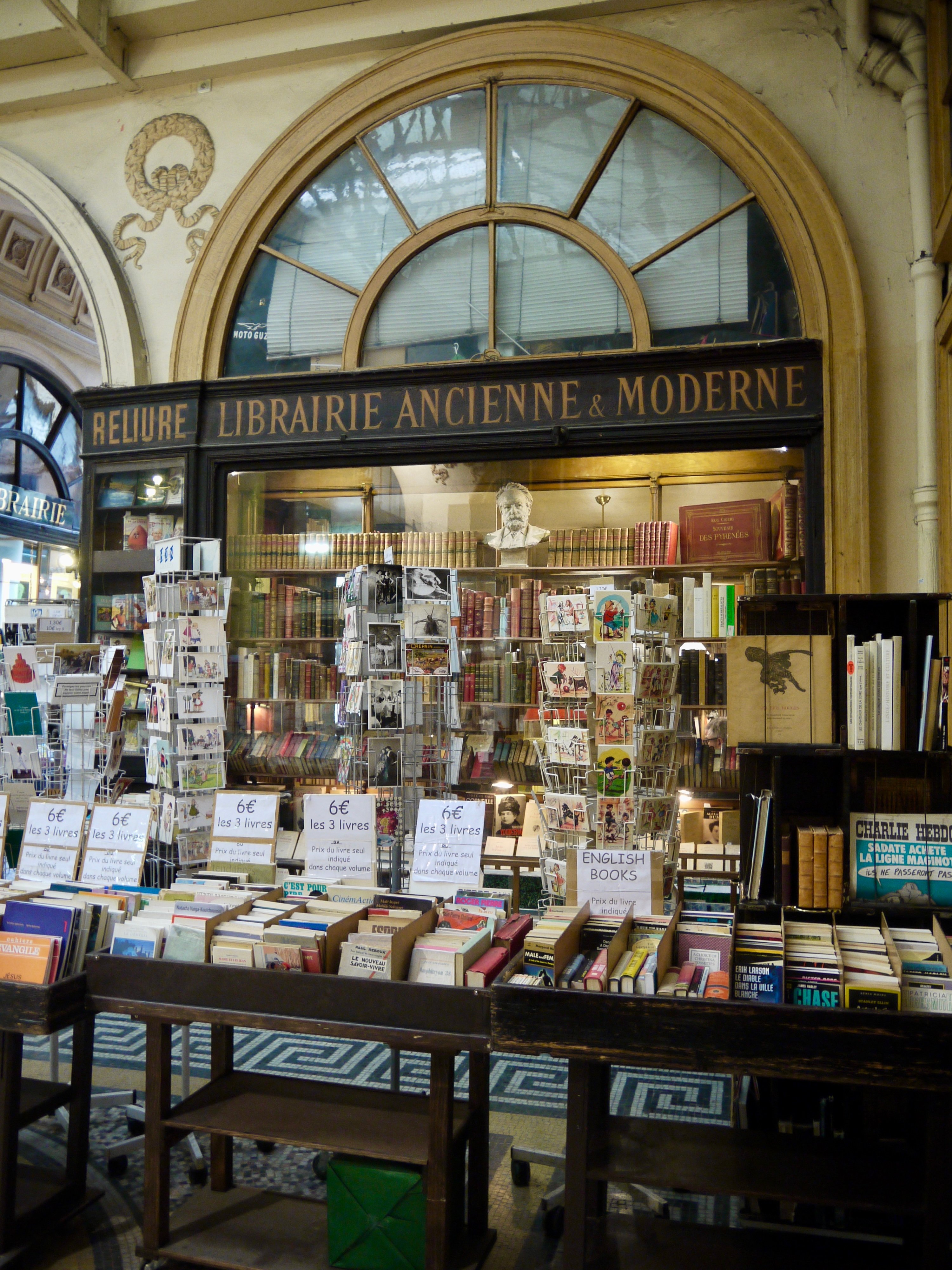
La Librairie Jousseaume est la plus ancienne boutique de la galerie, succédant à la librairie Petit Siroux qui a ouvert avec la Vivienne et n'a jamais cessé de fonctionner depuis. Vous y trouverez des tomes anciens, des cartes postales et des gravures et vous vous offrirez un peu du Paris éternel.
📍N° 5-7 rue de la Banque / N° 6 rue Vivienne
- Métro : Bourse (ligne 3) ou Grands Boulevards-Richelieu Drouot (ligne 9) ou Palais Royal (ligne 1,7)
- Tous les jours de 8h30 à 20h
Sortez de la Galerie Vivienne par l'entrée principale ou par les sorties latérales, et vous trouverez juste à côté :
4. Galérie Colbert
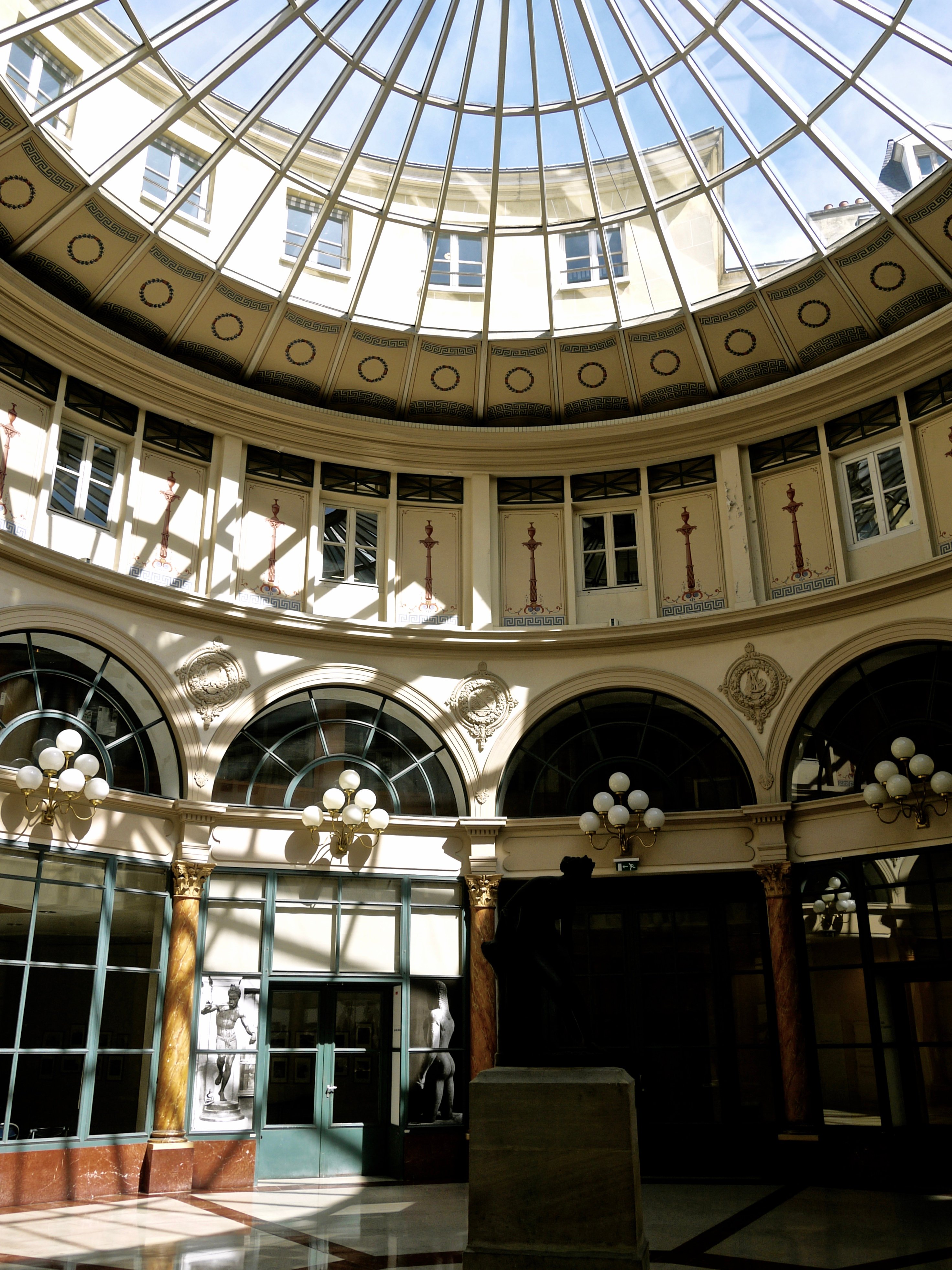
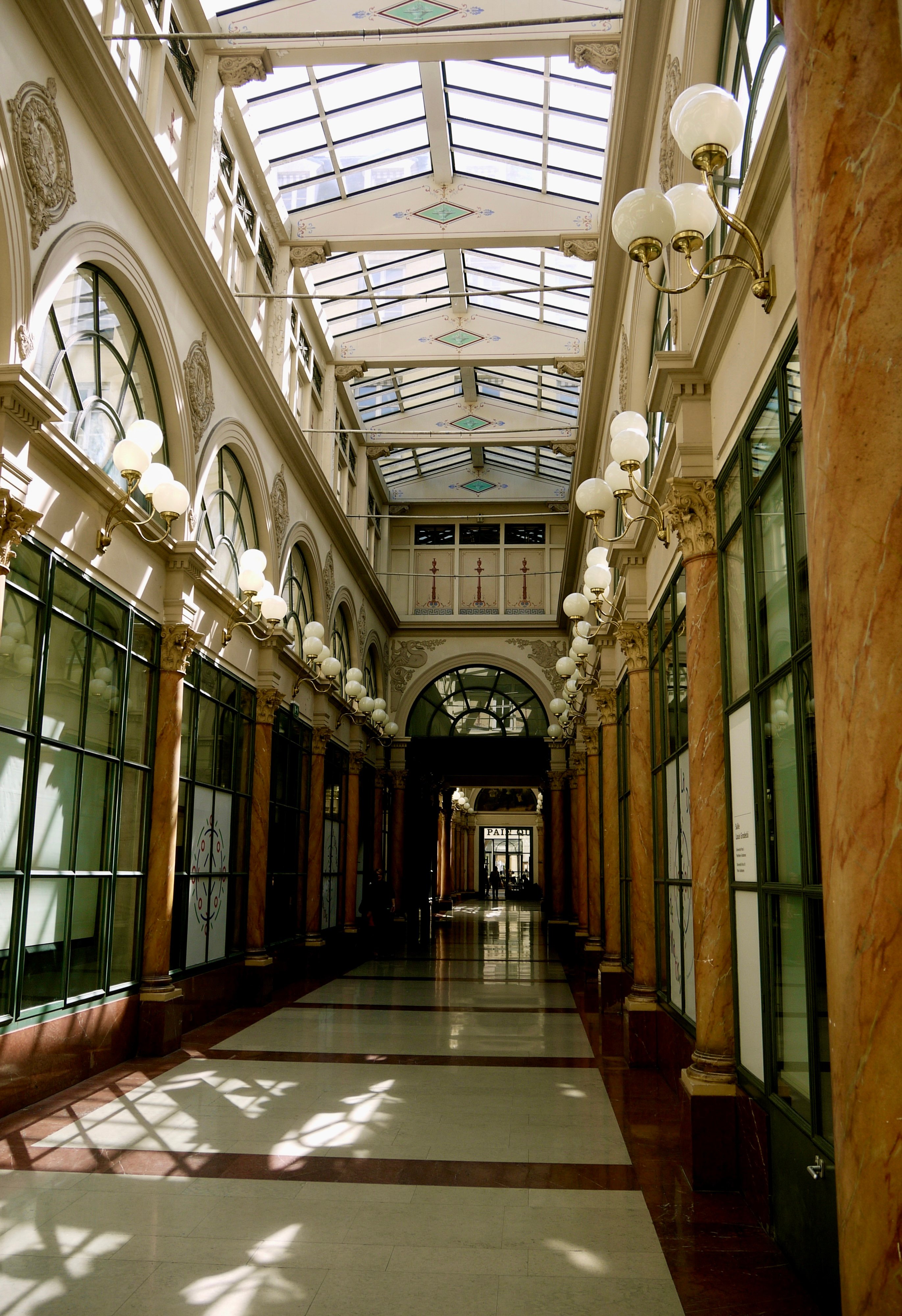
Ce passage, construit peu après en 1823, tentait de tirer parti de la popularité de la Vivienne. Vous n'y trouverez pas de boutiques, il est aujourd'hui dédié à l'Institut national d'histoire de l'art. A certaines périodes de l'année, il est possible d'assister à des défilés de danse à travers ses larges fenêtres.
Aujourd'hui encore, entièrement restauré, il est ouvert au public qui peut y entrer et admirer ses nombreuses beautés, comme sa magnifique coupole en verre au-dessus de la rotonde centrale où se trouve une statue d'Eurydice mourante. Cette statue remplace ce qui éclairait les lieux à l'époque, un immense candélabre de bronze avec sept globes de cristal éclairés au gaz, pour éclairer les rendez-vous du Paris Galant à l'époque romantique.
En effet, la Galerie Colbert tentait de faire revenir le public de la rivale Vivienne en organisant des soirées musicales qui s'échappaient harmonieusement des fenêtres de l'étage supérieur. Pendant la Révolution de 1830 (Les Misérables’ révolution), le compositeur Berlioz se met à fredonner la Marseillaise interdite. Lorsque la foule s'est rassemblée et lui a répété les paroles, il s'est évanoui.
À l'entrée de la rue Vivienne, vous trouverez la brasserie classique 1900 Le Grand Colbert, avec son décor art nouveau qui a fait le bonheur de plus d'un réalisateur de films à la recherche d'une atmosphère d'autrefois. Notez que vous devrez passer un contrôle de sécurité avant d'entrer.
📍N° 2-4 rue Vivienne / N° 6 rue des Petits Champs
- Métro : Opéra (lignes 3, 7 et 8) - Grands Boulevards (ligne 9)
- 8h00-20h00 tous les jours sans interruption
Le virus du passage vous a piqué au vif ?
Il y en a beaucoup d'autres, dont certains, comme le Passage des Panoramas, Jouffroy ou Verdeau, feront l'objet d'un prochain article, mais nous avons quelques autres favoris dans notre manche.
5. Passage Choiseuil
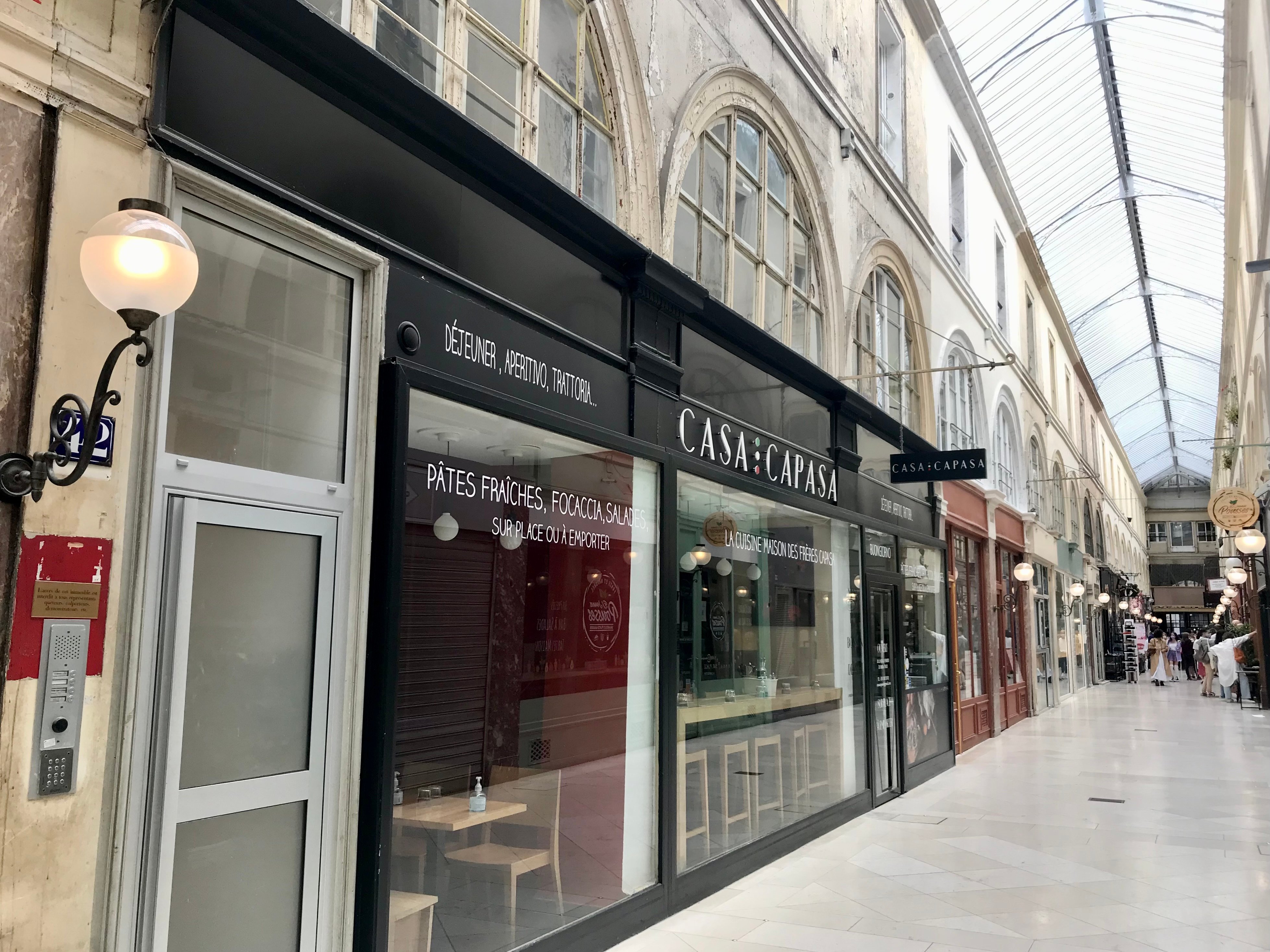
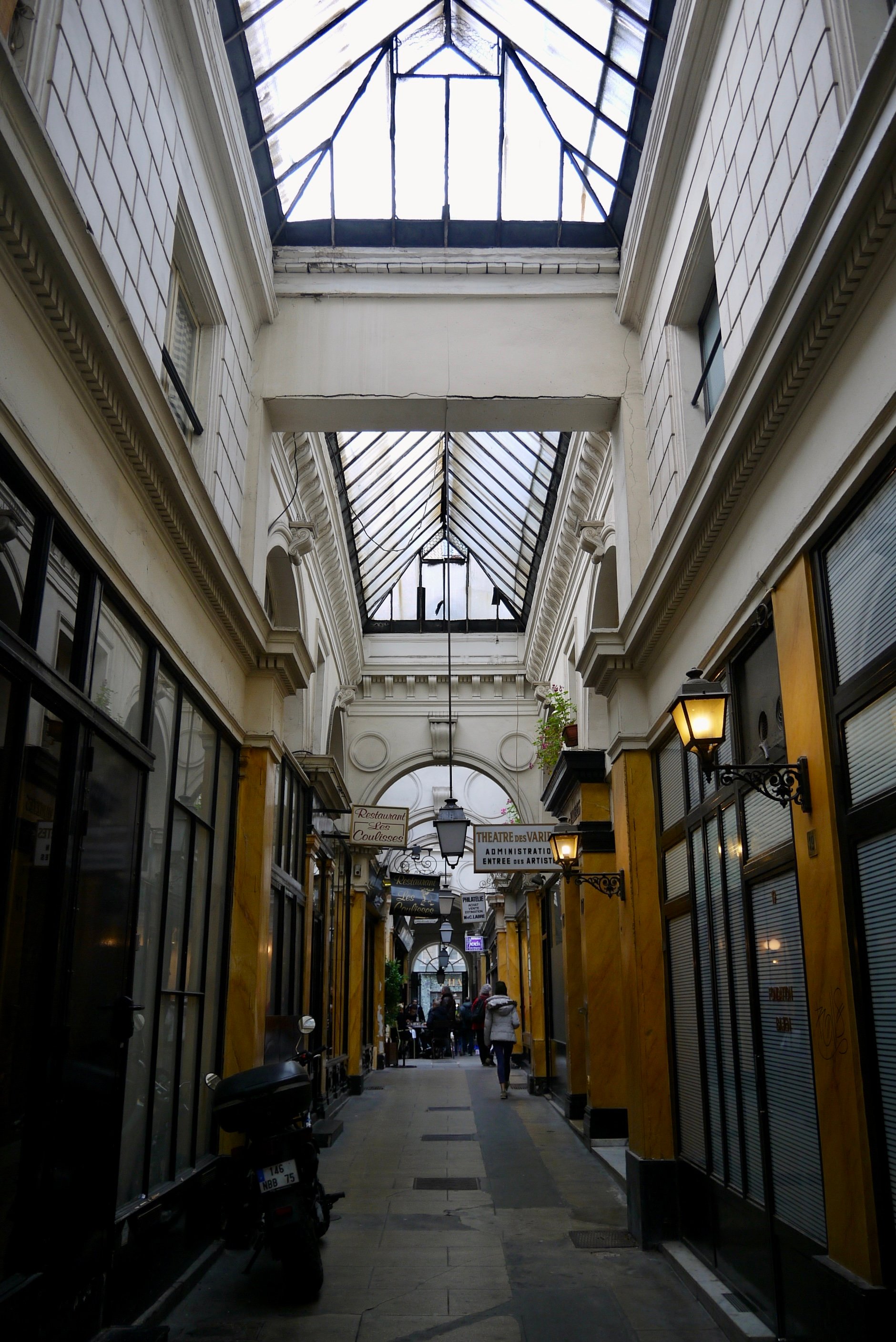
Ce passage de 1825, toujours dans le même quartier, doit sa popularité aux théâtres environnants, les saltimbanques de la sciure et leurs fans arpentant assidûment ces couloirs depuis lors. Le n° 67 est la sortie secondaire du Théâtre des Bouffes-Parisiennes, par exemple, où Offenbach présentait La Vie Parisienne et tant d'autres succès de l'ère haussmannienne
Les poètes aussi avaient leur adresse : Au n° 23 se trouvait le premier éditeur à publier Verlaine et d'autres poèmes du mouvement parnassien.
Aujourd'hui, alors que certaines banalités des chaînes de magasins se sont infiltrées dans ce passage, les théatreux, Les "pigeons", comme les appellent les Français, hantent toujours les couloirs. Les étages supérieurs, comme lors de l'ouverture du passage, sont toujours résidentiels.
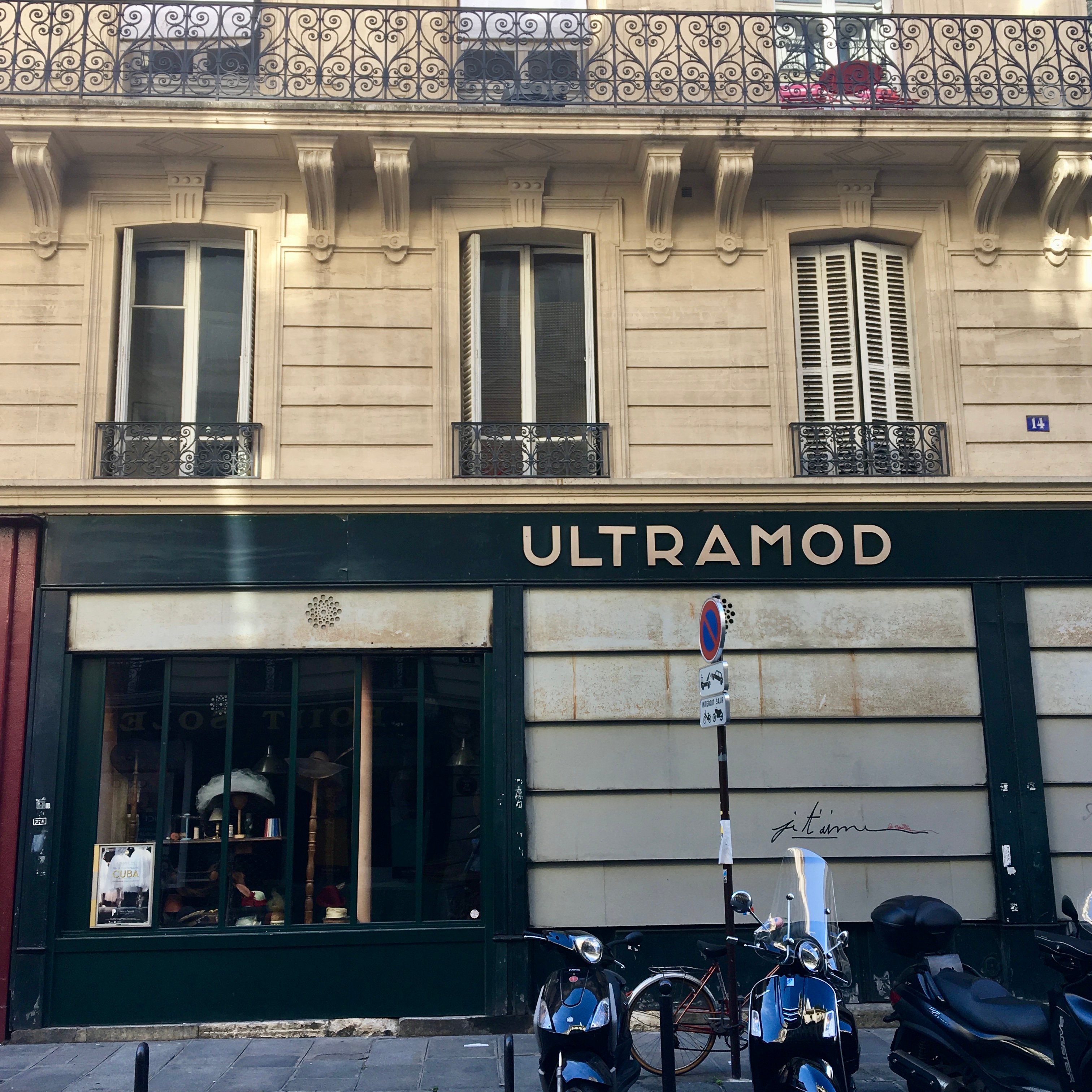
Mais pas seulement, car vous trouverez, parmi les librairies, les bijouteries et les galeries d'art, des adresses comme le n° 3 (juste avant d'entrer dans le passage). Ultramod, la plus ancienne mercerie à Paris. Les rubans et autres fantaisies sont le paradis des modistes, où les patronne de l'endroit est ravie de savoir ce que ses produits deviennent pour leur prochaine vie.
Nous adorons l'atelier de gravure et de papeterie Boisnard & Stern au n° 82 - pourquoi ne pas prendre quelques-uns de leurs articles de papeterie exquis et écrire une lettre à quelqu'un d'éloigné - ou même à vous-même pour l'ouvrir à votre retour à la maison ?
Ne manquez pas de visiter les boutiques éphémères au n° 27.
📍40, rue des Petits Champs - 23, rue Saint Augustin, 75002
- Métro Quatre-Septembre Ligne 3
- Ouvert du lundi au samedi de 8h à 20h, fermé le dimanche
6. Passage du Caire
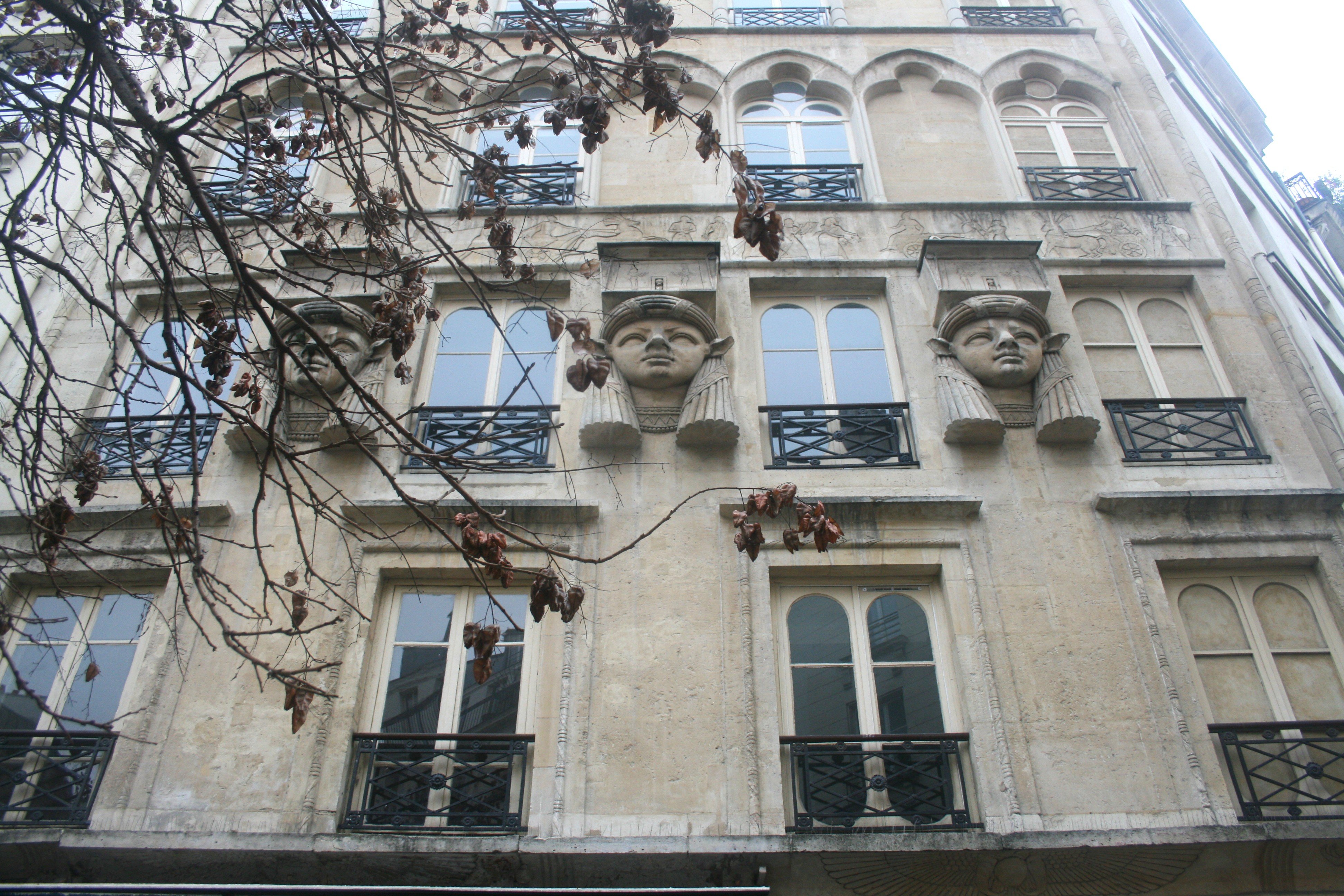
Nous sommes en 1798 et l'armée du général Bonaparte vient d'entrer en Égypte - d'où le nom original inscrit sur la porte, le passage du bazar du Caire. Regardez bien l'entrée de la place du Caire et vous verrez trois images de la déesse égyptienne Hathor, avec des oreilles de vache. Notez la frise de l'armée napoléonienne au-dessus de ces images.
Construit sur un ancien couvent, son sol était autrefois pavé des pierres tombales des sœurs et l'une de ses galeries, la Saint Denis, est probablement tracée sur la nef de leur église.
Elle se trouve également à proximité de la “Cour des miracles” médiévale, rendue célèbre par le roman de Victor Hugo. Le Bossu de Notre Dame, où les mendiants du jour se libéraient à la tombée de la nuit, jetant leurs fausses béquilles et leurs moignons, comme s'ils étaient miraculeusement guéris.
Au cœur du quartier du Sentier, historiquement le quartier de l'habillement de la capitale, on peut encore apercevoir des mannequins en vente, et toutes les boutiques de prêt-à-porter et de vente en gros témoignent de cet héritage.

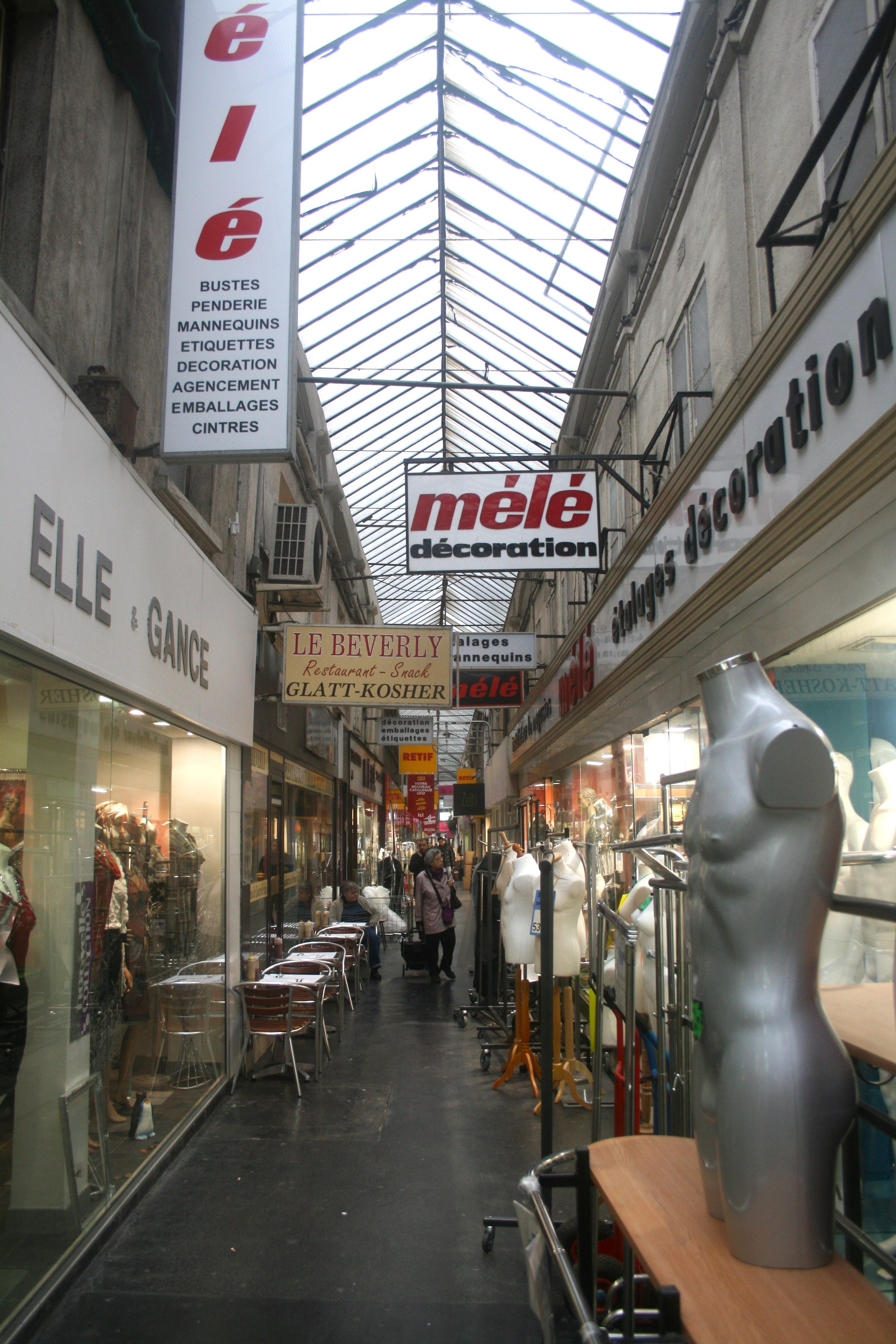
Moins chic que ses consœurs citées plus haut, pour ceux qui ont craqué pour les passages couverts, le Caire reste un lieu d'intérêt pour son étage qui a gardé son caractère d'origine.
📍N° 2, place du Caire / N° 16, rue du Caire / N° 239, rue Saint-Denis, 75002
- Métro Réaumur-Sébastopol (ligne 3) / Strasbourg-Saint-Denis (lignes 4, 8 et 9) / Arts-et-Métiers (ligne 11)
- Ouvert du lundi au vendredi jusqu'à 18h30
7. Passage Brady
Si le Passage du Caire n'a pas le charme historique parisien des autres passages cités plus haut, le Passage Brady est une autre paire de manches. Vous ne retrouverez pas grand-chose de ses origines de 1828, bains et salles de lecture, mais vous aurez l'impression de vous être égaré dans un pays lointain où l'air est chargé d'épices.
Communément appelée la Petite Inde de Paris, les façades des boutiques vendent des assaisonnements et des spécialités de l'Orient, du garam masala au tandoori, en passant par le tikka et bien d'autres choses encore, le tout à des prix qui ne manquent pas de plaire.
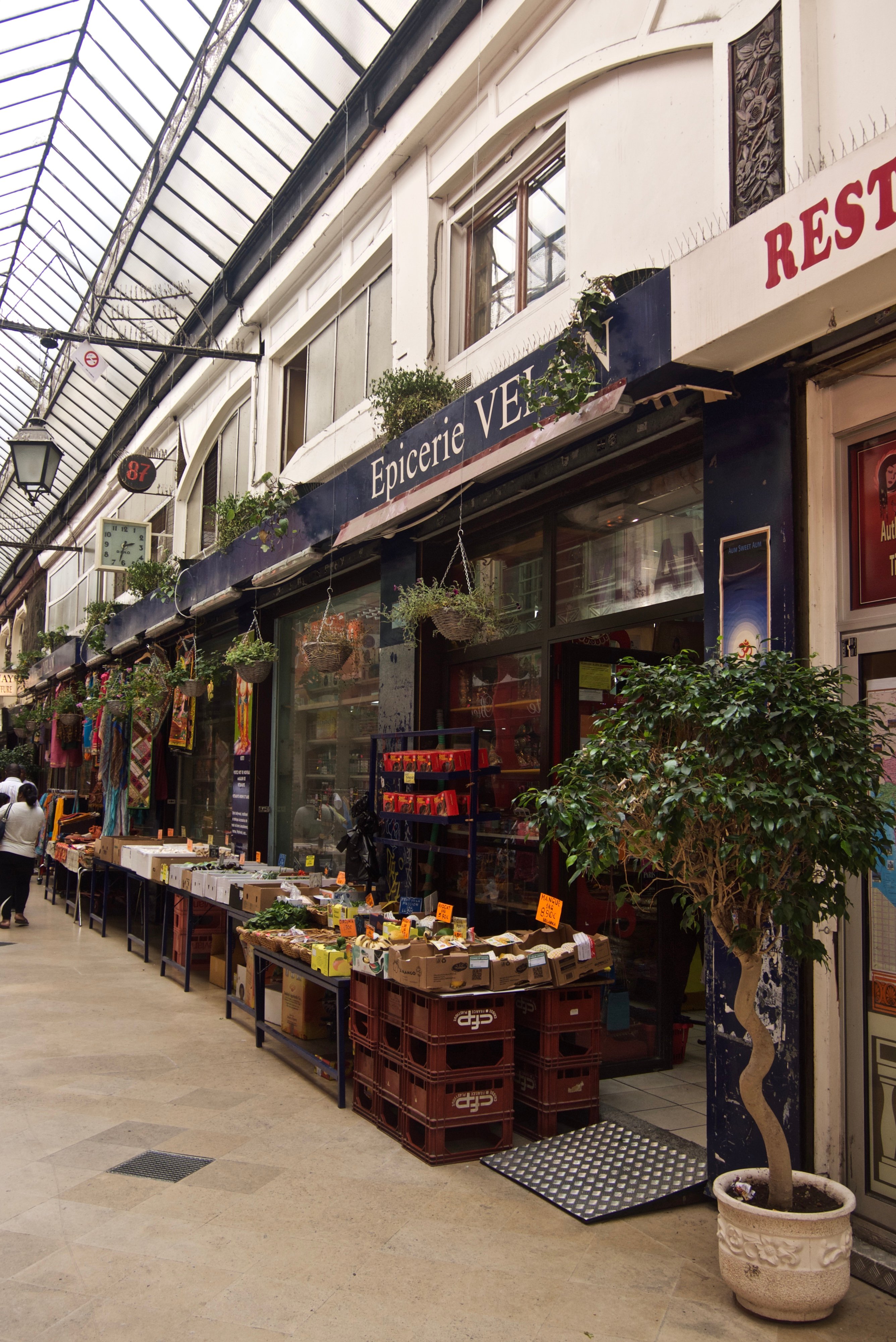
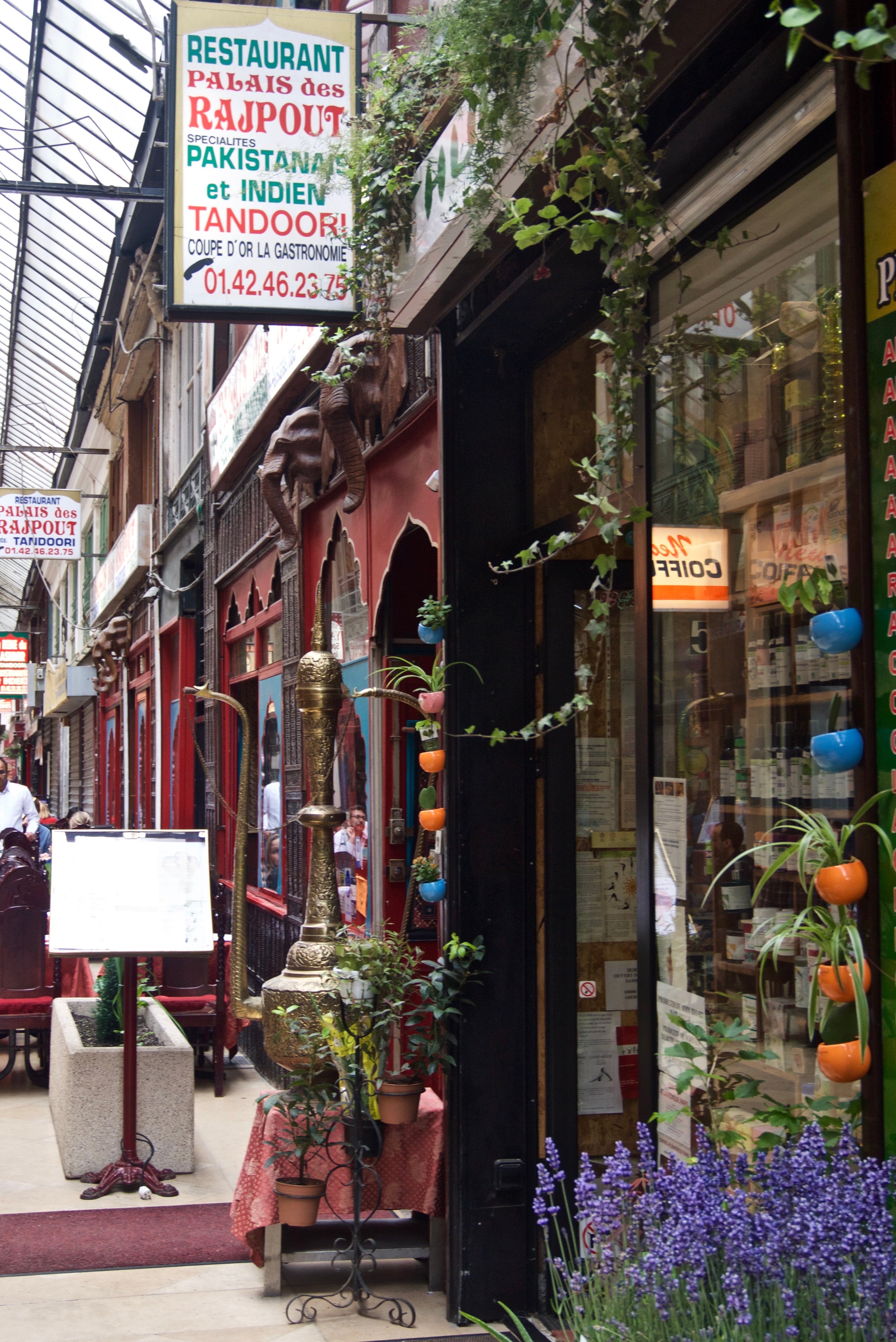
Vous aurez l'impression d'avoir voyagé bien plus loin que la France en essayant de choisir l'un des restaurants qui bordent le passage, même avec le budget le plus strict. Pour un prix fixe menu vous pouvez interrompre votre séjour parisien le temps d'un repas en Inde, au Pakistan, au Sri Lanka, ou encore à l'île Maurice ou à l'île de la Réunion.
Nous aimons :
N° 58 Thulasi, une herboriste ayurvédique vous conseillera sur ce qu'il faut prendre pour chasser ce microbe que vous avez attrapé dans l'avion.
N° 83 et 87 Velan, où tous les Parisiens vont chercher les meilleures épices, chutneys et chais, sels de l'Himalaya et henné. L'étourdissement des encens vous fera tourner la tête à plus d'un titre.
📍46 rue du Faubourg Saint-Denis,75010 / 22 ou 33 boulevard de Strasbourg et 43 rue du Faubourg Saint-Martin pour l'agence non couverte.
- Méteo : Strasbourg-Saint-Denis (lignes 4, 8, 9)
- Ouvert du lundi au samedi de 9h30 à 23h30, le dimanche de 18h à 23h30.
Passages bonus (mini !)
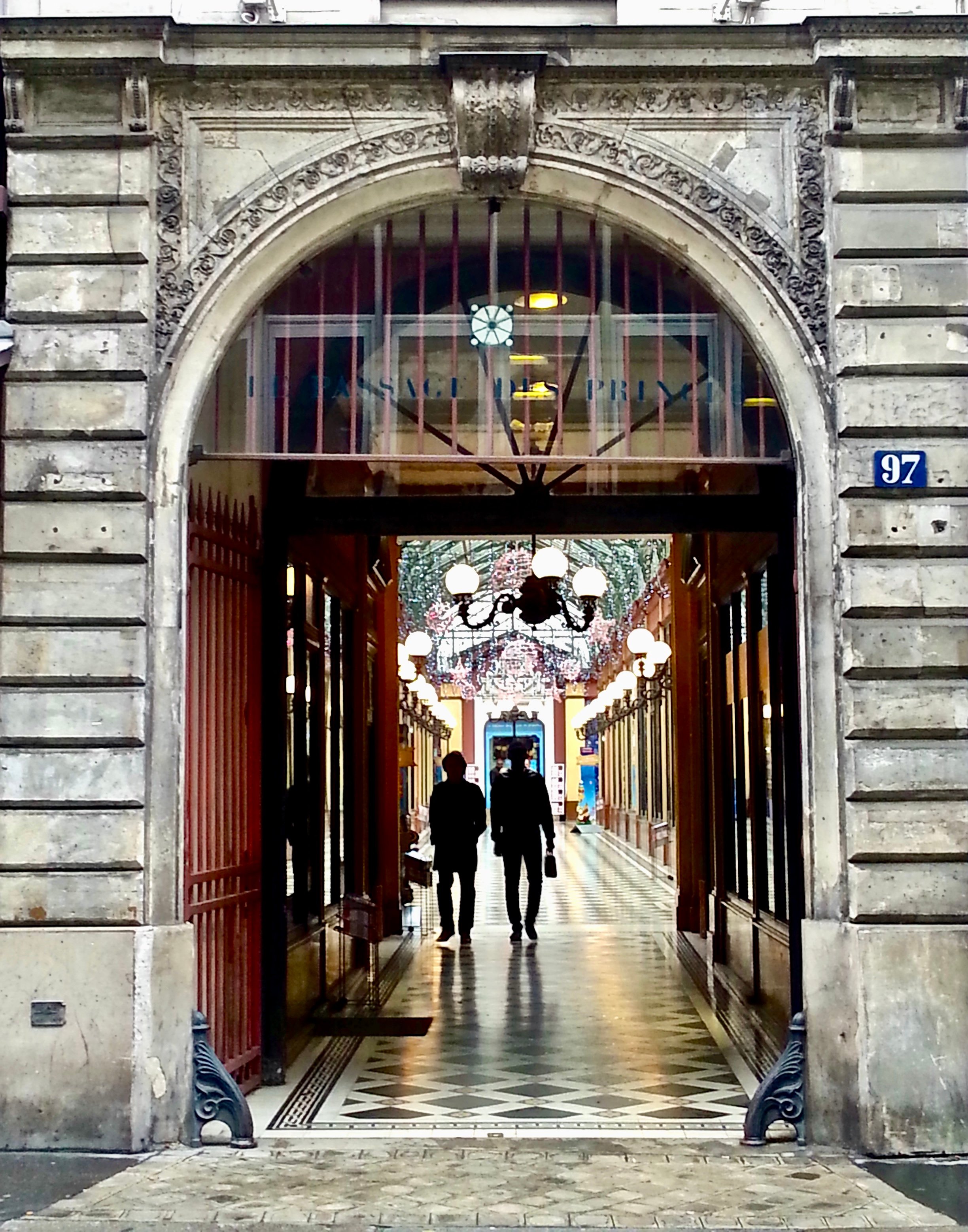
Envie de voir de vrais passages secrets locaux ? Les passages suivants, minuscules et intimes, sont regroupés autour du Palais Royal. Les habitants les utilisent toujours comme ils ont été conçus, comme des raccourcis - avec l'avantage supplémentaire d'être très photogéniques !
Passage des Deux Pavillons
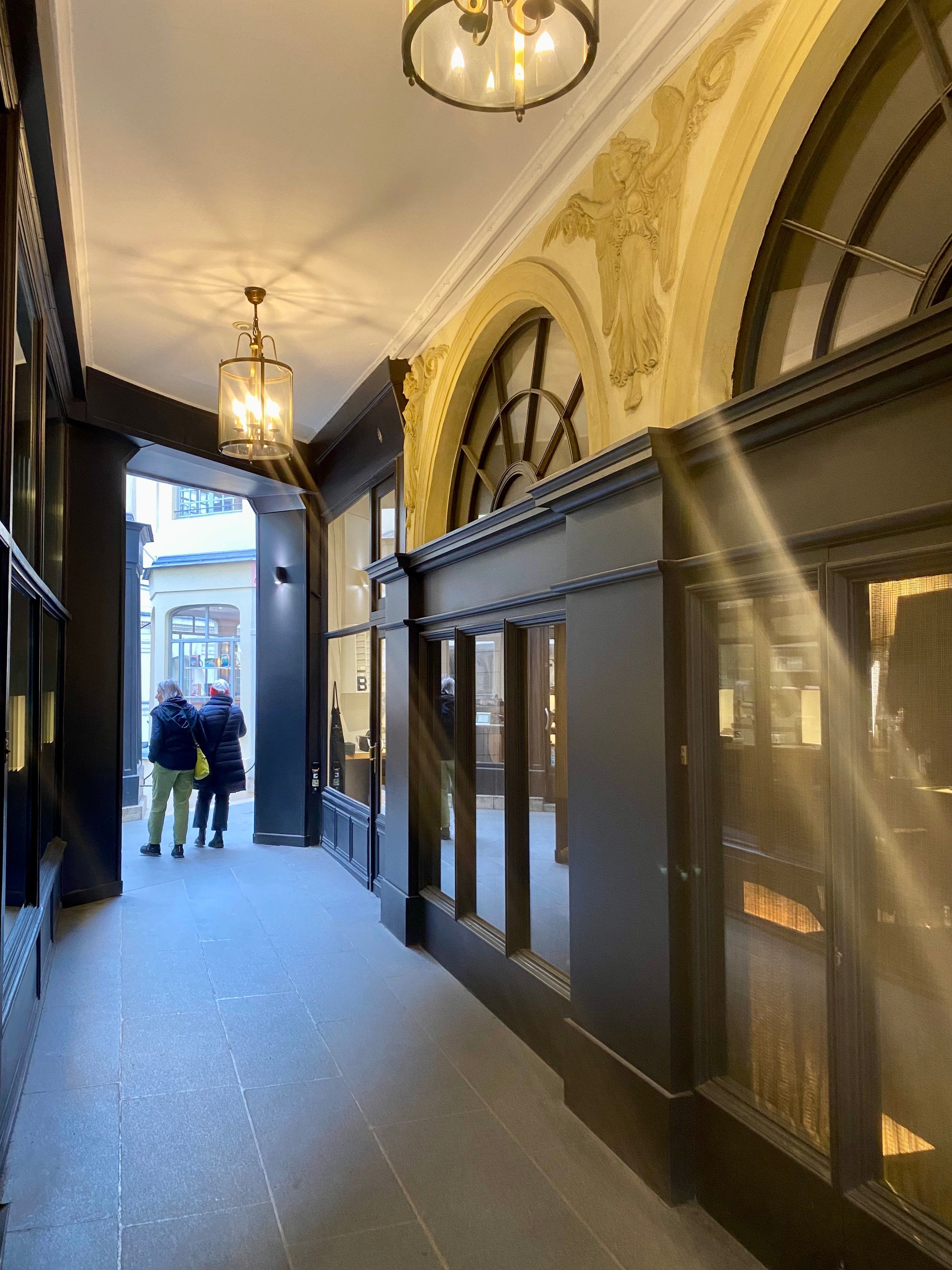
Celui-ci doit son nom à ses deux boutiques en forme de pavillon situées de part et d'autre de l'entrée du Palais Royal, rue du Beaujolais. C'est une sorte de “passage de dépit” puisqu'il a été construit par le propriétaire de la Vivienne pour attirer le trafic de son rival, Colbert, dans la compétition acharnée pour la clientèle. Utilisez-le pour aller des jardins du Palais Royal jusqu'à la Galerie Vivienne - prenez à droite en sortant du Passage du Perron, et au lieu de prendre la rue Vivienne, montez l'escalier en pierre et traversez ce minuscule passage pour déboucher sur la rue des Petits Champs, juste en face de la Galerie Vivienne.
📍N° 5 rue des Petits Champs / N° 6 rue de Beaujolais
- Métro : Palais-Royal-Musée du Louvre (lignes 1) Bourse (ligne 3)
- Ouvert de 8h30 à 20h30
Passage du Perron
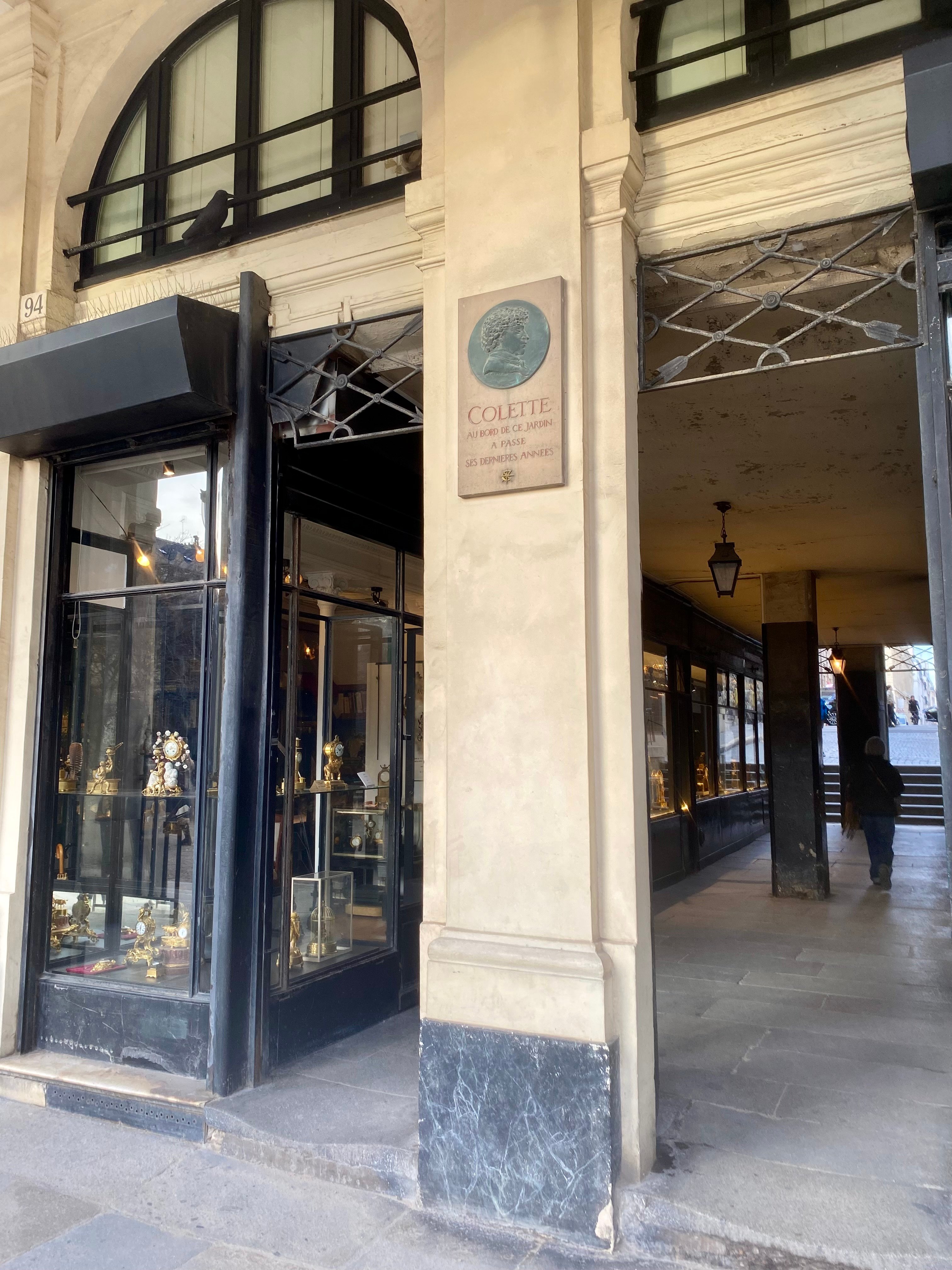
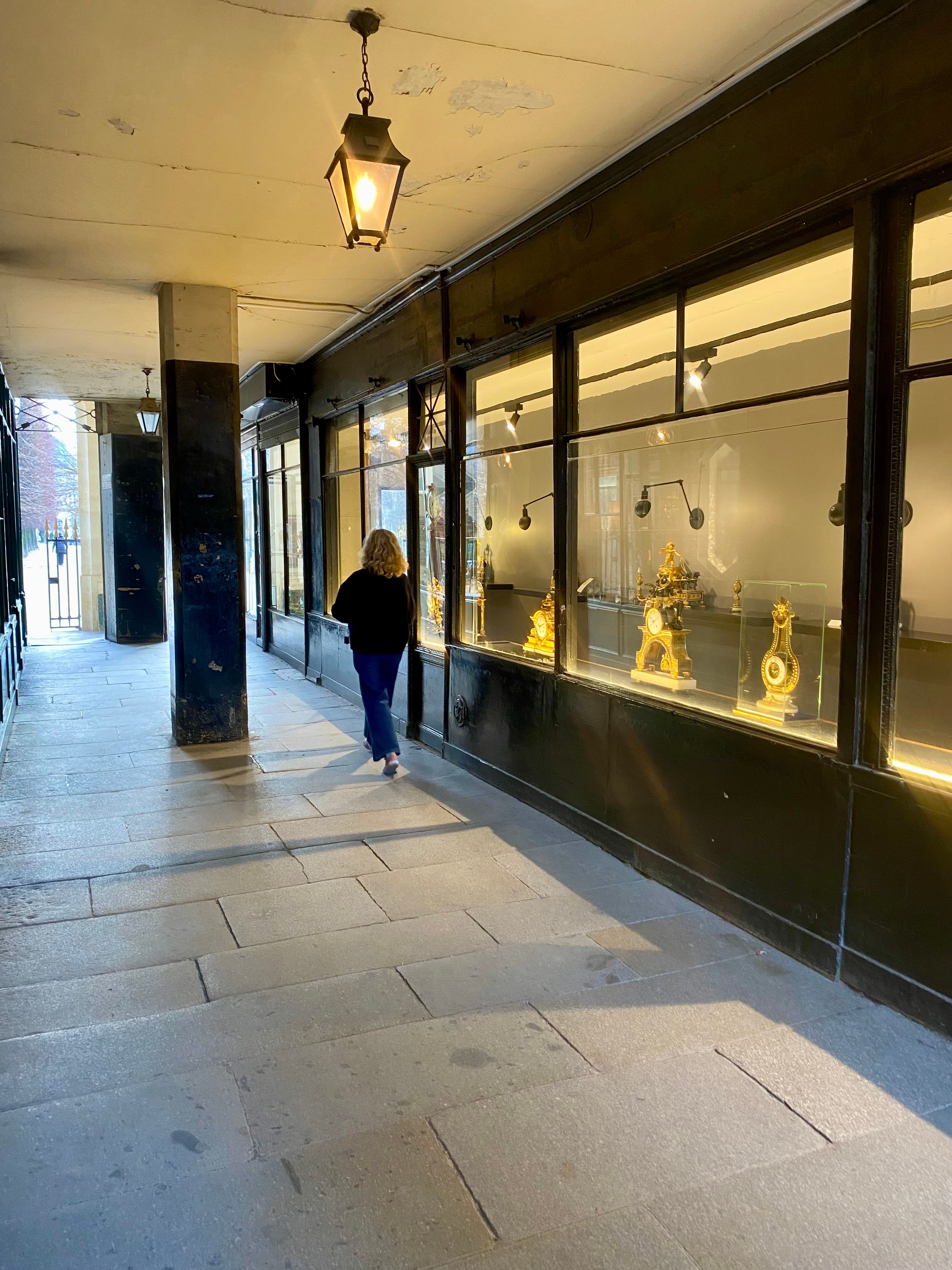
Ce passage, datant de 1784, est un autre vestige rare du Paris pré-révolutionnaire. Avec son entrée en étoile dans le Palais Royal et sa proximité avec la Bourse, il constituait un passage animé qui attirait toutes sortes de spéculateurs et de courtiers. Colette, écrivaine, journaliste et comédienne française pionnière, habitait au n° 9 de la rue de Beaujolais, juste à l'extrémité supérieure du passage.
📍N° 9, rue de Beaujolais / Galerie de Beaujolais depuis les jardins du Palais Royal
- Métro Palais Royal (Ligne 1), Bourse (Ligne 3)
Passage Beaujolais
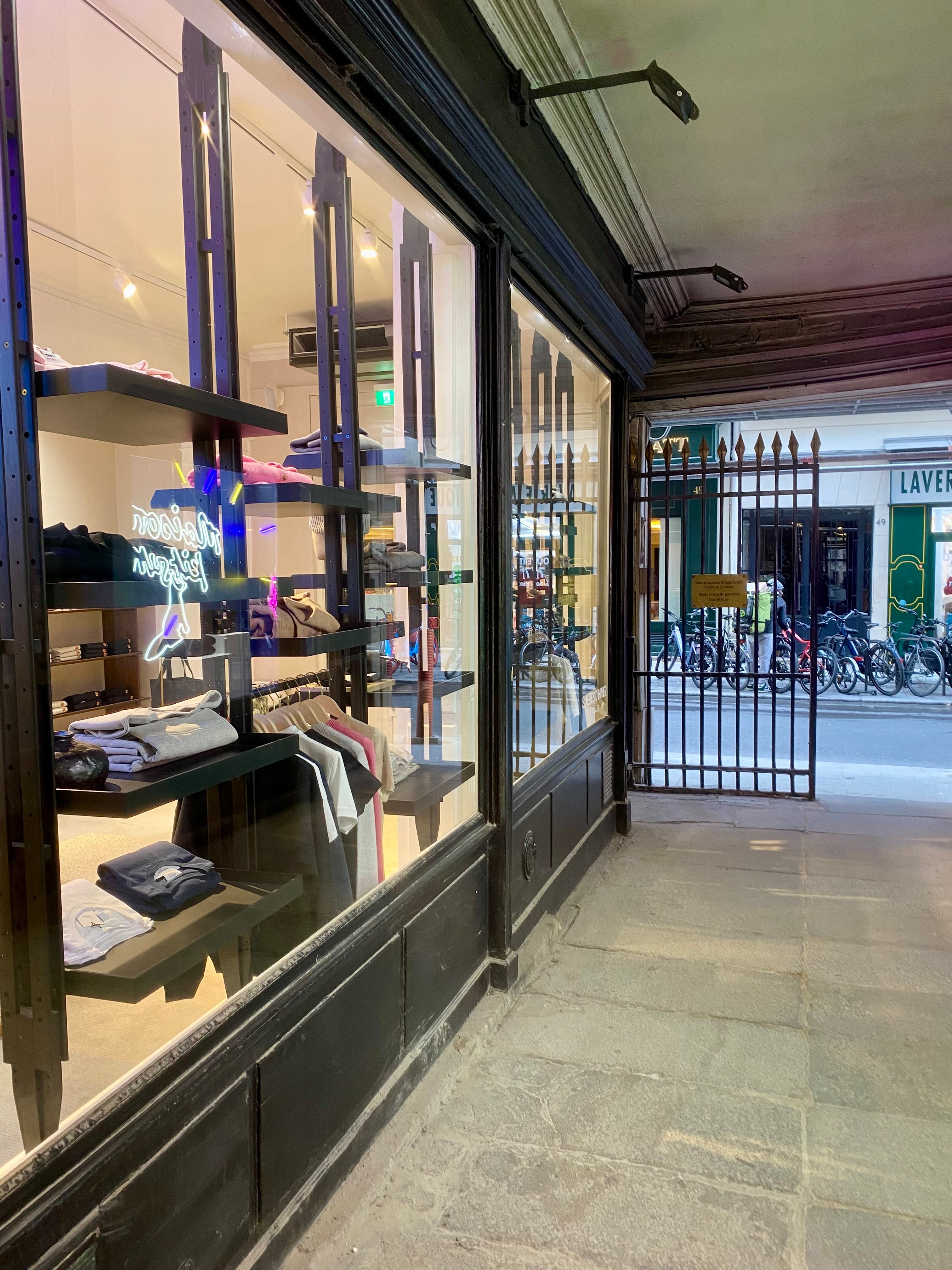
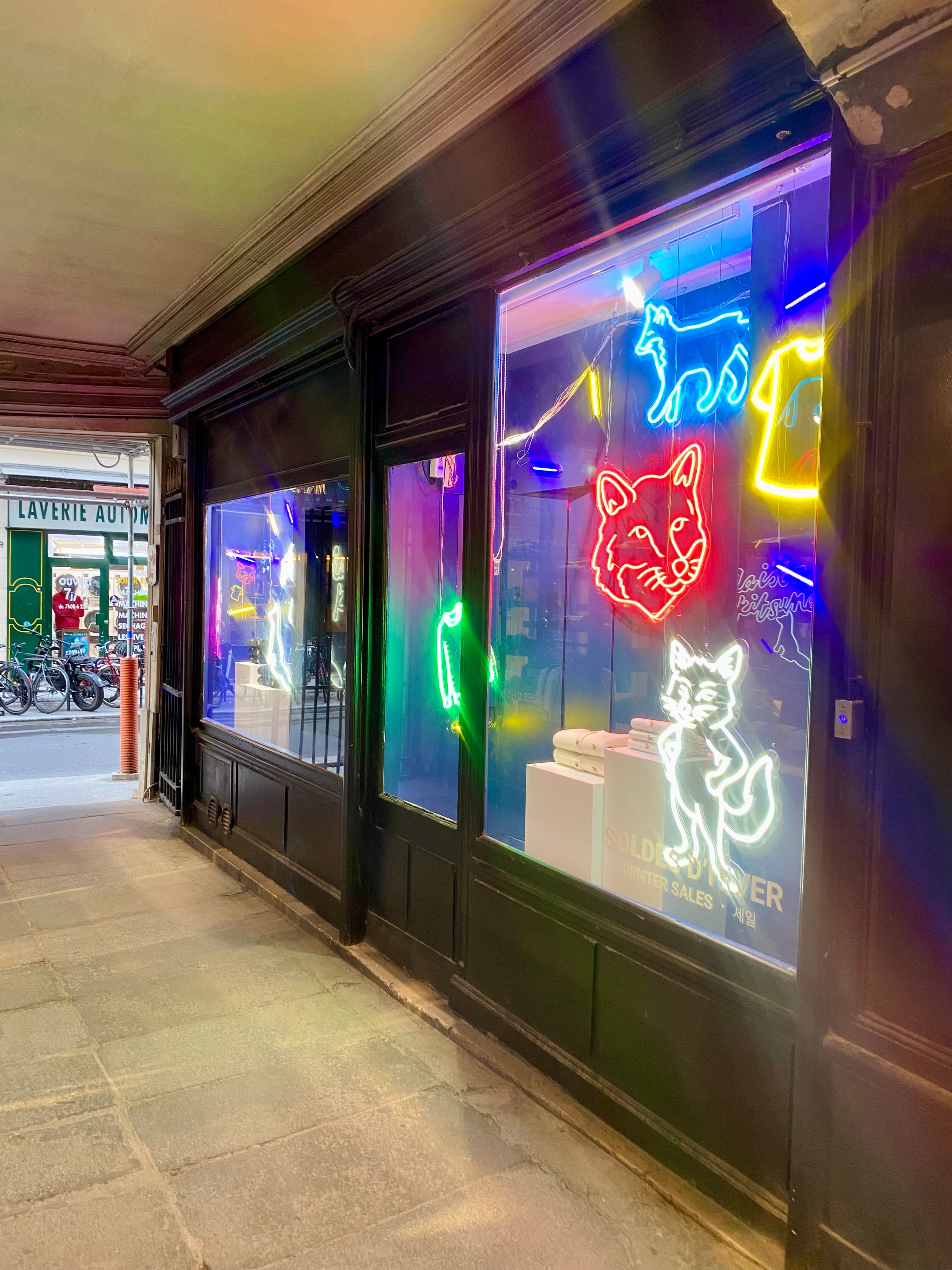
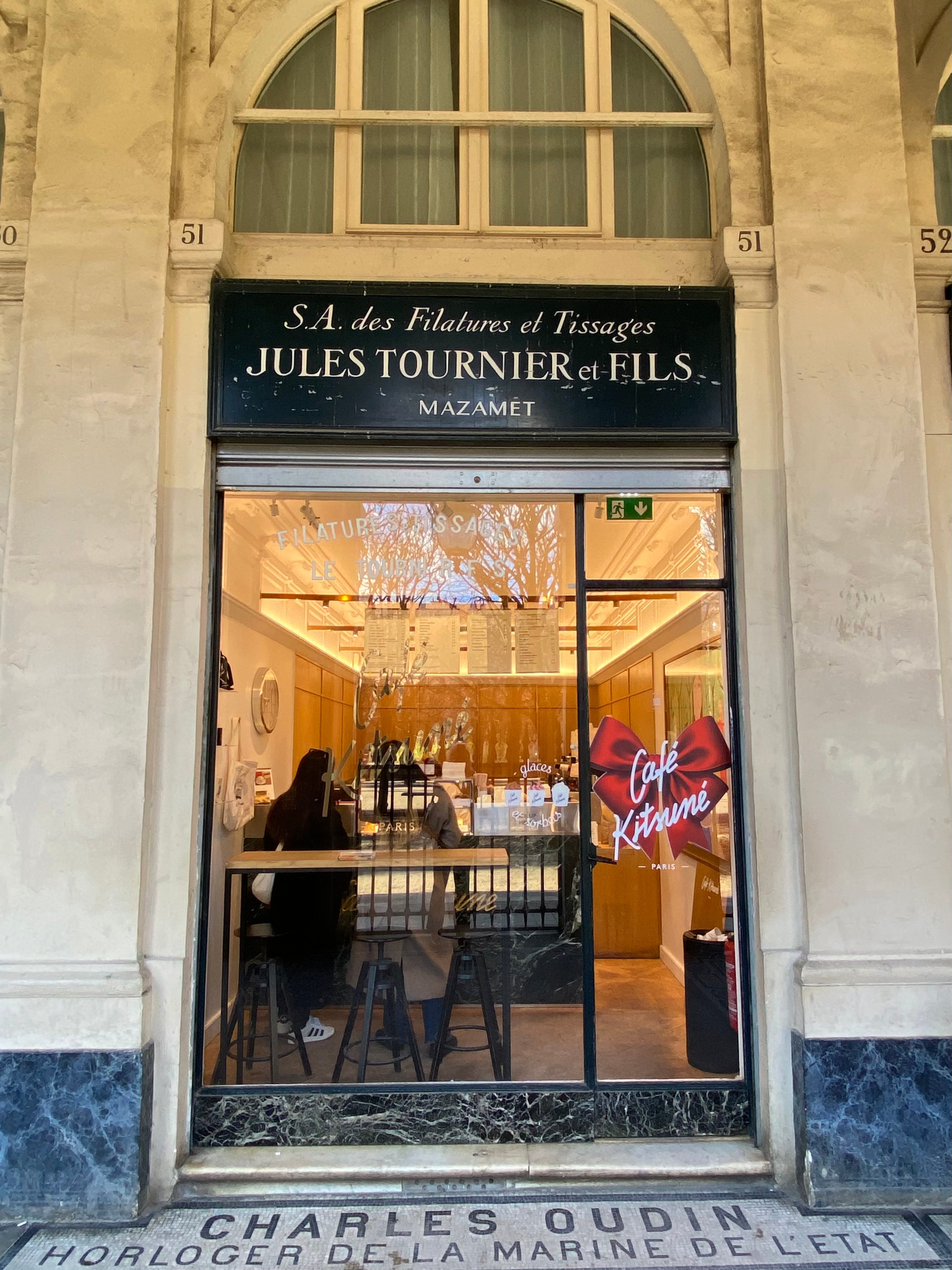
Ouvert en 1812, le Passage Beaujolais est une minuscule arcade cachée juste à côté du Palais-Royal, facile à manquer à moins de savoir où regarder. Il abrite aujourd'hui l'élégante Maison Kitsuné. En face du passage se trouve le Théâtre du Palais-Royal, un théâtre historique qui a été au cœur de la vie artistique de la ville pendant des siècles - ne manquez pas l'étonnante façade arrière. Le passage lui-même est privé et ses portes ferment à 21 heures précises.
📍N° 47, rue de Montpensier / N° 52, rue de Richelieu
- Métro Palais Royal (Ligne 1) Bourse (Ligne 3)
- fermeture à 21 heures
ET DONC...
Lorsque vous vous promènerez dans ces charmants espaces anciens à la recherche de babioles ou d'articles de luxe, pour trouver l'objet qui vous rappellera Paris, ou simplement pour faire du lèche-vitrine, sachez que vous profitez d'une tradition parisienne de longue date, qui fait partie intégrante de son urbanisme, de sa culture et de son histoire. Vous ferez partie d'une longue lignée d'acheteurs avisés qui reconnaissent la qualité ainsi que le plaisir de parcourir les marchandises uniques de cette ville qui semblent trouver leur niche la plus accueillante dans les passages couverts historiques.
Bonne exploration !
Merci de votre attention. Merci d'avoir pris le temps de lire notre blog ! Nous sommes une petite société de tourisme basée à Paris qui privilégie une expérience personnelle dans une boutique où nous pouvons partager notre passion pour notre patrimoine et notre communauté avec chaque personne qui se joint à nous. Si vous souhaitez participer à une visite guidée, rendez-vous sur notre site Web. site web pour un voyage inoubliable dans la ville lumière. En outre, consultez nos médias sociaux @memories.france pour tout savoir sur Paris : de l'utilisation du métro aux cafés les plus proches de chaque grand monument, il y en a pour tous les goûts !
Angelissa, Siobhan et la famille Memories France
Si vous êtes à la recherche de conseils, d'itinéraires et d'informations sur Paris, consultez nos médias sociaux !
- Le Mois de l'histoire des Noirs à Paris : Jazz, Montmartre et la légende de BricktopLe Mois de l'histoire des Noirs est le moment idéal pour découvrir les artistes, musiciens et écrivains noirs qui ont contribué à façonner le Paris moderne. Des rues jazzées du Montmartre des années 1920 au légendaire cabaret Bricktop's, découvrez l'histoire d'Ada “Bricktop” Smith et de la communauté dynamique qui a fait de la capitale française un havre de créativité, de liberté et de vie nocturne.
- Choses à faire à Paris quand il pleut : Musées, passages couverts et cafés chaleureuxLes jours de pluie à Paris ne sont pas forcément synonymes d'enfermement. En fait, ils peuvent être l'occasion de découvrir la ville dans une atmosphère des plus agréables. Des musées de renommée mondiale aux joyaux cachés, des passages couverts historiques aux cafés accueillants aux fenêtres embuées, Paris brille même lorsque le ciel est gris. Que vous visitiez l'hiver ou le début du printemps, ce guide regorge de conseils pratiques et de coups de cœur locaux pour vous aider à rester au sec, au chaud et inspiré - et à profiter de Paris dans ce qu'elle a de plus intime, de plus réfléchi et de plus silencieusement beau.
- Guide local des passages couverts de ParisQuittez les rues animées de Paris et pénétrez dans ses arcades cachées - les passages couverts. Construites au XIXe siècle, ces élégantes galeries vitrées étaient autrefois les rues commerçantes les plus chics de la ville, remplies de boutiques, de cafés et de charme. Aujourd'hui, elles sont parfaites pour flâner, découvrir des boutiques d'artisans et profiter de méandres tranquilles à l'écart de la foule. De la Galerie Vivienne au Passage Choiseuil, chaque passage a son histoire et ses trésors. Ce guide vous montrera les passages incontournables, les joyaux cachés et les astuces locales afin que vous puissiez explorer Paris comme un véritable initié.
- Marie-Antoinette portait-elle vraiment un bateau dans ses cheveux ?Les coiffures de Marie-Antoinette étaient bien plus que des déclarations de mode extravagantes. D'imposants poufs couronnés de navires, de symboles et d'allégories faisaient de sa chevelure une scène pour la politique, le patriotisme et la construction de l'image royale. Des victoires navales aux messages codés sur le pouvoir, la fertilité et la loyauté, les cheveux de la reine racontaient des histoires que les spectateurs du XVIIIe siècle savaient exactement comment lire, bien avant que le scandale ne les réduise à la caricature.
- Promenades secrètes de Noël à Paris : 6 quartiers magiques à explorer cet hiverParis brille à Noël - mais la vraie magie se trouve au-delà des grands boulevards. Laissez-nous vous emmener dans les quartiers authentiques de notre ville et vous montrer le côté charmant et local de Paris pendant les vacances d'hiver. Habillez-vous, laissez les touristes derrière vous et suivez-nous !